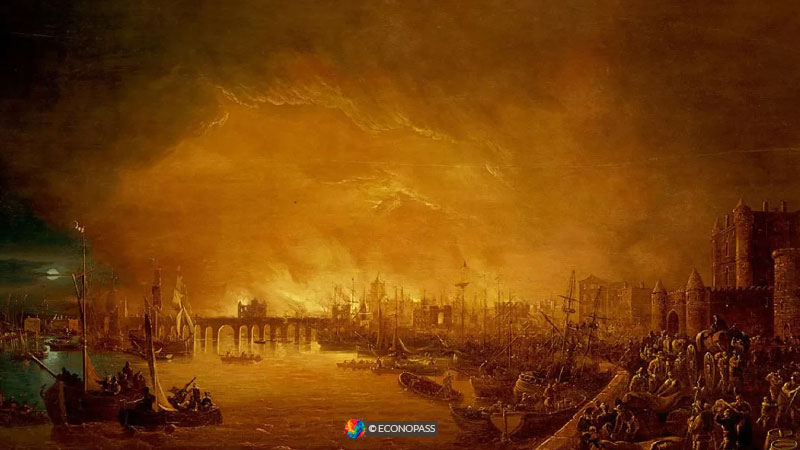
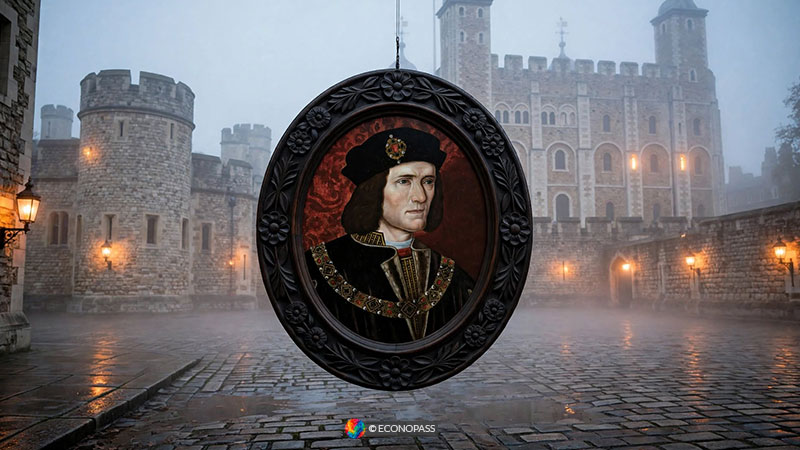
The most famous murder mystery in English history has no confirmed murder, no verified bodies, no living witnesses, no confession, and no contemporary accusation naming the man everyone blames. Richard III has been England’s official villain for five centuries. The case against him was assembled by his enemies, performed by a playwright on his enemies’ payroll, and recycled so many times it hardened into fact. It is not fact.
The Princes in the Tower, Edward V and his younger brother Richard, Duke of York, disappeared from the Tower of London in the summer of 1483. Two years later, their uncle Richard III died at Bosworth Field and Henry Tudor took the crown. What followed was one of the most effective character-assassination campaigns in the history of politics. History remembers it as justice. It was advertising.
The Timeline That Should Bother You
Edward IV died on April 9, 1483. His elder son, twelve-year-old Edward, was set to be crowned Edward V. Richard, Duke of Gloucester and the dead king’s brother, was named Lord Protector. The coronation never happened. By June 1483, Richard had declared his nephews illegitimate through the Titulus Regius, a parliamentary act citing a claimed pre-contract marriage that invalidated Edward IV’s union with Elizabeth Woodville. Richard took the throne.
By summer 1483, the boys had stopped appearing in public. That is the last verifiable fact. No body was produced. No trial was held. No execution was announced. The princes simply ceased to be visible, and the silence around their fate lasted for years.
Henry VII defeated Richard III at Bosworth on August 22, 1485, and immediately ordered the Titulus Regius suppressed. Every copy was to be surrendered and destroyed. This is the document that declared the princes illegitimate. A king with nothing to hide from the past does not erase the past’s paperwork.
If Richard killed the boys, Henry Tudor had a gift: a ready-made villain whose crime justified seizing the crown. If Richard did not kill them, the problem was thornier. The princes had a stronger dynastic claim than Henry. Henry never formally charged Richard with the murders. He never produced the bodies. He never commissioned an inquiry. He simply allowed the story to grow.

eufy E25 Robot Vacuum & Mop
Powerful suction, mop combo, smart navigation, works with Alexa. Set it, forget it, come home to clean floors.
View on AmazonThe Sources Are All Tudor
The primary historical account of Richard’s crimes comes from Thomas More, who wrote his “History of King Richard III” around 1513. More was five years old when the princes disappeared. His sources were secondhand accounts gathered decades later. His text was written under the reign of Henry VIII, a Tudor king who had every reason to welcome a damning portrait of the last Plantagenet. More never finished the work and never published it in his lifetime.
Polydore Vergil, the Italian humanist, wrote his “Anglica Historia” under direct commission from Henry VII. He is another foundational source for the case against Richard. He was writing for the man whose throne depended on Richard’s guilt.
Desmond Seward catalogues this pattern in Richard III: England’s Black Legend, arguing that the historical record is less a record than a construction, assembled piece by piece in the decades after Bosworth to make the Tudor claim feel inevitable.
Every major Tudor-era source condemning Richard III was produced by writers working under Tudor patronage, after Tudor victory, for Tudor audiences. Josephine Tey laid out this problem with devastating precision in The Daughter of Time, the 1951 novel in which a bedridden detective applies basic evidentiary standards to the case against Richard and finds nothing that would hold up in court. It remains one of the most readable demolitions of a historical consensus ever written.
The absence of contemporary accusation is the sharpest evidence. Richard governed England for two years after the princes vanished. There were rebellions. There were enemies. But the specific charge of murdering the boys is largely absent from the contemporary record of those years. It grows louder only after Henry Tudor wins and needs a story.
Shakespeare Finished the Job
William Shakespeare wrote Richard III around 1592. He drew from Holinshed’s Chronicles, which drew from More, which drew from Tudor sources. The play’s Richard is physically monstrous, psychologically deformed, gleefully evil. He confesses his villainy in the opening soliloquy. He is the most cartoonishly guilty character in English drama, and he has been playing that role in people’s heads ever since.
Shakespeare was writing under Elizabeth I. The Tudor queen’s legitimacy depended on her grandfather Henry VII’s legitimacy. Henry VII’s legitimacy depended, in part, on Richard III’s guilt. A playwright who wanted to keep working under Tudor patronage did not write sympathetic Plantagenets.
Richard’s actual skeleton, discovered beneath a Leicester car park in 2012 and confirmed by DNA analysis, showed scoliosis of the spine, not the withered arm and monstrous deformity Shakespeare depicted. The physical monster was a theatrical choice. The scoliosis would have been manageable and would not have prevented the battlefield combat Richard was documented to have performed at Bosworth, where he died fighting.
Paul Murray Kendall’s biography Richard III, published in 1955, remains the most thorough academic reassessment. Kendall found a man who, as Duke of Gloucester, had a strong record as an administrator, a loyal brother to Edward IV through years of actual crisis, and a king whose brief reign showed little of the erratic cruelty the Tudor narrative demands. The monster required construction. It did not arrive fully formed.
What Henry VII Never Did
There is one question this story consistently refuses to answer. If Richard III murdered the Princes in the Tower, why did Henry VII never formally say so? He had every political reason to charge Richard explicitly and on the record. A named crime, a documented victim, a condemned murderer: these would have discredited the Plantagenet line permanently and closed the door on future pretenders. Henry did none of this.
He let the rumor grow but never formalized it. When pretenders appeared claiming to be one of the princes, including Lambert Simnel and Perkin Warbeck, Henry dealt with them by force, not by producing evidence of their deaths. Perkin Warbeck claimed to be Richard, Duke of York, for years. Henry had him executed in 1499, fourteen years into his own reign. He never produced a body to disprove the claim.
The simplest explanation for Henry’s silence on the specific charge is that he did not know what had happened to the boys. And if Henry did not know, Richard’s guilt is not a settled question. It is a story that served a purpose, told by people who benefited from it, amplified by the greatest playwright in the English language, and mistaken ever since for history.
The truth about the Princes in the Tower is that there is no truth. There is only a very well-funded version of events.
Every story has a version. I’m sharing mine.
Marco Bellinari
Sources
- Princes in the Tower, Wikipedia
- Richard III of England, Wikipedia
- Titulus Regius, Wikipedia
- Thomas More, Wikipedia
- Perkin Warbeck, Wikipedia
A Note from Marco Bellinari
Thank you for reading. Every fact in this article is documented and sourced. You will find the references at the bottom if you want to dig further. I hope it surprised you at least once. That is always the intention.
I would love to hear your thoughts. Follow Econopass on social media and share your reaction hereafter as a social comment. And if you do not want to miss the next story, hit follow. There is always another forgotten truth waiting to be told.
Still Curious? Don't Stop Here!
The Salem Witch Trials Were Not About Witchcraft. They Were About Land. Every Accused Pers...
Marie Antoinette Never Said Let Them Eat Cake. The Quote Existed 20 Years Before She Was B...

The Bermuda Triangle Kills No More Ships Than Any Other Ocean. Lloyd's of London Charges t...
Walt Disney Was Not Cryogenically Frozen. The Story Started as a Joke and Never Stopped.

The Pyramids Were Not Built by Slaves. We Know Who Built Them and What They Were Paid.
You've Been Lied to About Left and Right

The First Person to Circumnavigate the Globe Was Not Magellan. He Died Halfway Through.