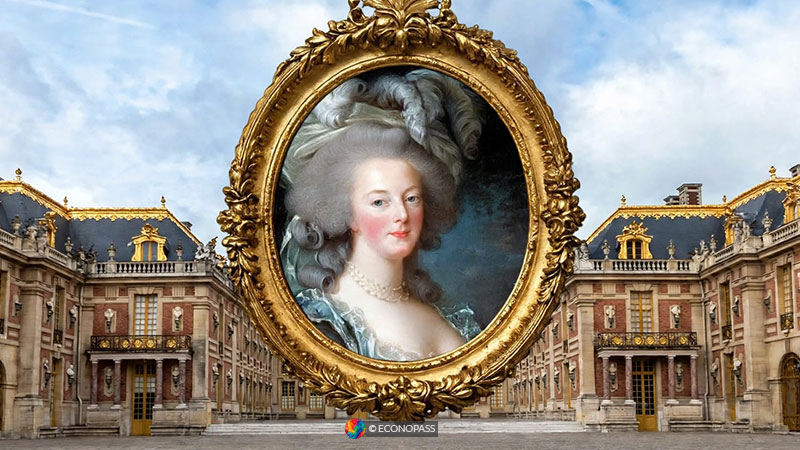
The story is perfect. A queen so detached from reality, so sealed inside her palace of mirrors and powdered wigs, that when told the people had no bread, she suggested cake. It captures everything the revolution needed her to be: stupid, callous, and irredeemably out of touch. The only problem is that she never said it. The quote existed before she arrived in France. It existed, in fact, before she was old enough to form a sentence.
Marie Antoinette was born on November 2, 1755. She arrived at the French court in 1770 at the age of fourteen. Jean-Jacques Rousseau wrote the passage containing “let them eat cake” in his autobiographical Confessions in the mid-1760s, when Marie Antoinette was approximately ten years old and living in Vienna. The timeline does not require interpretation. It simply ends the argument.
What Rousseau Actually Wrote
The passage appears in Book Six of Rousseau’s Confessions, in a scene where the young Rousseau, hungry and wandering, contemplates stealing food. He writes: “I recalled the thoughtless saying of a great princess, who, on being told that the country people had no bread, replied, ‘Let them eat cake.'” The phrase in the original French is “Qu’ils mangent de la brioche” – let them eat brioche. Brioche is not cake. It is an enriched bread made with butter and eggs, more expensive than plain bread but categorically not cake. The famous English translation has been wrong from the beginning.
Rousseau does not name the princess. He attributes the remark to an unnamed “great princess” as an example of the careless wealth of the aristocracy. His Confessions were written between 1765 and 1770 and first published in 1782, four years after his death. By the time the text was in print, Marie Antoinette had already been Queen of France for eight years. The passage existed, circulated, and was available to be weaponised long before anyone chose to attach her name to it.
Rousseau wrote “let them eat cake” in the 1760s. Marie Antoinette was a child in Vienna when he wrote it. She did not arrive in France until 1770. The attribution is not a misremembering. It is an invention.

Amazon Echo Dot 5th Gen
Improved bass, temperature sensor, tap-to-snooze, and Alexa everywhere. The most-rated smart speaker on Amazon for good reason.
View on AmazonThe Timeline That Ends the Argument
Antonia Fraser, whose biography Marie Antoinette: The Journey remains the definitive scholarly account of her life, addresses the misattribution directly. Fraser traces the quote’s origin to Rousseau and notes that no contemporary source places the remark in Marie Antoinette’s mouth. The revolutionary pamphlets, the trial transcripts, the explosion of printed material attacking the queen during the Terror – none of them cite the brioche remark as hers. The attribution appears to have solidified in the nineteenth century, not the eighteenth. By the time it became widely attributed to Marie Antoinette, the events of the revolution were already decades in the past and the historical record had been thoroughly filtered through political mythology.
Fraser also notes what the documentary evidence actually shows about Marie Antoinette’s relationship with poverty and hunger. She made regular charitable donations. She reduced the royal household budget after the famine of 1788. She was photographed – in the sense that she was described and recorded – giving food and money to the poor at public events. None of this makes her a saint, and none of it resolves the genuine political failures of her reign. But it does make the brioche quote doubly inaccurate: wrong in origin and wrong in character.
No contemporary source from the revolutionary period attributes the brioche remark to Marie Antoinette. The attribution solidified in the nineteenth century, long after the events it was meant to illustrate. The quote was assigned to her retrospectively, not recorded at the time.
Who the Great Princess Actually Was
Historians have proposed several candidates for Rousseau’s unnamed “great princess.” One possibility is Marie-Thérèse of Spain, wife of Louis XIV, who died in 1683 and whose court produced quantities of apocryphal remarks about the poor. Another candidate is Maria Theresa of Austria, Marie Antoinette’s own mother, who was known for occasionally tone-deaf pronouncements about the lower classes. Some scholars argue the princess was composite or fictional, a rhetorical device rather than a recorded person, inserted by Rousseau to make a point about aristocratic indifference rather than to document a specific moment.
Paul Boller and John George, who compiled cases of fabricated and misattributed quotations in They Never Said It, include the brioche remark in their catalogue of statements that became attached to the wrong people through the machinery of political convenience. Ralph Keyes, whose systematic tracking of quote origins in The Quote Verifier pursues individual phrases back to their earliest documented appearance, places the remark firmly with Rousseau and finds no evidence of independent attribution to Marie Antoinette in any contemporaneous source. The trail goes cold in exactly the place it should not exist at all.
The candidates proposed for Rousseau’s unnamed “great princess” include Marie-Thérèse of Spain, Maria Theresa of Austria, and no one at all. What they share is an absence of documentary proof. What Marie Antoinette shares with them is the same absence, plus a birth date that makes the attribution geometrically impossible.
Why the Lie Stuck
The persistence of the misattribution is not mysterious. The French Revolution required a villain, and Marie Antoinette was available. She was foreign, Austrian in a court that had long been suspicious of Austrian influence. She was expensive at a time when the treasury was failing. She was a woman with political opinions in a system that resented women with political opinions. The brioche quote, once attached to her name, completed a portrait the revolution had already painted. It provided a single, memorable, damning line that encapsulated everything her critics wanted to say about her.
Misattributed quotes survive when they tell a story people want to believe. The Marie Antoinette version of the brioche remark is not merely wrong. It is wrong in a direction that has been consistently useful to those who wished to construct a particular version of history. It took a line from a philosopher’s memoir, stripped it of its context, erased the unnamed woman Rousseau actually referred to, and transferred it to a specific woman who was executed before she could dispute it. The revolution was thorough.
Every story has a version. I’m sharing mine.
Marco Bellinari
Sources
- Did Marie Antoinette Really Say “Let Them Eat Cake”? Encyclopaedia Britannica
- Marie Antoinette, “Let Them Eat Cake,” Snopes
- The Confessions of Jean-Jacques Rousseau, Liberty Fund
- Did Marie Antoinette Really Say “Let Them Eat Cake”? History.com
- Marie Antoinette: The Journey review, The Guardian
A Note from Marco Bellinari
Thank you for reading. Every fact in this article is documented and sourced. You will find the references at the bottom if you want to dig further. I hope it surprised you at least once. That is always the intention.
I would love to hear your thoughts. Follow Econopass on social media and share your reaction hereafter as a social comment. And if you do not want to miss the next story, hit follow. There is always another forgotten truth waiting to be told.
Still Curious? Don't Stop Here!

The Bermuda Triangle Kills No More Ships Than Any Other Ocean. Lloyd's of London Charges t...
Walt Disney Was Not Cryogenically Frozen. The Story Started as a Joke and Never Stopped.
The Pyramids Were Not Built by Slaves. We Know Who Built Them and What They Were Paid.
You've Been Lied to About Left and Right

The First Person to Circumnavigate the Globe Was Not Magellan. He Died Halfway Through.
The Great Fire of London Did Not Kill the Plague. That Happened Six Months Earlier and Nob...
Every Country That Slid Into Civil War Went Through the Same Steps First. The United State...