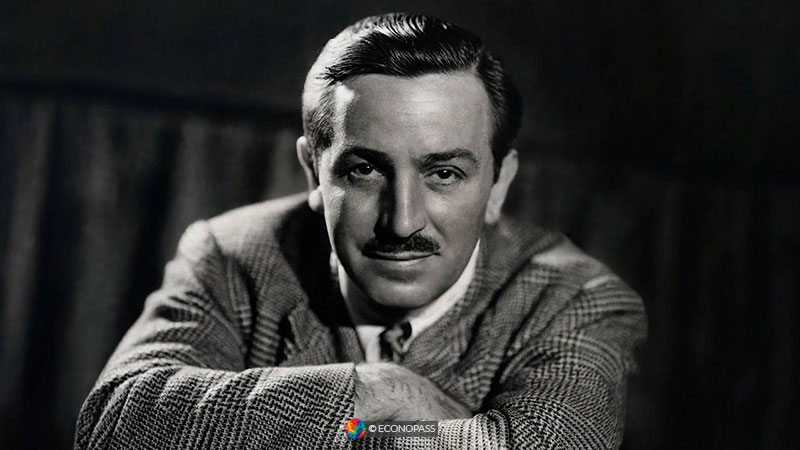
Walt Disney was cremated on December 17, 1966. His ashes are interred at Forest Lawn Memorial Park in Glendale, California. His death certificate, filed in Los Angeles County, lists the cause of death as acute circulatory collapse secondary to lung cancer. The records are public, consistent, and have been available for nearly sixty years.
None of this has stopped the story.
The story, for those who have not encountered it: Walt Disney, upon learning he was dying of cancer, arranged to have his body cryonically preserved immediately after death, to be revived by future medicine when a cure became available. He is currently frozen somewhere beneath Disneyland, or in a facility in California, or in a location known only to a small circle of insiders. The story varies by telling. What does not vary is that it is entirely false, in every version, and has been false since before anyone first told it.
Walt Disney’s ashes are at Forest Lawn Memorial Park in Glendale. The cryonics story has no source, no record, and no evidence. It has survived for nearly sixty years anyway.
What the Records Show
Disney was diagnosed with lung cancer in November 1966, following surgery to remove a tumor. He died on December 15, 1966, at St. Joseph’s Hospital in Burbank, two weeks after the surgery. He was 65 years old. A private funeral was held on December 16. He was cremated on December 17. The entire sequence from death to cremation took 48 hours.
Neal Gabler’s biography Walt Disney: The Triumph of the American Imagination, the most thoroughly researched account of Disney’s life, documents the final weeks in detail. There is no mention of cryonics discussions, no contact with cryonics organizations, no estate provision related to preservation. Disney’s family has confirmed the cremation on multiple occasions. The Forest Lawn records are consistent. No documentary evidence of any kind connects Disney to cryonics at any point in his life.
Disney’s will, filed as a public record, contains no reference to cryonic preservation and no provisions consistent with an intent to be preserved. Cryonics arrangements require specific, unusual legal and logistical preparation. None of it exists in Disney’s case. The absence of evidence is not ambiguous here. It is comprehensive.
Our Pick
Kindle Paperwhite 2026
New 7″ flush-front aluminum design, weeks of battery, glare-free in any light. The e-reader that stays on your nightstand permanently.
Even setting aside the death certificate and the cremation records, there is a chronological problem with the cryonics story that has never been adequately addressed by the people who tell it.
The first human being ever cryonically preserved was James Bedford, a psychology professor from California. Bedford died on January 12, 1967, and was preserved by the Cryonics Society of California. He remains preserved to this day, held by the Alcor Life Extension Foundation in Scottsdale, Arizona. Bedford was not the second person cryonically preserved, or the tenth. He was the first. There was no cryonic preservation of a human being before Bedford. The practice did not yet exist as an applied procedure.
Disney died on December 15, 1966. Bedford was preserved on January 12, 1967. Disney died 28 days before the first human cryonic preservation in history. There was no facility to receive him, no procedure to perform, and no organization with the capability to preserve him. The technology described in the legend did not exist at the time Disney died. The story is not merely unsupported. It is physically impossible given the documented timeline.
The first human ever cryonically preserved was frozen 28 days after Disney was cremated. There was no procedure, no facility, and no organization capable of doing what the legend describes. The timeline makes the story impossible, not just unproven.
Where the Story Came From
The precise origin of the Disney cryonics myth is difficult to pin down, which is itself a feature of how myths of this type propagate. No primary source has ever been identified. No original article, no named insider, no dated first telling exists in the historical record.
The story appears to have entered wider circulation in the late 1960s and early 1970s, initially in French-language press and subsequently in American tabloid publications. By the 1980s it had become established enough to be treated as a known fact by people who had heard it secondhand. Larry Johnson, in Frozen, an account written by a former Alcor employee with direct access to the organization’s records, notes that Disney is not and has never been in any cryonics facility. Johnson had professional reasons to know. The cryonics community’s own records contain no Disney entry.
The story likely gained traction partly because Disney died around the time cryonics was entering public consciousness as a concept, and partly because his public persona as a technological visionary made the idea feel plausible to people who had no reason to check the dates. The 1964 New York World’s Fair, for which Disney produced several major attractions, had established him in the popular imagination as someone oriented toward the future. A man who built a theme park around tomorrow might plausibly want to live in it. That feeling of plausibility did a lot of work in the absence of any actual evidence.
Why It Survived
Michael Shermer, in Why People Believe Weird Things, identifies the conditions under which false beliefs persist and replicate. One consistent factor is that the belief must be interesting enough to repeat. A story about a powerful, beloved, slightly mysterious figure being secretly preserved in anticipation of resurrection is intrinsically more compelling than the truth: a man who died, was cremated two days later, and has been at Forest Lawn ever since. The truth is ordinary. The myth is not.
A second factor is that corrections rarely travel as far or as fast as the original claim. The Disney cryonics story has been debunked in print dozens of times across six decades. Each debunking reaches a fraction of the audience that the original rumor reached. The people who believe the story are generally not aware it has been examined and found baseless. They heard it from someone who heard it from someone else and found it interesting enough to pass along. The transmission mechanism does not include a verification step.
The story also benefits from the structure of conspiracy thinking: the absence of evidence is reframed as evidence of concealment. The fact that no cryonics facility has ever confirmed Disney’s presence is interpreted not as evidence that he is not there, but as evidence that the secret is well kept. This structure makes the belief unfalsifiable in practice. Any evidence against it can be explained as part of the cover-up. Any absence of supporting evidence can be explained the same way.
The story has been debunked dozens of times. Each correction reaches a fraction of the audience the original rumor reached. The people repeating it today almost certainly have no idea any of this has been checked.
Walt Disney is at Forest Lawn. He has been there since December 1966. The records say so. The timeline confirms it. The cryonics community’s own archives support it. None of that stopped the story, and none of it is likely to stop it now.
Every story has a version. I’m sharing mine. Marco Bellinari
The rabbit hole goes deeper. Go further. It is worth it.
Thank you for reading. Every fact in this article is documented and sourced. You will find the references at the bottom if you want to dig further. I hope it surprised you at least once. That is always the intention.
I would love to hear your thoughts. Follow Econopass on social media and share your reaction hereafter as a social comment. And if you do not want to miss the next story, hit follow. There is always another forgotten truth waiting to be told.
Disclosure: This article may contain affiliate links. This means we may earn a commission if you click on a link and make a purchase at no extra cost to you. This applies to featured Amazon products or any other Econopass's partners.
FediBack: Walt Disney Was Not Cryogenically Frozen. The Story Started as a Joke and Never Stopped.
These articles and stories are free because of a few non-intrusive ads. To support us, simply turn off your ad blocker for Econopass. It takes one click on the ad blocker icon in your browser. Thank you!
We use cookies to ensure that we give you the best experience on Econopass website. If you continue to use this site we will assume that you are happy with it.