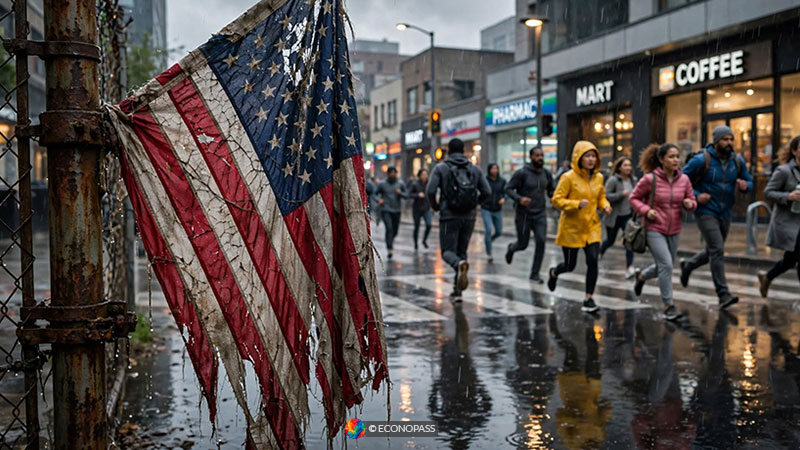
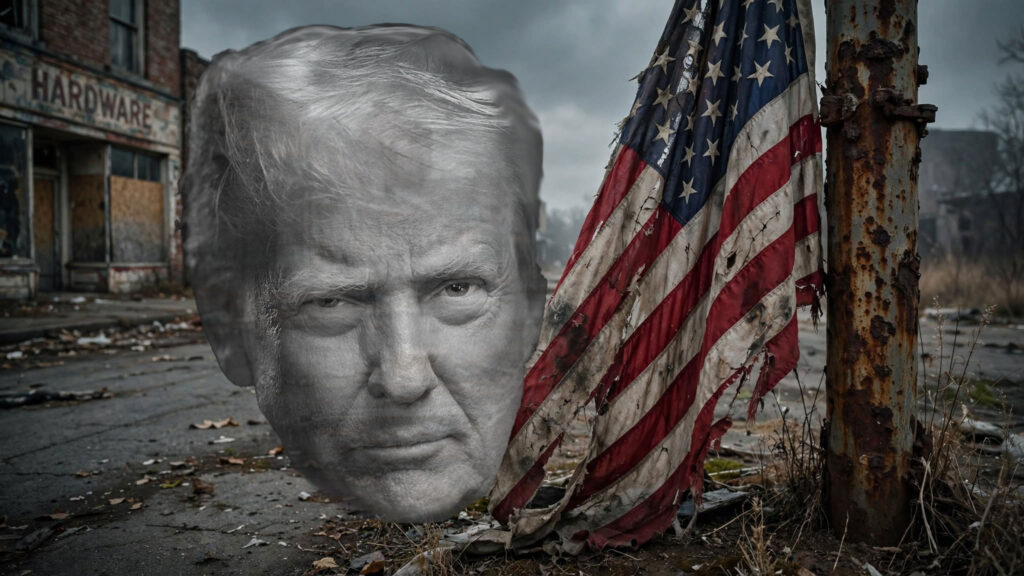
In 2021, the United States was downgraded on the Polity scale, the index political scientists use to measure the health of a democracy. The country moved from a score of seven to a score of five. The scale runs from negative ten to positive ten. A score of six is the minimum threshold for full democracy. A score of five falls below it, into the category researchers call an anocracy: not a democracy, not an autocracy, but the unstable middle ground where the risk of civil conflict increases by a statistically measurable degree. The organization that published the finding, the Center for Systemic Peace, noted it was the first time the United States had been classified that way in more than two centuries. Most Americans never heard about it.
The Pattern Has a Name
Barbara Walter spent her career studying civil wars. Not American history. Civil wars everywhere: Lebanon, Sri Lanka, Colombia, Mozambique, Northern Ireland. She was looking for the pattern that preceded them, the structural conditions that predicted armed internal conflict before anyone on the ground believed it was coming. She found it. It is called anocracy, and it is not a description of ideology. It is a description of institutional weakness: a government strong enough to provoke but no longer strong enough to protect, a political class that has learned to speak in tribe rather than in policy, and an opposition that has been stripped of enough legitimacy to believe that working within the system is no longer worth attempting. The United States entered that category. The data says so.
Walter’s research identified anocracy as the single strongest predictor of civil conflict across modern history. Countries do not slide into war from stable democracy. They slide from the middle ground, where institutions still exist but no longer function as intended.
What Triggered Civil Wars Elsewhere
Yugoslavia in 1991. Rwanda in 1994. Syria in 2011. The surface details differ. The architecture does not. In each case the sequence was roughly identical: a political class that weaponized economic resentment into ethnic or tribal identity, a press that was first discredited and then silenced, institutions whose independence was dismantled from the inside by the people appointed to protect them, and a population that had been sorted into two groups with no shared understanding of what was real. None of these countries believed it was coming. The historians who studied them afterward found the warning signs were visible years before the first shot.
The Press Is Not Collateral Damage. It Is the Target.
The United States ranked 49th in the Reporters Without Borders World Press Freedom Index in 2015. In 2026 it ranked 64th, below Lithuania (15th), Namibia (23rd), and Timor-Leste (30th). That shift is not the product of journalists doing worse work. It is the product of a sustained, documented campaign to delegitimize independent reporting as an institution: the term fake news applied not to specific false stories but to entire outlets, the removal of press access from White House briefings, the prosecution and threatened prosecution of journalists, and the explicit framing of the press as an enemy of the people by a sitting president. Every authoritarian consolidation in modern history attacked the press first, discredited it second, and silenced it third. The sequence is documented. The United States has completed the first two steps publicly and with evident popular support from a significant portion of the electorate.
Press freedom and civil conflict are directly correlated in the historical record. A population that cannot agree on shared facts cannot negotiate shared outcomes. When the mechanism for establishing common reality is destroyed, force becomes the remaining alternative.
When the Constitution Becomes Optional
Democratic erosion does not arrive as a coup. It arrives as a series of small violations, each one normalized by the absence of consequence, each one making the next one easier to commit and harder to condemn. The emoluments clause of the United States Constitution prohibits a president from profiting from foreign governments while in office. It was challenged repeatedly in court during the first Trump administration and never fully adjudicated before the cases were dismissed as moot. The pattern of placing personal allies in positions designed to be independent of political pressure, the use of executive power to reward supporters and punish critics, the pardoning of individuals convicted of crimes committed in service of the administration: none of these are unprecedented in isolation. What is unprecedented is their volume, their speed, and the absence of institutional resistance sufficient to slow them.
Two Tribes With No Common Facts
The most dangerous condition is not poverty. It is not inequality. It is not even injustice. It is the fracturing of shared reality. Researchers who study radicalization identify a specific threshold: the point at which a population stops disagreeing about solutions and starts disagreeing about the nature of reality itself. When one group believes an election was stolen despite sixty court rulings to the contrary, and another group believes the first group is engaged in coordinated, bad-faith denial, the two groups are no longer in political disagreement. They are in epistemological conflict. There is no negotiated resolution to epistemological conflict. History has shown only two exits: one side concedes the reality of the other, or one side forces the issue by other means.
Political scientists who study democratic collapse identify the loss of shared factual reality as the point of no return. Once a population has divided into two groups with irreconcilable versions of what happened, the institutional tools designed to resolve conflict stop working. They were built for disagreement, not for two mutually exclusive realities.
What History Says Comes Next, and What to Do With That Information
The purpose of understanding a pattern is not to accept its conclusion as inevitable. It is to interrupt it with information rather than surprise. What historians and civil conflict researchers recommend for individuals in a high-risk period is consistent across cases: build and maintain local community ties that are not mediated by national political identity; develop basic practical resilience in communications, supply, and mutual aid independent of centralized infrastructure; stay informed through multiple independent sources rather than a single platform or outlet; and resist the pull toward dehumanizing language about the other side, which is always the final psychological step before organized violence becomes thinkable. How Can I Communicate When Networks Fail? addresses the communications infrastructure question directly and practically, because the first thing that breaks in any serious civil disruption is not food or water. It is the ability to know what is happening and to reach the people you need to reach. Preparation is not panic. It is the rational response to a documented risk that most people prefer not to think about until it is no longer a choice.
And through all of it, do not discard your humanity, your pride, or your convictions. Countries have recovered from worse. This one will too. It will take years. Until then, stay safe.
Let’s hope it won’t happen…
The world rarely matches the version sold to us. This is what it actually looks like. Simon De Lafronde
The rabbit hole goes deeper. Go further. It is worth it.
The advice and information in this article come from my experience and research. It’s intended to support your reading with evidence-based insights. If the article is covering wellness or any other health topics, this is not professional advice. Please consult appropriate professionals for your specific situation.
Disclosure: This article may contain affiliate links. This means we may earn a commission if you click on a link and make a purchase at no extra cost to you. This applies to featured Amazon products or any other Econopass's partners.
FediBack: Every Country That Slid Into Civil War Went Through the Same Steps First. The United States Is Not on Step One.
🟢 Historians who studied civil wars found the warning signs were visible years before the first shot. What would it take for you to take this seriously?
🟢 Historians who studied civil wars found the warning signs were visible years before the first shot. What would it take for you to take this seriously?
🟢 Historians who studied civil wars found the warning signs were visible years before the first shot. What would it take for you to take this seriously?
These articles and stories are free because of a few non-intrusive ads. To support us, simply turn off your ad blocker for Econopass. It takes one click on the ad blocker icon in your browser. Thank you!
We use cookies to ensure that we give you the best experience on Econopass website. If you continue to use this site we will assume that you are happy with it.