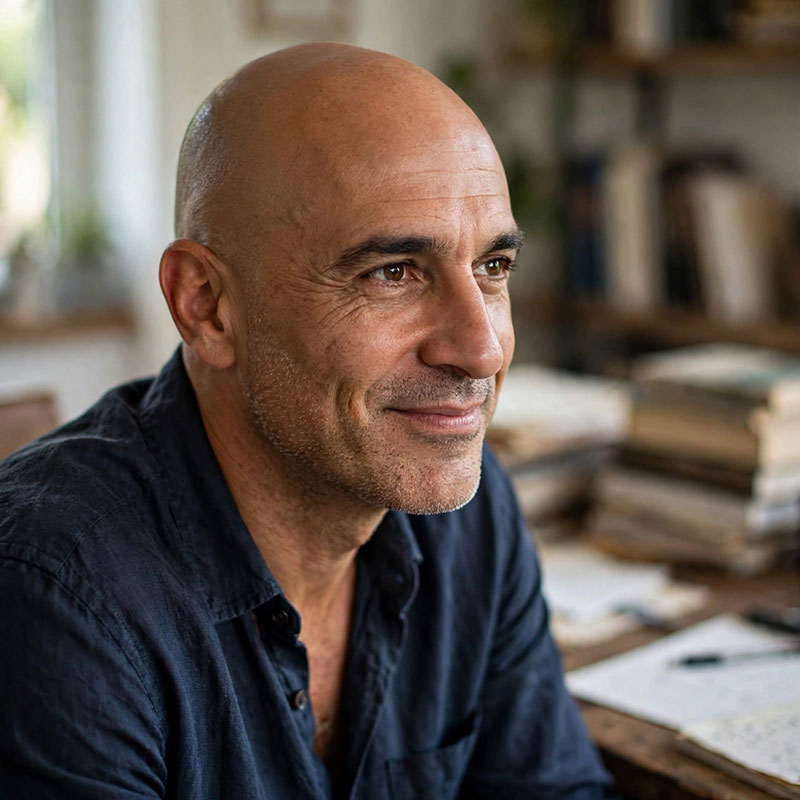
Marco Bellinari is a contributing author at Econopass.com, specialising in history, human behaviour, and the kind of facts that make you question everything you thought you knew.
Born in Bologna, Italy, Marco studied History and Philosophy at the University of Bologna before spending two decades moving between cities, continents, and careers. That restlessness turned out to be an education in itself. He has lived and worked in four countries, picked up three languages, and developed an enduring obsession with the gap between the official version of events and what actually happened.
His writing is driven by a single conviction: the truth is almost always stranger, darker, and more interesting than the story we were told. Whether he is dismantling a myth about Napoleon, explaining why your brain physically hurts when someone ignores you, or uncovering the law that makes it illegal to be overweight in Japan, Marco brings the same rigorous respect for verified fact and the same refusal to let a good story be boring.
At Econopass, Marco co-writes with editor Simon De Lafronde across three categories: The Forgotten Truth, Why We Do That, and Stranger Than Fiction. Every claim is sourced. Every article is built to make you think twice.
No bots, no shortcuts. If your needs go beyond the free posts, the author also offers paid professional consultations; just reach out via the contact page.
Between 1347 and 1353, the Black Death killed somewhere between a third and half of Europe. But it did not kill randomly. The pattern of who died, where, and when reveals something the standard story has always left out.
Tsutomu Yamaguchi was in Hiroshima on August 6, 1945. He was in Nagasaki on August 9. He survived both blasts, lived through both cities, and spent the rest of his life telling people what that meant.
Multitasking is not a skill. It is a myth your brain invented to make you feel productive. What you are actually doing has a name, and the cost is measurable.
Iceland has no army. Its population is smaller than Coventry. Between 1958 and 1976 it went to war with the United Kingdom three times over fishing rights. It won all three without firing a shot. Its weapons were wire cutters, diplomatic audacity, and a threat to leave NATO that would have handed the Soviets the entire North Atlantic. Britain had frigates. Iceland had leverage.
Your brain does not fill up when you learn. It destroys things. Synaptic pruning cuts connections that go unused. Myelin wraps the ones that get used, increasing signal speed from 1 to 100 metres per second. The expert brain is not a fuller brain. It is a leaner, faster, more ruthlessly efficient one. And myelin does not care whether what you are practising is correct.
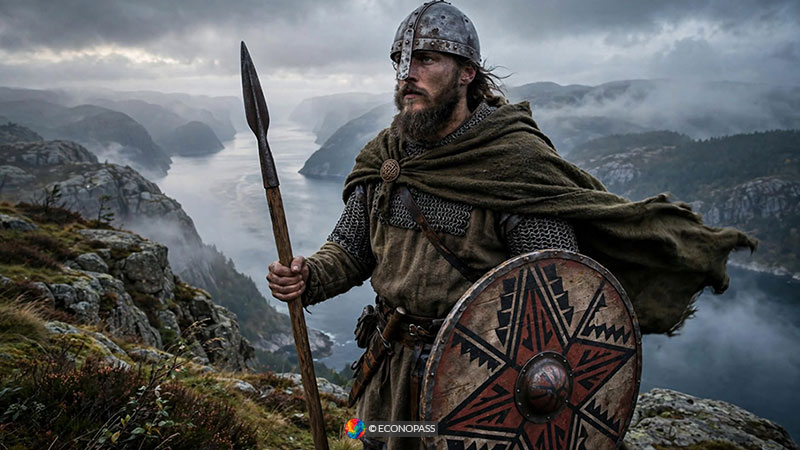
Not one horned Viking helmet has ever been found in any archaeological dig. The only complete Viking helmet ever recovered is a simple rounded iron cap with a nose guard. The horned helmet was invented by a German costume designer named Carl Emil Doepler for Wagner’s Ring Cycle opera in 1876. The horned helmets that do exist in Scandinavia predate the Vikings by 3,000 years.
U-2 and OXCART spy plane flights from Area 51 accounted for more than half of all UFO reports in the US during the late 1950s and 1960s. Project Blue Book’s actual job was to figure out which UFO sightings were their own classified aircraft. The government chose aliens as a cover story because no official body would ever confirm it. The planes were stranger than the fiction.
Being ignored activates the same region of your brain as physical pain. A 2003 UCLA study put people in brain scanners and had a computer ghost them. Their pain centres lit up. And a common painkiller measurably reduced hurt feelings. Your brain does not especially distinguish between a stubbed toe and a stubbed social standing.
In January 1911 Marie Curie was the most decorated scientist in France. The French Academy of Sciences voted against admitting her by two votes, then voted 90 to 52 to bar all women permanently. She responded by refusing to let them publish her work for a decade. Later that same year she won her second Nobel Prize. France did not admit a woman to the Academy until 1979.
These articles and stories are free because of a few non-intrusive ads. To support us, simply turn off your ad blocker for Econopass. It takes one click on the ad blocker icon in your browser. Thank you!
We use cookies to ensure that we give you the best experience on Econopass website. If you continue to use this site we will assume that you are happy with it.