Someone sent you a message. You can see they read it. They have not replied. It has been three hours. Your brain, at this very moment, is doing something that neuroscientists find genuinely fascinating: it is producing the same neural response as if someone had stepped on your foot.
Not a metaphor. Not approximately. The same region of your brain that lights up when you stub your toe is activating right now because of an unread message. Your body does not especially distinguish between a bruised elbow and a bruised social standing. It uses the same alarm system for both. And the alarm is loud.
In 2003, UCLA neuroscientist Naomi Eisenberger and her colleagues ran an experiment that has since become one of the most cited in social psychology. They put participants in an fMRI scanner and had them play a virtual ball-tossing game called Cyberball. The participant would toss a digital ball back and forth with what they were told were two other players. After a while, the other “players” simply stopped throwing the ball to them. They kept tossing it between themselves, ignoring the participant completely. The participant sat there, in a brain scanner, being ghosted by a computer programme. And their anterior cingulate cortex, the part of the brain most strongly associated with the unpleasantness of physical pain, lit up. The more distress the participant reported, the more activity appeared in that exact region.
Here is the part that takes a moment to land: the participants knew they were in an experiment. They knew the “other players” were likely not real people. Some of them were told explicitly that the exclusion was being caused by a computer, not human choice. It did not matter. The brain’s social pain system activated anyway, because the social pain system is older and less rational than your rational brain, and it does not wait for a logical briefing before deciding something hurts.
This system exists for a reason that makes complete evolutionary sense. For most of human history, being excluded from the social group was not just embarrassing. It was a death sentence. No group meant no protection, no food sharing, no reproduction, no survival. The brain that treated social rejection as a minor inconvenience would not have been selected for. The brain that treated it as an emergency, urgently motivating repair of the social bond, would have been. We inherited that brain. Every time someone leaves you on read, a very old piece of your nervous system responds as if you are being left behind on the savanna.
The evolutionary argument also explains why the pain system and the social system share neural architecture in the first place. The most parsimonious explanation, which researchers have articulated, is that the social attachment system essentially piggybacked onto the existing pain system during the course of mammalian evolution. Pain was already a well-established biological mechanism for signalling threat. Rather than build an entirely new system for social threat, evolution appears to have repurposed the existing one. You feel the social equivalent of pain because your brain is using the pain network. It is not a metaphor. It is infrastructure reuse.
The painkiller study is the thing that gets people in a room talking. Eisenberger’s team, following the logic of the shared pain system, asked an apparently ridiculous question: if social pain and physical pain share the same neural mechanism, would a painkiller reduce social pain? They ran a study in which participants took either Tylenol (paracetamol) or a placebo daily for three weeks, and reported their social pain levels over that period. The Tylenol group reported significantly lower levels of hurt feelings than the placebo group. A common over-the-counter painkiller measurably reduced emotional pain from social rejection. The brain really does treat them the same way.
There is a companion finding that is almost as surprising. Eisenberger’s team found that simply seeing a photograph of an ex-partner, or watching a video of disapproving faces, activated the same pain-related neural pathways. You do not need to be actively excluded in real time. The brain can generate the same social pain response from a memory, an image, or a facial expression. This is either very useful to know or deeply inconvenient, depending on how your week is going.
There is also good news buried in this research, which feels only fair to mention. The same brain region involved in social pain, the anterior cingulate cortex, also processes the warmth of social connection. Acceptance, belonging, and feeling genuinely seen by someone you care about run through the same neural real estate as rejection. The system is not purely a damage detector. It is a social barometer, reading both the threat of exclusion and the reward of inclusion through the same sensitive instrument. Which means that the reason belonging feels so good is the same reason rejection feels so bad. It is the same scale, measuring in both directions.
The person who has not replied to your message probably got distracted, is in a meeting, or simply forgot. Your anterior cingulate cortex does not know this yet. It is doing its job, which is to take social disconnection very seriously indeed, on the grounds that for most of our species’ history, it had to.
It will feel better when they reply. That is also the brain doing its job.
Now you know. The question is what you do with it. Marco Bellinari
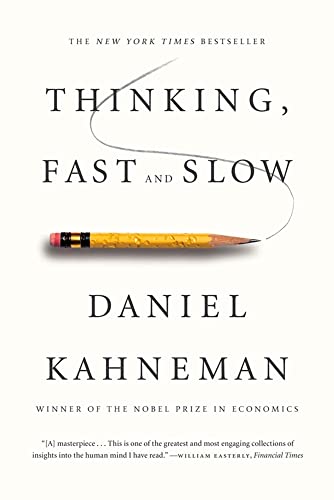
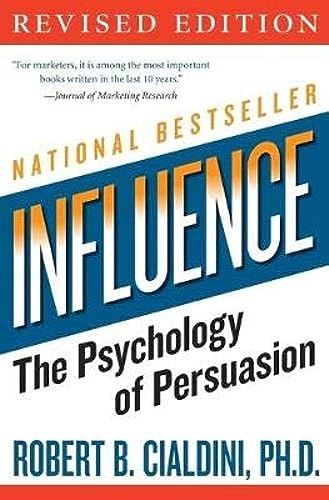
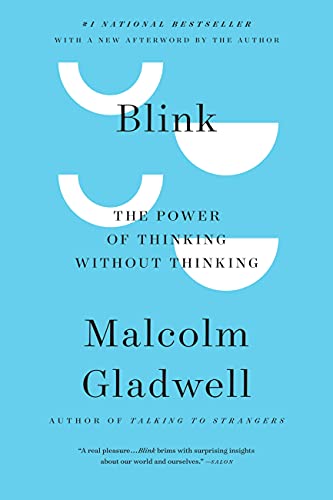
Want to understand yourself a little better? These books will help.
Thank you for reading. Every fact in this article is documented and sourced. You will find the references at the bottom if you want to dig further. I hope it surprised you at least once. That is always the intention.
I would love to hear your thoughts. Follow Econopass on social media and share your reaction hereafter as a social comment. And if you do not want to miss the next story, hit follow. There is always another forgotten truth waiting to be told.
Disclosure: This article may contain affiliate links. This means we may earn a commission if you click on a link and make a purchase at no extra cost to you. This applies to featured Amazon products or any other Econopass's partners.
FediBack: What Happens in Your Brain When Someone Ignores You. It Is the Same as Physical Pain.
🟢 A computer ghosted people in a brain scanner and their pain centres lit up anyway. After reading this, does it change how you feel about the last time someone ignored you? Tell me below.
🟢 A computer ghosted people in a brain scanner and their pain centres lit up anyway. After reading this, does it change how you feel about the last time someone ignored you? Tell me below.
🟢 A computer ghosted people in a brain scanner and their pain centres lit up anyway. After reading this, does it change how you feel about the last time someone ignored you? Tell me below.
These articles and stories are free because of a few ads. To support us, simply turn off your ad blocker for Econopass. It takes one click on the ad blocker icon in your browser. Thank you!
We use cookies to ensure that we give you the best experience on Econopass website. If you continue to use this site we will assume that you are happy with it.