Iceland has a population of roughly 370,000 people. That is smaller than Coventry. It has no army. Its entire defence budget is a fraction of what Britain spends on paperclips. And between 1958 and 1976, it went to war with the United Kingdom three times over fish.
It won all three. Without firing a single shot.
The Cod Wars the name was coined by a British journalist in September 1958 with what was presumably intended as mild mockery are one of the stranger episodes in post-war European history, and one of the most instructive. A nation with no military defeated a nuclear power with a permanent seat on the UN Security Council, a standing navy, and the institutional memory of an empire, over access to fish. The lesson it teaches about leverage, bluffing, and knowing what your opponent cannot afford to lose is more useful than anything in most diplomatic textbooks.
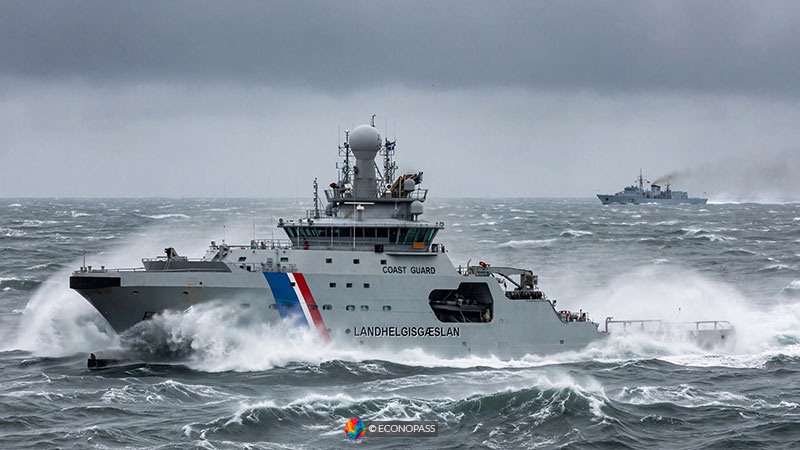
The dispute had a simple origin. Iceland’s entire economy ran on cod. Fishing accounted for the overwhelming majority of its export earnings. When British trawlers appeared in Icelandic waters in significant numbers after the Second World War, Iceland faced an existential economic threat dressed up as a fishing dispute. In 1958, Iceland unilaterally extended its territorial waters from 4 nautical miles to 12. Britain refused to recognise the extension and sent Royal Navy frigates to protect British trawlers operating within the newly claimed zone. Iceland sent its coast guard. The Icelandic vessels were smaller, slower, and outnumbered. They also had wire cutters. Icelandic coast guard ships began cutting the fishing lines of British trawlers operating inside the disputed zone, releasing their nets and their catches into the North Atlantic. The British Navy watched and could not legally intervene.
The First Cod War ended in a compromise that satisfied nobody completely but gave Iceland something. The Second began in 1972 when Iceland extended its zone to 50 nautical miles. The pattern repeated: Britain sent frigates, Iceland sent coast guard vessels with wire cutters, confrontations occurred at sea, the international community watched. There were collisions. Ships rammed each other in the North Atlantic. One Icelandic engineer died during the Second Cod War, the only confirmed fatality of all three conflicts, killed accidentally while repairing damage from a collision with a British frigate.
Britain had the stronger navy. Iceland had the stronger card. And in the Third Cod War, which began in 1975 when Iceland extended its zone to 200 nautical miles, Iceland finally played it.
Iceland threatened to leave NATO. This sounds, at first glance, like a small country having a tantrum. It was actually a devastatingly precise strategic move. Iceland sits in the middle of the GIUK gap, the ocean passage between Greenland, Iceland, and the United Kingdom through which Soviet submarines would need to transit to reach the Atlantic in the event of a war. The NATO strategy for containing the Soviet naval threat in the North Atlantic depended critically on Iceland’s position. Iceland also hosted the Keflavik air base, an American military installation that was a cornerstone of NATO’s early warning and anti-submarine capability. If Iceland left NATO, the entire defensive architecture of the North Atlantic went with it. Britain was holding a fishing dispute. Iceland was holding a nuclear trump card.
NATO panicked. The Americans applied pressure. Britain, which had deployed frigates to protect trawlers operating inside Iceland’s 200-mile zone, was told in terms that could not be misunderstood that its fishing interests were not worth destabilising the Western alliance’s entire North Atlantic defence posture. Britain capitulated. In June 1976, the UK formally accepted Iceland’s 200-nautical-mile fishing zone. British trawlers left. The fishing industry of Hull, Grimsby, and other English ports collapsed. Grimsby, which had been one of the great fishing ports of the world, now has no fishing fleet. It retains an honorary Icelandic consul, because Iceland maintains one there out of something that might charitably be called respect.
Iceland’s 200-mile fishing zone did not remain uniquely Icelandic for long. The concept of the Exclusive Economic Zone, the 200-nautical-mile limit within which a coastal state has sovereign rights over natural resources, became standard international maritime law under the UN Convention on the Law of the Sea in 1982. Iceland had not just won its own fishing dispute. It had established the legal framework that now governs maritime resource rights for every coastal nation on Earth. Every country with a coastline benefits from the principle Iceland established by threatening to take its geopolitical position and go home.
The weapons Iceland used deserve a moment of appreciation. Wire cutters. Diplomatic audacity. An understanding of what the other side could not afford to lose. And the willingness to make a threat that everyone knew Iceland could not easily survive acting on leaving NATO would have been genuinely dangerous for a small country with no army in the middle of the Cold War but that Britain and NATO could afford even less to call. Iceland was bluffing with real cards. The art of the Cod Wars was knowing which cards those were.
The Icelandic word for the conflict is Landhelgisstríðin. The wars for the territorial waters. In Iceland, they are not a quirky footnote. They are a founding myth of modern nationhood, the moment a small country with one resource and no military decided it was not going to be told what it was allowed to fish in its own waters, and found a way to make that stick against one of the most powerful nations on Earth.
Britain called them the Cod Wars as a joke. Iceland won them as a strategy.
The world is stranger than anyone told you. I am just keeping count. Marco Bellinari
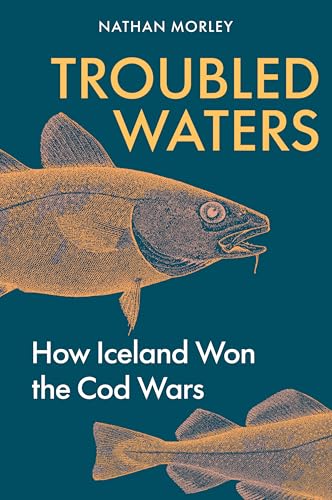
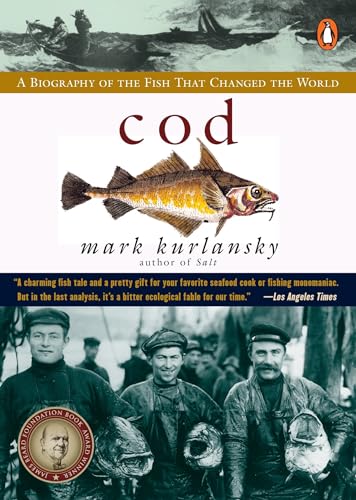
Think that was strange? These books will finish the job.
Thank you for reading. Every fact in this article is documented and sourced. You will find the references at the bottom if you want to dig further. I hope it surprised you at least once. That is always the intention.
I would love to hear your thoughts. Follow Econopass on social media and share your reaction hereafter as a social comment. And if you do not want to miss the next story, hit follow. There is always another forgotten truth waiting to be told.
Disclosure: This article may contain affiliate links. This means we may earn a commission if you click on a link and make a purchase at no extra cost to you. This applies to featured Amazon products or any other Econopass's partners.
These articles and stories are free because of a few ads. To support us, simply turn off your ad blocker for Econopass. It takes one click on the ad blocker icon in your browser. Thank you!
We use cookies to ensure that we give you the best experience on Econopass website. If you continue to use this site we will assume that you are happy with it.