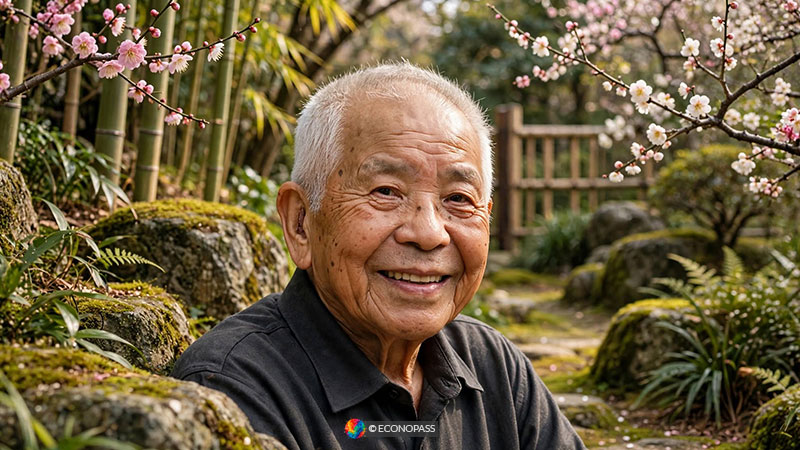
His name was Tsutomu Yamaguchi, and on the morning of August 6, 1945, he was standing roughly three kilometres from the centre of Hiroshima when the world’s first atomic bomb used in warfare detonated above the city. The flash was so bright it temporarily blinded him. The shockwave threw him to the ground and ruptured both his eardrums. His arms were badly burned. He was alive, and the question of what happened next is the part nobody expects.
He went back to work.
Not immediately, but within days. Yamaguchi was a naval engineer employed by Mitsubishi, in Hiroshima on a business trip. With his wounds bandaged and his hearing partially returned, he did what people in shock often do: he followed the next logical step. He boarded a train back to his home city. The city was Nagasaki. The date of his arrival was August 8, 1945.
The Morning of August 9
He reported to his Mitsubishi office in Nagasaki the following morning, bandages still on his arms, and began debriefing his supervisor on what he had witnessed in Hiroshima. His supervisor did not believe him. One bomb, Yamaguchi explained, had destroyed an entire city in a single flash. His supervisor told him he must be exaggerating. That a single weapon could not do what Yamaguchi was describing. Yamaguchi was still in the middle of that conversation at 11:02 a.m. when the second atomic bomb detonated 3.2 kilometres away.
The blast blew out the windows of the office. The same white flash. The same shockwave. Yamaguchi was knocked to the floor again, his bandages blown off, his wounds reopened. He had now been at the epicentre of both atomic bombings in history, within 72 hours, in two different cities. His supervisor, who had just finished telling him that one bomb could not destroy a city, was present for the second one.
Yamaguchi survived the second blast as he had survived the first: by being far enough from the hypocentre that the initial kill radius did not reach him, and by being shielded enough that the thermal pulse did not finish the job. Both times, distance and structure kept him alive by margins that were not guaranteed and not large. The fact that he lived was not a certainty. It was the narrowest kind of luck, applied twice.
What Came After
The years following the bombings were not easy, and Yamaguchi never claimed otherwise. He suffered chronic radiation-related illness for decades. He lost his hearing partially on multiple occasions. His wife and son were also exposed to the Nagasaki blast and lived with their own health consequences. The Japanese term for atomic bomb survivors is hibakusha, and it carried stigma for many years: employers were reluctant to hire them, families were reluctant to allow marriages, the fear of radiation being contagious mixing with the ordinary human discomfort of being near someone who had witnessed something unimaginable.
For most of his life, Yamaguchi did not speak publicly about what he had experienced. He was not unique in this. Many hibakusha stayed silent for decades, the trauma too large and the social cost of disclosure too real. It was not until he was in his 80s that Yamaguchi began to speak openly, and not until 2009, at the age of 93, that the Japanese government formally recognized him as the only person officially certified as a survivor of both bombings. He was the only one because he was the only one who had formally applied for dual certification. The others, an estimated 165 people who had been in both cities, had either died or never sought official recognition.
That number stops most people cold: 165. There were roughly 165 people who survived Hiroshima and were present in Nagasaki three days later. They had a name in Japanese: nijuu hibakusha, double bomb survivors. Most of them never told anyone. The weight they carried was not just physical.
What He Did With the Time He Had
In his final years, Yamaguchi became an anti-nuclear activist. He testified before the United Nations. He wrote a memoir. He gave interviews that circulated globally. He was not interested in being a symbol of survival as triumph. He was interested in making sure people understood what the weapons actually did, not in the abstract language of policy and deterrence, but in the specific, physical, human detail of what it looks like when a city disappears in the time it takes to blink.
He died on January 4, 2010, at the age of 93, of stomach cancer. Whether the cancer was related to his radiation exposure is not definitively established. He outlived most of the people who had been anywhere near either blast. He outlived the government that dropped the bombs. He outlived the Cold War that the bombs helped to start. He had more than six decades after Nagasaki to think about what he had seen, and he spent the last of them making sure someone was still listening.
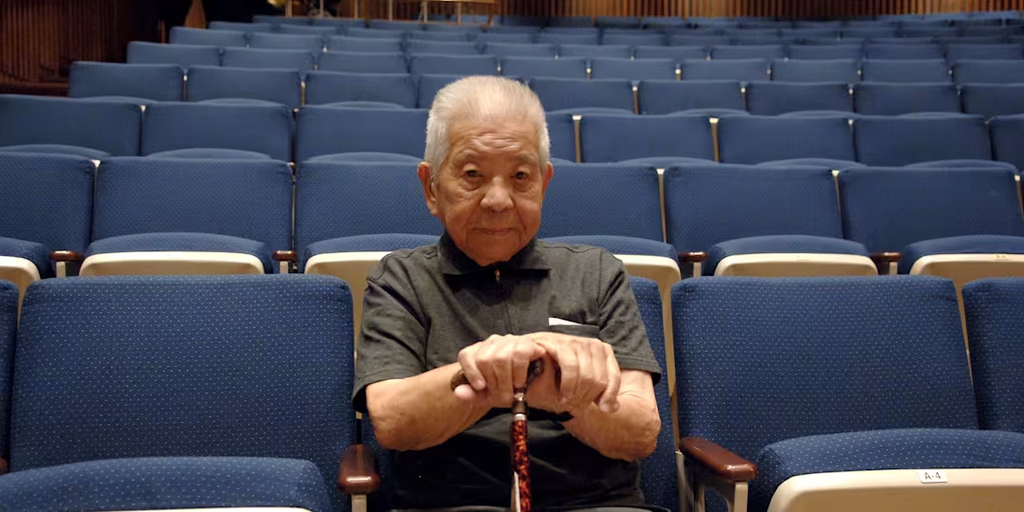
There is a photograph of Yamaguchi taken late in his life, sitting in a chair, looking directly at the camera. He is small and old and entirely composed. He does not look like a man defined by what happened to him. He looks like a man who decided, at some point, what he was going to do about it. The two cities did not break him. What they gave him, eventually, was something to say.
The world has roughly 12,500 nuclear warheads as of the last public count. Yamaguchi saw what two of them did. He spent his last years hoping the number mattered to someone who had not.
The world is stranger than anyone told you. I am just keeping count. Marco Bellinari
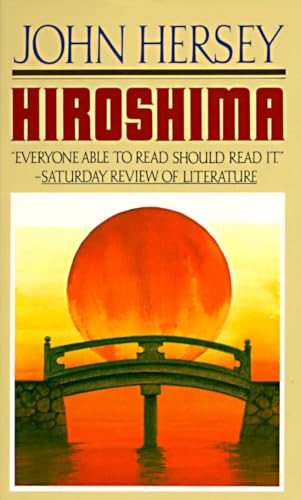
Think that was strange? These books will finish the job.
Thank you for reading. Every fact in this article is documented and sourced. You will find the references at the bottom if you want to dig further. I hope it surprised you at least once. That is always the intention.
I would love to hear your thoughts. Follow Econopass on social media and share your reaction hereafter as a social comment. And if you do not want to miss the next story, hit follow. There is always another forgotten truth waiting to be told.
Disclosure: This article may contain affiliate links. This means we may earn a commission if you click on a link and make a purchase at no extra cost to you. This applies to featured Amazon products or any other Econopass's partners.
FediBack: A Man Survived Both the Hiroshima and Nagasaki Atomic Bombs. He Lived to 93.
🟢 There were approximately 165 people who survived Hiroshima and were present in Nagasaki three days later. Most of them never told anyone. After reading this, what stays with you? Tell me below.
🟢 There were approximately 165 people who survived Hiroshima and were present in Nagasaki three days later. Most of them never told anyone. After reading this, what stays with you? Tell me below.
🟢 There were approximately 165 people who survived Hiroshima and were present in Nagasaki three days later. Most of them never told anyone. After reading this, what stays with you? Tell me below.
These articles and stories are free because of a few ads. To support us, simply turn off your ad blocker for Econopass. It takes one click on the ad blocker icon in your browser. Thank you!
We use cookies to ensure that we give you the best experience on Econopass website. If you continue to use this site we will assume that you are happy with it.