


Think about the last time you learned something genuinely new. A language, an instrument, a sport, a skill that required you to fail repeatedly before you got it. While you were struggling through the early stage, something was happening inside your skull that most people never picture correctly.
Your brain was not filling up. It was not getting bigger. It was not adding new compartments like a filing cabinet getting an extra drawer. What it was actually doing is stranger, more violent, and considerably more interesting than that.
It was destroying things. And that destruction was the point.
In 2004, researchers from the Max Planck Institute scanned the brains of people learning to juggle over a three-month period. The MRI results were unambiguous: the participants showed measurable increases in grey matter in the mid-temporal areas of the brain, regions involved in processing visual motion. This was neuroplasticity in action, the brain physically restructuring itself in response to learning. But then the researchers did something the popular version of the story usually forgets to mention. They told the participants to stop juggling. They scanned again three months later. The grey matter increase had partially reversed. The brain had started dismantling what it had built, because the skill was no longer being used. The brain does not preserve things out of sentiment. It preserves things that earn their keep.
This is the part that most explanations of neuroplasticity skip over. Learning is not just about forming new connections. It is equally about pruning old ones. Every second of every day, your brain is running a ruthless efficiency audit. Neural pathways that are used regularly get strengthened. Pathways that go quiet get trimmed. The technical term is synaptic pruning, and far from being a sign of decline, it is one of the primary mechanisms by which the brain gets better at things. A brain with fewer, stronger, more efficient connections outperforms a brain with more, weaker, more diffuse ones. The expert brain is not a fuller brain. It is a leaner one.
Think of it like a city road network. A new city has roads everywhere, many of them underused, some of them redundant. As the city matures, the heavily used routes get widened and upgraded. The quiet backstreets that nobody uses get closed or left to deteriorate. The city becomes more efficient not by adding more roads but by concentrating investment on the ones that actually matter. Your brain is doing the same thing, constantly, in response to what you do and do not practice.
The second mechanism is even more surprising. When you practice a skill repeatedly until it becomes automatic, your brain does not just strengthen the neural pathway. It wraps it in a fatty white substance called myelin. Myelin acts like insulation around an electrical cable. It dramatically increases the speed at which signals travel along the axon, the wire of the neuron, and reduces signal loss. An unmyelinated axon conducts signals at roughly 1 metre per second. A heavily myelinated axon conducts signals at up to 100 metres per second. The difference between a beginner and an expert is not just knowledge or experience. It is, literally, the thickness of the insulation on their brain’s wiring. The expert brain does not think faster. It conducts faster. The thoughts arrive before the conscious mind has had time to slow them down.
UCL researchers confirmed this in a landmark study: mice that were genetically prevented from producing new myelin could not learn to run on a complex wheel with unevenly spaced rungs, even though they could run perfectly well on a normal wheel. Their motor ability was intact. Their capacity to acquire a new motor skill was gone. The myelin was not decorative. It was load-bearing. Remove it, and the learning stops.
This has a direct and slightly unsettling implication for everything you are trying to learn. The awkward, frustrating, early stage of learning a skill, when you have to think consciously about every movement, every word, every decision, is not just psychological difficulty. It is the period before your brain has built the myelin sheath. You are driving on an unmyelinated road at 1 metre per second and wondering why it feels so slow. The fluency that comes later, the stage where the skill flows without effort, is not a change in your mind. It is a change in your brain’s physical infrastructure. You are now driving on a myelinated highway at 100 metres per second.
Here is the part that should make you think twice about what you practice. Myelin does not distinguish between good habits and bad ones. It wraps whatever you do repeatedly. Practice a golf swing with poor technique five hundred times and your brain will myelinate the poor technique. The signal will arrive faster and more reliably than ever. You will have become an expert at doing it wrong. This is why coaches are so insistent on correct form from the beginning, and why unlearning a deep habit is so much harder than learning a new one. You are not just building a new pathway. You are competing against a myelinated highway that your brain built in the wrong direction.
The famous London taxi driver studies showed that cabbies who had navigated the city for years had measurably larger hippocampal regions than control groups, and the longer they had been driving, the larger the difference. The brain had physically expanded the region that does spatial navigation in direct response to the demands placed on it. But here is the follow-up finding that fewer people know: when the taxi drivers retired, the hippocampal advantage began to shrink. The brain had invested in an asset and, when the asset stopped generating returns, it started reallocating the resources.
Your brain is not a library that stores everything you ever put into it. It is more like a muscle that grows in response to use and atrophies in response to neglect, except that it is simultaneously a demolition crew tearing down what no longer earns its place.
What are you practising today? Because whatever it is, your brain is building infrastructure around it right now. And it will keep that infrastructure exactly as long as you keep using it.
Now you know. The question is what you do with it.
Marco Bellinari
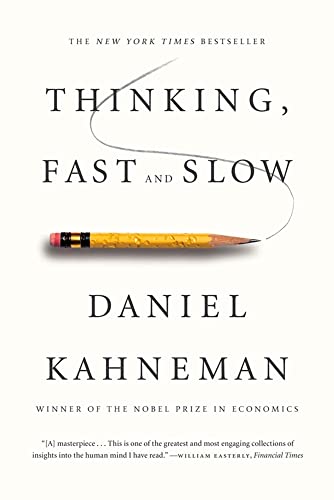
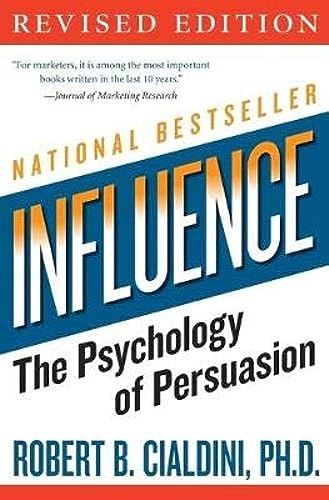
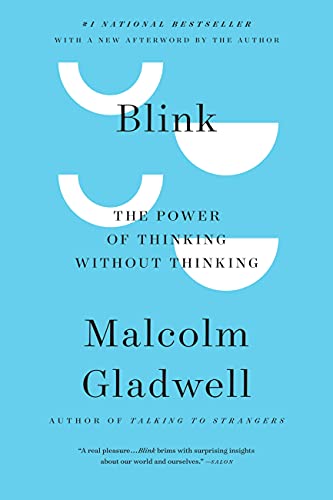
Want to understand yourself a little better? These books will help.
Sources
- Technology Networks. Learning New Motor Skills Can Change Myelination in the Brain. University of Colorado Anschutz, nodes of Ranvier, myelin remodelling during learning.
- UCL Wolfson Institute. Myelin Vital for Learning New Practical Skills. Oligodendrocytes, mouse complex wheel study, myelin production and skill acquisition.
- JoVE. Neuroplasticity. Draganski 2004 juggling study, synaptic pruning, myelination, London taxi driver hippocampus findings.

A Note from Marco Bellinari
Thank you for reading. Every fact in this article is documented and sourced. You will find the references at the bottom if you want to dig further. I hope it surprised you at least once. That is always the intention.
I would love to hear your thoughts. Follow Econopass on social media and share your reaction hereafter as a social comment. And if you do not want to miss the next story, hit follow. There is always another forgotten truth waiting to be told.