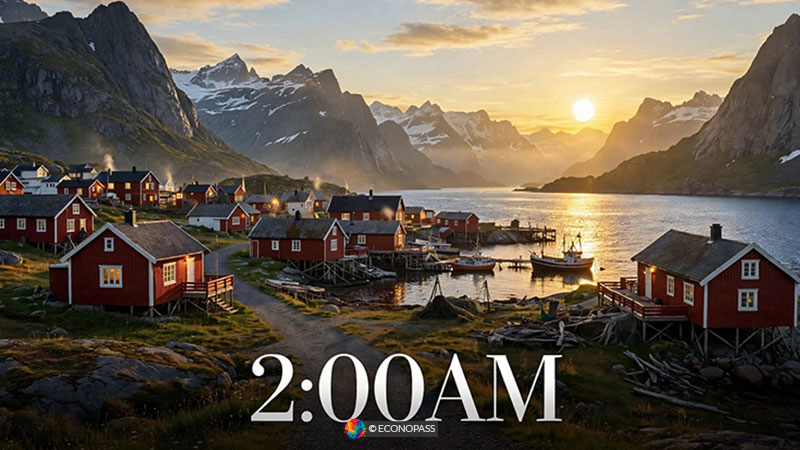
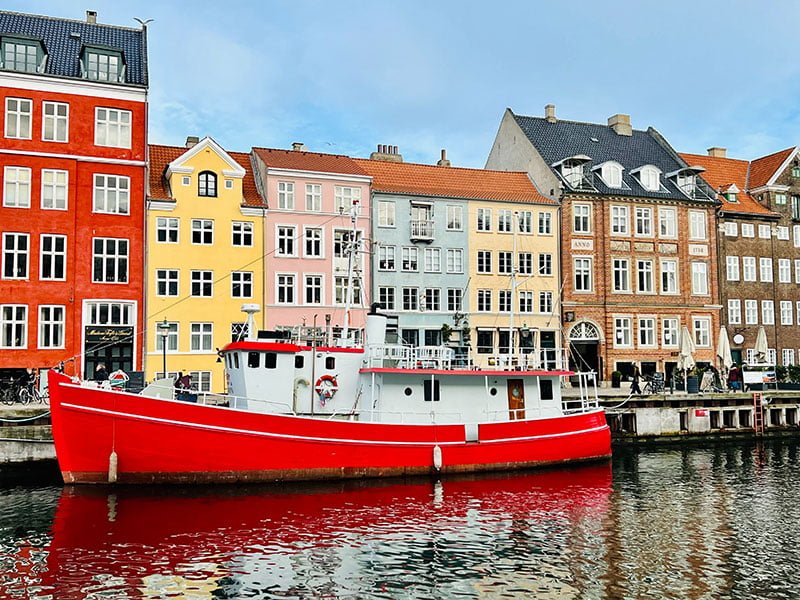
It is 2am in Tromsø, Norway. The sun is shining. It has been shining since May 20th. It will not set again until July 22nd. Right now, somewhere in the city, people are sitting at cafe tables in the sunlight drinking coffee, children are playing outside, and someone is probably mowing their lawn.
This is not a holiday. This is just Tuesday.
Tromsø sits at 69 degrees north, above the Arctic Circle, which means that for roughly two months every summer the sun never drops below the horizon at all. Not at midnight. Not at 3am. Not at any point during the 24-hour cycle. The sky does not go dark. It does not even go particularly dim. The midnight sun is simply up, doing exactly what the daytime sun does, at hours when your body has been informed by evolution that darkness is supposed to exist.
The assumption most people make when they hear this is obvious: it must be devastating for sleep. Two months of perpetual daylight, your circadian rhythm hammered by light signals at 3am, insomnia spreading through the population like a slow, sleepless epidemic. Logically, this makes complete sense. The brain uses light to regulate melatonin production, and melatonin is what tells your body it is time to sleep. No darkness means no melatonin signal means no sleep. Except this is not quite what happens.
The Tromsø Study, one of the largest and longest-running population health studies in the world, has been tracking the sleep patterns of the city’s residents for decades. Its findings on the midnight sun are counterintuitive. Sleep duration does not significantly change between the light season and the dark season. Tromsø residents sleep roughly the same amount in June as they do in December, when the polar night means the sun does not rise above the horizon at all between late November and mid-January. The brain, it turns out, is more adaptable than the logic would suggest, and the thick blackout curtains installed in virtually every Norwegian Arctic bedroom help considerably.
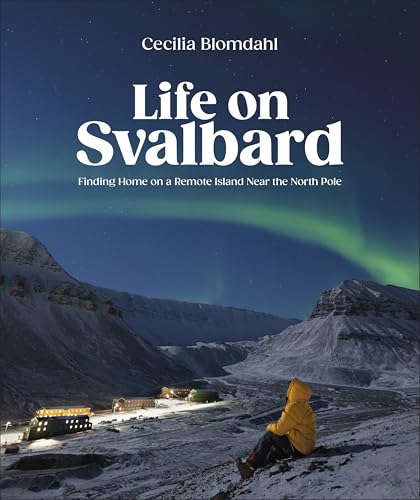
But here is where it gets strange. Researchers studying mental health across Norwegian latitudes expected to find that the further north you lived, the more the extreme light cycles would damage psychological wellbeing. They found the opposite. People in Tromsø, who experience both the midnight sun and the polar night in their most extreme form, report more positive attitudes toward winter than people in Oslo, who experience neither. And people in Longyearbyen on the Svalbard archipelago, where the polar night lasts from late October to mid-February and the midnight sun runs even longer, report more positive attitudes still.
The researchers’ explanation is cultural rather than biological. In Tromsø and especially in Svalbard, the extreme light cycles are not experienced as something that happens to you. They are woven into the identity of the place. The midnight sun is something you go out and do things in, not something you survive. Ski slopes stay open and floodlit through the polar night. Cafes fill up at midnight during the light season. The Norwegian concept of koselig, a kind of deliberate cosy intimacy, emerged partly as a cultural technology for surviving the dark months with morale intact. The people who live through the most extreme light variation have simply organised their culture around it.
The moment that captures this most vividly is what happens on the day the sun first reappears after the polar night. In Longyearbyen, this is a civic holiday called Solfestuka, sun festival week. Residents gather on the steps of the old hospital, the first place in the valley where the sun’s rays reach after weeks of absence, to stand in the light together. Schools close early. People cry. The return of the sun after months of darkness is experienced not as a relief but as a reunion, with an object that was missed the way you miss a person.
The flip side of this is what happens to outsiders. Visitors to Tromsø in summer frequently report the most disorienting sleep disruption of their lives, waking at 3am in bright sunlight completely certain it is morning, lying awake for hours unable to persuade their brain that night exists. The body clock, calibrated to wherever they came from, simply cannot make sense of what it is being shown. The residents who have lived there for years sleep through it without difficulty. The same sunlight that breaks a tourist’s sleep is invisible to a local’s melatonin system, trained over years to ignore the light signals that arrive at the wrong hours.
There is a lesson in this that reaches beyond Norway. The human circadian system is not a fixed mechanism. It is adaptive, tunable over time by consistent environmental exposure. The Sami people, the indigenous inhabitants of the Arctic regions of Norway, Sweden, Finland and Russia, do not recognise the four seasons that most of the world uses as its temporal framework. Their traditional calendar divides the year into eight seasons that map onto the actual cycles of light, ice, reindeer migration, and thaw. They have been navigating extreme photoperiods for thousands of years, and their cultural categories reflect what the biology eventually learns: that any light cycle, given enough time and the right cultural frame, can become normal.
Tromsø in July at 2am, the sun warm on your face, children on bikes, the fjord glittering. It sounds like a dream, and the first time most people experience it, it feels like one. The locals look at their watches, see 2am, and reach for their blackout curtains.
Then they go to sleep. The sun will still be there when they wake up.
The world is stranger than anyone told you. I am just keeping count. Marco Bellinari
Think that was strange? These books will finish the job.
Thank you for reading. Every fact in this article is documented and sourced. You will find the references at the bottom if you want to dig further. I hope it surprised you at least once. That is always the intention.
I would love to hear your thoughts. Follow Econopass on social media and share your reaction hereafter as a social comment. And if you do not want to miss the next story, hit follow. There is always another forgotten truth waiting to be told.
Disclosure: This article may contain affiliate links. This means we may earn a commission if you click on a link and make a purchase at no extra cost to you. This applies to featured Amazon products or any other Econopass's partners.
FediBack: There Is a Town in Norway Where the Sun Does Not Set for Two Months. Here Is What That Does to People.
🟢 People who live through the most extreme light cycles on Earth report more positive attitudes toward winter than people who live in normal climates. After reading this, does that surprise you? Tell me below.
🟢 People who live through the most extreme light cycles on Earth report more positive attitudes toward winter than people who live in normal climates. After reading this, does that surprise you? Tell me below.
🟢 People who live through the most extreme light cycles on Earth report more positive attitudes toward winter than people who live in normal climates. After reading this, does that surprise you? Tell me below.
These articles and stories are free because of a few ads. To support us, simply turn off your ad blocker for Econopass. It takes one click on the ad blocker icon in your browser. Thank you!
We use cookies to ensure that we give you the best experience on Econopass website. If you continue to use this site we will assume that you are happy with it.