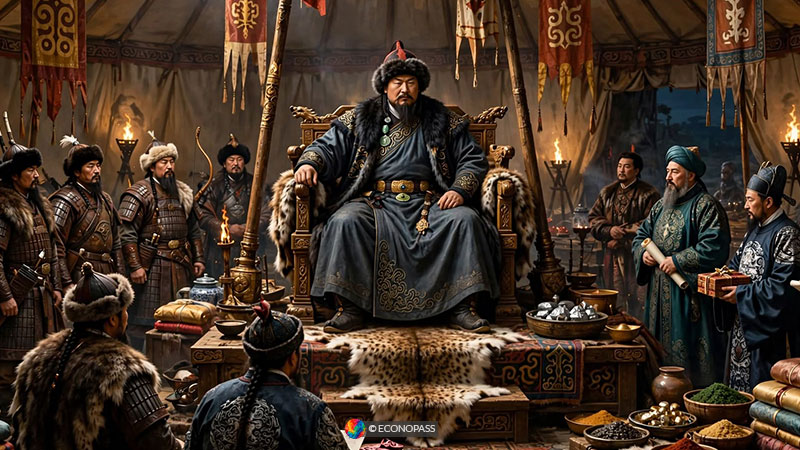
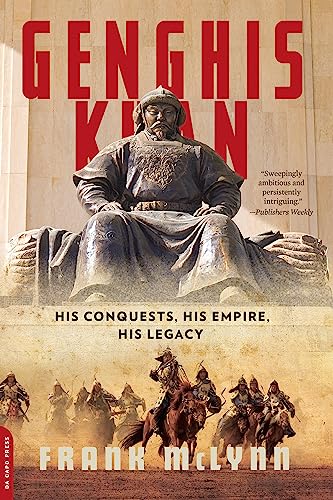
Genghis Khan killed somewhere between 40 and 60 million people. This figure is not disputed. The Mongol conquests of the thirteenth century caused one of the largest demographic collapses in human history. Entire cities were annihilated. Populations that had existed for centuries were erased within days. The Persian city of Nishapur was so completely destroyed that, according to contemporary accounts, the Mongols returned weeks later to behead any survivors who had emerged from the rubble.
This is the Genghis Khan that history remembers. The destroyer. The barbarian. The name that European parents used for centuries to frighten children into obedience.
What history has largely forgotten is what he built.
At its greatest extent, the Mongol Empire covered approximately 23 million square kilometres, stretching from the Sea of Japan to the Danube River. It was the largest contiguous land empire in human history. And across that empire, Genghis Khan created something that had never existed before: a unified system of trade, communication, law, and religious tolerance that connected East Asia to Western Europe for the first time.
The historians call it the Pax Mongolica. The Mongol Peace. The name is deliberate and slightly ironic: a peace established through extraordinary violence, maintained by the credible threat of the same. It lasted from approximately 1250 to 1350, a century during which a merchant, a diplomat, or a scholar could travel from China to Persia to the edges of Europe along roads that were safer than they had ever been, protected by Mongol garrisons, supplied by Mongol relay stations, and documented by Mongol passports.
Those passports were called paiza. They were tablets of gold, silver, or iron depending on the rank of the bearer, inscribed with the authority of the Khan. Marco Polo carried one. His account of receiving it describes being given a tablet that guaranteed his party would be supplied with horses, escorts, and whatever they needed across the entire empire. It worked. The Polo family crossed Central Asia multiple times under Mongol protection, which was how the first sustained direct contact between Europe and China became possible.
Prior to the Pax Mongolica, there is no documented evidence of direct trade between Europe and China. The intermediaries, the Persian merchants, the Arab traders, the Byzantine middlemen, had always stood between the two ends of the known world. The Mongols removed them. For one century, the Silk Road was a single administrative unit under a single legal system. Spices, silk, porcelain, and tea moved west. Gunpowder, printing technology, and mathematical concepts moved in both directions. Some historians argue that the intellectual cross-fertilisation of this period contributed directly to the conditions that produced the Renaissance.
The religious tolerance is perhaps the most consistently surprising aspect of the Mongol empire to modern readers. Genghis Khan himself was a shamanist who believed in sky spirits and mountain gods. His empire contained Buddhists, Muslims, Nestorian Christians, Daoists, and practitioners of every faith across the Eurasian landmass. His response to this diversity was, by the standards of any era, remarkably liberal. He passed laws declaring religious freedom throughout the empire. He exempted places of worship from taxation. He invited scholars and priests of every tradition to his court and engaged them in extended theological conversations, not to convert but to learn.
History.com notes that unlike many empire builders, Genghis Khan embraced the diversity of his conquered territories, and that his personal interest in spirituality extended across multiple traditions. He was accompanied on his Central Asian campaigns by Changchun, a Daoist sage from China, whose account of traveling with his Mongol patron survives. Genghis questioned him extensively about Daoist practices for prolonging life. He questioned Buddhist monks about reincarnation. He questioned Nestorian Christians about their theology. He appears to have found all of it genuinely interesting.
There is a phrase that circulated across the Mongol empire during the Pax Mongolica. It was said that a maiden bearing a nugget of gold on her head could wander safely throughout the realm. This was propaganda, of course. But propaganda reflects aspiration, and the aspiration of the world’s most powerful empire was law, order, and safe passage for merchants. That is not what the word barbarian usually brings to mind.
The Mongol legal code, the Yasa, was another innovation that contradicts the simple narrative. It prohibited the torture of prisoners in many circumstances, protected the property of merchants, established rules for the treatment of ambassadors (who were considered inviolable under Mongol law), and created standardised taxation across conquered territories. The Yasa was not a gentle document. Its punishments for theft, treachery, and adultery were severe. But it was a legal system, applied consistently across an empire that stretched across a dozen modern countries, at a time when most of Europe was governed by a patchwork of local feudal arrangements with no coherent rule of law.
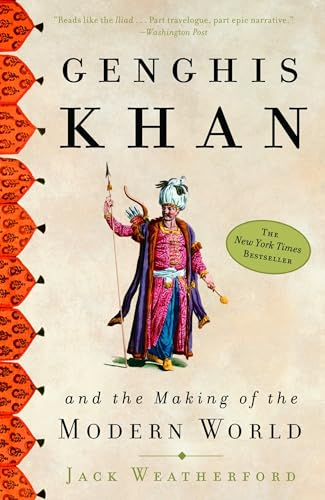
Jack Weatherford, the anthropologist whose book on Genghis Khan remains the most widely read modern reassessment, argues that the Mongols were not barbarian plunderers but visionary empire builders who rejected aristocratic privilege, transcended conventional boundaries, and refused to impose their own beliefs on subject peoples. He describes their commercial policies, including free trade, standardised passports, and an empire-wide courier system called the Yam, as laying the foundations of global commerce.
The violence and the achievement are not separate stories. They are the same story. The Pax Mongolica was built on the ruins of forty million deaths. The free trade zone was enforced by the army that had created it through conquest. The religious tolerance was extended to peoples who had been given no choice about joining the empire in the first place. To celebrate the Mongol achievement without the Mongol cost is dishonest. But to remember only the cost, and nothing of what was built, is equally incomplete.
Genghis Khan died in 1227, probably from injuries sustained in a fall from a horse, though the historical record is not entirely certain. His burial site remains unknown. He had given instructions that it should not be marked. According to tradition, the soldiers who accompanied his body killed everyone they encountered on the journey to prevent the location from being discovered. The guards who buried him were themselves killed. The location has never been found.
A man who connected the world refused to leave a mark on it. History has spent eight centuries arguing about what to do with that.
Every story has a version. I’m sharing mine. Marco Bellinari
The rabbit hole goes deeper. Go further. It is worth it.
Thank you for reading. Every fact in this article is documented and sourced. You will find the references at the bottom if you want to dig further. I hope it surprised you at least once. That is always the intention.
I would love to hear your thoughts. Follow Econopass on social media and share your reaction hereafter as a social comment. And if you do not want to miss the next story, hit follow. There is always another forgotten truth waiting to be told.
Disclosure: This article may contain affiliate links. This means we may earn a commission if you click on a link and make a purchase at no extra cost to you. This applies to featured Amazon products or any other Econopass's partners.
FediBack: Genghis Khan Killed Millions. He Also Created the First Global Free Trade Zone. Both Are True.
🟢 He killed 40 million people and created the world's first free trade zone. He granted religious freedom across an empire larger than any in history. And his burial site has never been found because everyone who knew was killed. What surprised you most? Tell me below.
🟢 He killed 40 million people and created the world's first free trade zone. He granted religious freedom across an empire larger than any in history. And his burial site has never been found because everyone who knew was killed. What surprised you most? Tell me below.
🟢 He killed 40 million people and created the world's first free trade zone. He granted religious freedom across an empire larger than any in history. And his burial site has never been found because everyone who knew was killed. What surprised you most? Tell me below.
These articles and stories are free because of a few ads. To support us, simply turn off your ad blocker for Econopass. It takes one click on the ad blocker icon in your browser. Thank you!
We use cookies to ensure that we give you the best experience on Econopass website. If you continue to use this site we will assume that you are happy with it.