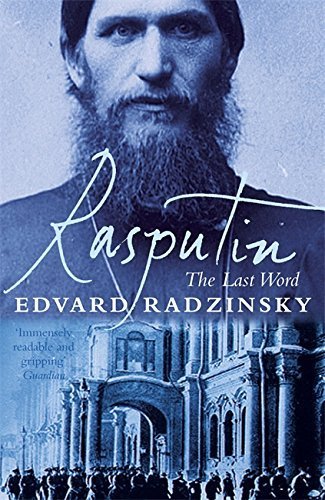
The story of Rasputin’s death is one of the most compelling in modern history. A Siberian peasant mystic, lured to a palace basement, fed cakes laced with enough cyanide to kill five men. Surviving the poison. Shot in the back. Getting up again. Shot three more times. Beaten. Thrown into an icy river. And still alive, clawing at the ice, until he finally drowned.
It is an extraordinary story. Almost none of it is supported by the forensic evidence.
The source of the legend is Prince Felix Yusupov, one of the five conspirators who killed Rasputin on the night of December 16, 1916. Yusupov published his memoir in 1927, followed by a second, more sensational account in 1952. Both were written while he was in exile in Paris, stripped of his wealth and position after the revolution. He changed his story between the two books in significant ways. The version most people know, the one involving the miraculous survival of the poison and the seemingly unkillable mystic, comes primarily from Yusupov’s second memoir, written thirty-five years after the event, when the embellishments had had decades to accumulate.
The autopsy tells a different story. No traces of poison were found in Rasputin’s system, nor was any water found in his lungs, suggesting that he was dead before he was thrown into the river. He did not drown. He did not survive the cyanide. The forensic evidence from a 2024 re-evaluation published in the journal Forensic Science, Medicine and Pathology concluded that Rasputin was likely executed by a close-range gunshot to the forehead, and that the traditional narrative of multiple near-miraculous survivals appears inconsistent with what the physical evidence shows.
There is a further complication. According to Douglas Smith, whose biography of Rasputin is the most thoroughly researched modern account, the man who was going to supply the conspirators with cyanide later wrote that he had a change of heart and gave them crushed aspirin instead. If this is accurate, there was never any cyanide. The poison that Rasputin supposedly survived may never have been administered. The entire foundation of the superhuman Rasputin legend collapses on this single detail.
What does the evidence actually support? Rasputin was shot, almost certainly at close range, and died from a gunshot wound. His body was then dumped in the Malaya Nevka River, where it was found two days later. The elaborate theatre of poison, survival, beating, and drowning was a narrative constructed by Yusupov, a man who had every reason to make himself the hero of a dramatic story and Rasputin the villain of a gothic one. The more prosaic truth is that a group of aristocrats shot an unarmed peasant in a basement and threw his body in a river. That is less cinematic. It is also more historically plausible.
The mythology around Rasputin’s life is equally worth examining. He was never ordained as a monk and never held any official position in the Russian Orthodox Church. His title “the Mad Monk” is a journalistic invention. He was a Siberian peasant with a gift for religious intensity and a remarkable ability to calm the haemophiliac Tsarevich Alexei, probably through hypnosis or the reduction of the anxiety that worsened the boy’s bleeding episodes. His relationship with the Tsarina Alexandra was genuine but there is absolutely zero historical evidence to suggest the pair engaged in any sort of sexual activity.
There is also the British intelligence angle, which serious historians treat with appropriate scepticism but cannot entirely dismiss. One of the bullets found in Rasputin’s body was fired from a Webley revolver, a British service weapon, not a Russian one. The theory that British agents were involved in the assassination, motivated by concerns that Rasputin was pushing Russia toward a separate peace with Germany, has been discussed by multiple historians. It has not been proven. The Webley bullet remains unexplained.
What makes Rasputin’s story genuinely strange is not the death but the life. A barely literate peasant from Siberia who arrived in St Petersburg and within a few years was dining with the royal family, influencing ministerial appointments, and receiving hundreds of letters a day from petitioners seeking his intercession. He did this without money, without education, without aristocratic connection, on the strength of personal magnetism and a peculiar spiritual intensity that eyewitnesses consistently struggled to describe. The legend of his death has overshadowed the actual mystery, which is how he got into that basement in the first place.
Yusupov succeeded at one thing beyond the killing itself. He turned Rasputin into a mythological figure whose supernatural resilience reflected the irrational fear the Russian aristocracy had of him in life. The story of the man who could not be killed was written by the man who killed him. History has been repeating it ever since.
Every story has a version. I’m sharing mine. Marco Bellinari
The rabbit hole goes deeper. Go further. It is worth it.
Thank you for reading. Every fact in this article is documented and sourced. You will find the references at the bottom if you want to dig further. I hope it surprised you at least once. That is always the intention.
I would love to hear your thoughts. Follow Econopass on social media and share your reaction hereafter as a social comment. And if you do not want to miss the next story, hit follow. There is always another forgotten truth waiting to be told.
Disclosure: This article may contain affiliate links. This means we may earn a commission if you click on a link and make a purchase at no extra cost to you. This applies to featured Amazon products or any other Econopass's partners.
FediBack: Rasputin Did Not Die the Way You Were Told. The Real Account Is Stranger.
These articles and stories are free because of a few ads. To support us, simply turn off your ad blocker for Econopass. It takes one click on the ad blocker icon in your browser. Thank you!
We use cookies to ensure that we give you the best experience on Econopass website. If you continue to use this site we will assume that you are happy with it.