

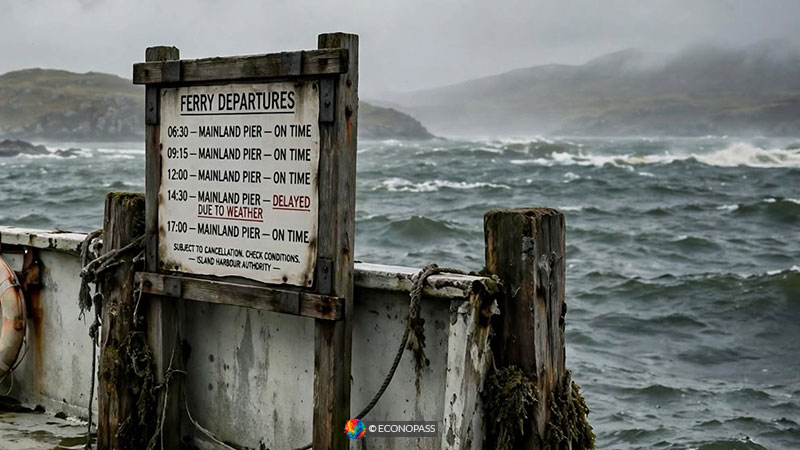
The ferry left the mainland port at eight in the morning, exactly as scheduled. The crossing took forty minutes. The island was small, its harbour occupied by a dozen fishing boats and a row of whitewashed buildings that faced the water precisely as they had in the photographs. The guesthouse was adequate. The restaurant served one dish each evening and it was always good. The plan was three nights. The return ferry was booked for the morning of the fourth day. What happened instead is a compressed version of a situation that plays out on islands, peninsulas, and remote coastal destinations around the world every season, and that the travel industry has no particular interest in preparing you for.
On the evening of the second day, the wind shifted. By the third morning the sea state had changed from the flat grey of the outbound crossing to something considerably less cooperative. The ferry company sent a text message: service suspended until further notice. The guesthouse had two other guests who had been there for a week already, waiting. Nobody mentioned this when the booking was made. The island had one ATM. It was out of cash. The nearest pharmacy was on the mainland. The return flights, booked on the assumption that the ferry would operate, were on day four.
What the Booking Process Does Not Tell You
Ferry services to small islands operate on meteorological tolerance thresholds that are rarely published and never explained to passengers at the point of booking. A sea state that feels moderate to an experienced mariner may exceed the safety limit for a passenger vessel operating a commercial route. The ferry company does not owe the stranded passenger an explanation of its decision-making process. It owes them a refund for the cancelled leg. The accommodation, the missed flights, the additional days of food and lodging, the professional obligations disrupted, the medications not packed because the return was supposed to be on day four: none of this is the ferry company’s liability.
The terms and conditions, available on the booking site behind a link that most passengers click through without reading, state this clearly. Force majeure covers weather cancellations. The company’s obligation ends at the refund for the cancelled ticket. The passenger who assumed that buying a return ticket constituted a guarantee of return was operating on an assumption the contract never made. This is not a scandal. It is the standard commercial arrangement for island ferry services globally. It is also information that would substantially change the packing decisions, insurance choices, and contingency planning of most passengers if it were stated plainly at the point of purchase rather than buried in the terms they agreed to without reading.
Alain de Botton, in The Art of Travel, argues that the anticipatory imagination of a destination is almost always richer and more controlled than the experience of actually being there, and that the gap between the two is the source of most travel disappointment. The stranded passenger experiences a specific version of this gap: the island was imagined as a place with an exit. The exit turned out to be conditional. The imagination had not included the weather, the ATM, the guesthouse owner’s carefully neutral expression when asked how long these things usually last. Travel planning tends to be planning for the journey in. It rarely extends to planning for the journey out failing.

Ring Video Doorbell
1080p HD video, motion detection, two-way talk, works with Alexa. See who is at the door from anywhere in the world.
View on AmazonThe Practical Arithmetic of Being Stranded
Six days on an island you planned to leave on day four produces a specific set of practical problems, each manageable individually and collectively exhausting. Clothing is the most immediately visible: one change of clothes, designed for a three-night trip, does not cover six days with dignity. The island had a small shop that sold practical items at prices calibrated to the absence of competition. The guesthouse provided laundry facilities of a kind. These problems were solved, with effort and expense.
The larger problems were less tractable. The return flights had been missed and the airline’s rebooking fees were substantial. Travel insurance covered weather disruption, but the policy excess meant that the first significant portion of additional costs was absorbed by the passenger. The professional meeting on day five happened without its attendee, via a phone connection that dropped twice during the most important part of the discussion. The medication that had run out by day five was eventually sourced through the island’s one pharmacy, which had it, but not in the correct dosage. These were the costs of a disruption that lasted six days. Disruptions of two weeks are documented. So are disruptions of three.
Bruce Chatwin, in In Patagonia, spent months navigating a region where transport connections were provisional, schedules were suggestions, and the gap between arriving somewhere and leaving it was determined largely by factors outside his control. His account normalizes a relationship with travel logistics that most contemporary tourists have entirely lost: the understanding that reaching a remote place involves surrendering a degree of schedule sovereignty that the booking process implies you retain. The ferry timetable on the island website is an aspiration under favorable conditions. The conditions are not always favorable. This was always true. The difference is that the booking process now presents the aspiration as a contract.
What the Six Days Actually Looked Like
By day five, the stranded passengers had reorganized around the reality of their situation. The guesthouse owner, who had seen this before, produced a bottle of local spirit on the fourth evening and explained, without being asked, that the weather pattern usually broke within a week. Usually. The fishing boats went out on day five, which was understood by everyone watching from the harbor as a sign that conditions were improving. The ferry resumed service on the morning of day seven. The crossing took forty minutes. The mainland port looked exactly as it had on the outbound journey, unremarkable in a way that felt, after six days, extraordinarily welcome.
The practical lessons extracted from the experience are not complicated. Travel insurance that explicitly covers weather-related accommodation and transport disruption, with a low excess, is worth the premium difference on any trip involving ferry-dependent islands. Packing an extra two days of clothing and medication beyond the planned trip length costs nothing significant in luggage terms and covers the most common disruption scenarios. Knowing the island’s resupply schedule, its ATM situation, and its pharmacy stock before departure requires twenty minutes of research that the booking process will never prompt you to do. The ferry will leave on time on the outbound journey, almost certainly. The question is what you have planned for the moment it does not come back.
Robyn Davidson, in Tracks, documented her solo crossing of the Australian desert by camel, a journey defined above all by her preparation for conditions that most people would consider disqualifying, and by her refusal to assume that the environment would accommodate her schedule. The island and the desert are different in almost every respect. The underlying principle is identical: remote places operate on their own terms, and the traveler who plans only for favorable conditions has not finished planning. The six days on the island were not an emergency. Nobody was in danger. They were an inconvenience produced entirely by the assumption that the return would be as predictable as the departure. It is an assumption worth examining before you board.
The Information That Was Always Available
The ferry company’s cancellation rate for the route, by month and by season, is not published on the booking site. It is available, for anyone willing to look for it, in maritime authority records, in travel forums where previous passengers document their experiences, and in the operating statistics that ferry companies file with regulatory bodies in most jurisdictions. The guesthouse reviews, read carefully rather than skimmed for star ratings, contained three separate mentions of weather delays in the previous two years. The island’s Wikipedia entry noted that the ferry service was weather-dependent and that disruptions of several days were not unusual in the shoulder season. This information was present before the booking was made. It was not consulted.
The lesson is not that the island should have been avoided. It was, as advertised, worth visiting. The lesson is that the booking process for remote destinations is designed to convert aspiration into transaction as efficiently as possible, and that the information most relevant to realistic planning is systematically absent from that process. The traveler who wants to know what happens when the ferry does not run has to find that out independently, before the ferry does not run, because the moment it does not run is too late to find it useful.
Not the highlights reel. Not the itinerary. Just what actually happened.
Simon De Lafronde


Sources
- Weather routing and ferry cancellations, Maritime Connector
- UK Government, Passenger rights on ferries
- EU Passenger Rights, Waterborne Transport, European Commission
- Travel insurance and weather disruption, InsureMyTrip
- Force majeure, Wikipedia

A Note from Simon de Lafronde
The advice and information in this article come from my experience and research. It’s intended to support your reading with evidence-based insights. If the article is covering wellness or any other health topics, this is not professional advice. Please consult appropriate professionals for your specific situation.
📖 Read MoreStill Curious? Don't Stop Here!

He Rented a Scooter in Vietnam Without an International Licence. He Had an Accident. His T...

She Left Her Bag at a Café Table in Rome for Thirty Seconds. The Surveillance Footage Show...
The Maldives Is Sinking. The Government Has Already Bought Land in Australia. The Resorts ...
They Photographed the Military Checkpoint Without Reading the Sign. The Camera Was Confisc...
The Tour Bus to Machu Picchu Left Without Her. She Was in the Bathroom. The Next Bus Was T...
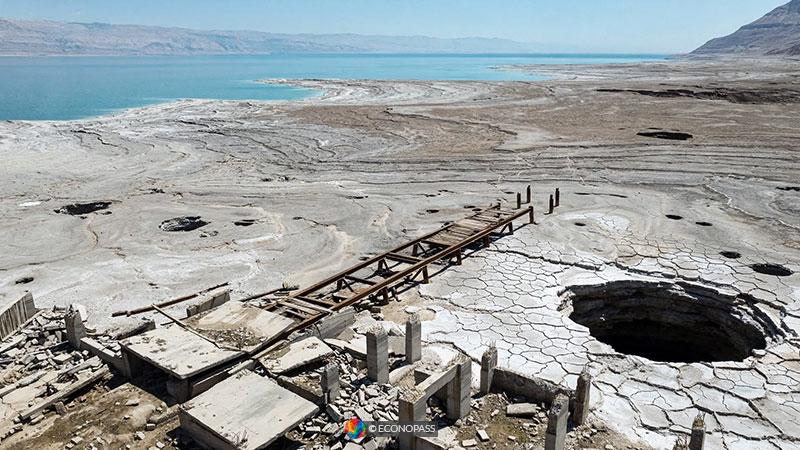
The Dead Sea Is Shrinking by One Metre Every Year. The Sinkholes Opening Around Its Shores...

Petra Was Not Lost. The Local Bedouin Knew Exactly Where It Was. The West Simply Had Not A...