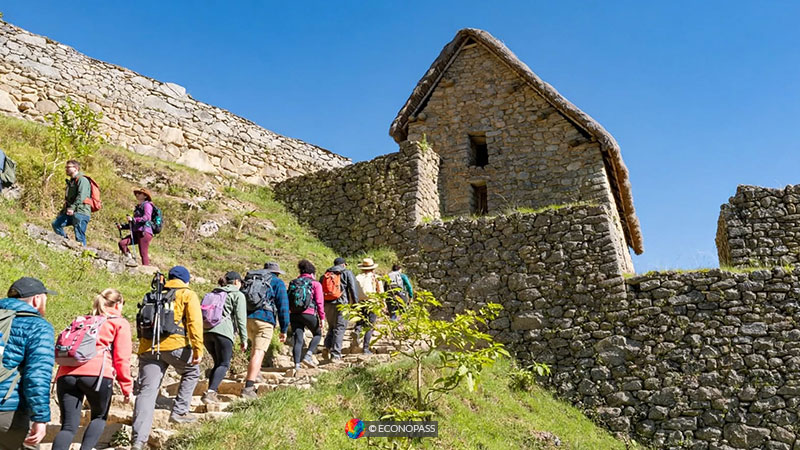
The bus from Aguas Calientes to the Machu Picchu entrance gate takes approximately twenty-five minutes. It runs on a ticketed schedule. Each departure carries a full load of visitors who have, in most cases, planned this particular day for months. The drivers do not hold the bus. This is not a policy quirk. It is a structural feature of a site that receives several thousand visitors per day through a single access road and cannot absorb the cascading delays that courtesy would produce.
She had been travelling for eleven days through Peru. Cusco, the Sacred Valley, the salt terraces at Maras. Machu Picchu was the last stop before her return flight. Her bus ticket was for the 06:00 departure, the first of the day, chosen specifically to reach the site before the crowds thickened. She was at the terminal at 05:45. She went to the bathroom at 05:57. The bus left at 06:00.
The Architecture of the Problem
Aguas Calientes, now officially called Machupicchu Pueblo, sits at the base of the mountain. There is no road connecting it to the wider Peruvian road network. Access is exclusively by train from Cusco or Ollantaytambo, or on foot via the Inca Trail. The bus service up the switchback road to the ruins is the only motorised option for reaching the entrance; the alternative is an approximately ninety-minute hike up a steep path.
The next scheduled bus after the 06:00 departure was not, as she had initially hoped, an hour later. The gap in the morning schedule was longer. The ticket office, when she reached it, confirmed that the next available seat on a bus with space was at 18:00. This information arrived at approximately 06:03.
The last train back to Ollantaytambo departed Aguas Calientes at 17:20. A bus arriving at the Machu Picchu gate at approximately 18:25 would place her at the ruins after the site’s closing time of 17:00, with no mechanism for descending back to town other than the bus itself, which returns on the same schedule. The mathematics of the situation closed around her within about four minutes of the original bus pulling away. Mark Adams, in Turn Right at Machu Picchu, describes the logistical rigidity of the site as a defining characteristic of the visitor experience: Machu Picchu is simultaneously one of the most visited archaeological sites on Earth and one of the least forgiving of unplanned variation.
She walked to the hiking path. It took eighty-seven minutes. She counted them.
These Little Gadgets Solve Something You Didn't Know Was Annoying You.
The kind of find you send to three friends immediately. Small, smart, oddly satisfying.
Find Your GadgetWhat the Mountain Actually Requires
The hike from Aguas Calientes to the Machu Picchu entrance is not a casual alternative. It gains approximately 400 metres of elevation over roughly 7.5 kilometres of path that runs parallel to the switchback road. In the early morning it is humid and steep. The stone steps are uneven. The path is not well lit before dawn. She had a daypack with water and a light jacket. She did not have hiking boots. She had the shoes she had planned to wear for a guided tour.
She arrived at the entrance gate at 07:28, behind the first wave of bus arrivals but ahead of the second. Her entry ticket, booked months in advance for the 06:00 slot, was time-restricted. The gate staff examined her ticket, noted the discrepancy, and after a conversation she described as unexpectedly calm on both sides, allowed her entry on the basis that her assigned time window had not yet fully expired under the site’s grace period policy.
Hiram Bingham, who brought Machu Picchu to international attention after his 1911 expedition, described in Lost City of the Incas a journey to the site that involved days of travel through difficult terrain, local guides, and genuine uncertainty about whether the ruins he had been told about actually existed. The contemporary visitor experience, with its ticketing windows, scheduled buses, and entrance grace periods, represents a different kind of uncertainty: not whether the place exists, but whether the bureaucratic system surrounding it will admit you on the day you planned.
She spent four hours at the site. She described it, when asked later, as genuinely extraordinary. She also described the hike up as the part she remembered most clearly.
The Train She Almost Missed Twice
The descent by bus took twenty-five minutes. She was at the Aguas Calientes train station by 14:30, well ahead of the 17:20 departure. She bought a meal at a restaurant near the station and sat outside. At 16:45 she returned to the platform. The 17:20 train was running approximately forty minutes late due to a track inspection between Aguas Calientes and Ollantaytambo. It departed at 18:03.
The connection in Ollantaytambo to the bus service to Cusco operates on a schedule that does not wait for delayed trains. She missed the last direct bus. A shared taxi was available. She arrived in Cusco at 22:40, three hours later than planned, in time for a meal that most restaurants had already stopped serving and an early morning transfer to the airport that now felt, in retrospect, inadequately buffered.
Ernesto Guevara, travelling through Peru decades before Machu Picchu became a managed international destination, wrote in The Motorcycle Diaries about a different kind of logistical uncertainty: the kind produced not by ticketing systems and schedules but by the basic unpredictability of travel in a country where infrastructure was thin and patience was the primary navigational tool. The problems have changed. The fundamental experience of a journey not going as planned has not changed at all. What changes is only which specific system fails you and in what sequence.
She made her flight. She checked in with eleven minutes to spare before the gate closed. She had been awake for twenty-two hours.
What the Bathroom Stop Cost
Two minutes. That is the actual duration of the gap between her entering the terminal bathroom and the bus pulling out of the stop. Two minutes produced an eighty-seven minute hike at elevation in the wrong shoes, a grace-period negotiation at the entrance gate, a missed direct bus, a shared taxi at night, and an arrival time that made the following morning’s airport transfer feel like a controlled emergency.
The site itself was everything she had expected. The stonework. The scale of the terraces against the cloud forest. The way the mountains frame the ruins from the Sun Gate. None of that was diminished by the morning’s events. It was simply framed by them, the way most things you work harder than expected to reach tend to be framed by the work.
She said she would go back. She said she would take the first bus. She said she would use the bathroom in the hotel.
Not the highlights reel. Not the itinerary. Just what actually happened.
Simon De Lafronde
Sources
- Machu Picchu, Wikipedia
- Aguas Calientes, Wikipedia
- Inca Trail to Machu Picchu, Wikipedia
- Hiram Bingham III, Wikipedia
- Peru Rail, Wikipedia

A Note from Simon de Lafronde
The advice and information in this article come from my experience and research. It’s intended to support your reading with evidence-based insights. If the article is covering wellness or any other health topics, this is not professional advice. Please consult appropriate professionals for your specific situation.
📖 Read MoreStill Curious? Don't Stop Here!
The Dead Sea Is Shrinking by One Metre Every Year. The Sinkholes Opening Around Its Shores...
Petra Was Not Lost. The Local Bedouin Knew Exactly Where It Was. The West Simply Had Not A...
They Hired a Local Guide in the Amazon. He Left Camp Before Dawn on Day Two. They Did Not ...
The Backpack Was Switched at the Bangkok Airport. He Did Not Notice Until the Customs Dog ...
Chernobyl Has More Wildlife Now Than Before the Disaster. Removing the Humans Was the Best...
The Aral Sea Was the Fourth Largest Lake in the World. You Can Now Walk to the Rusting Shi...
She Tipped Generously at Every Stop in Japan. Every Single Person Looked Uncomfortable. No...