


You have spent three days preparing. You have rehearsed your answers to the obvious questions. You know your CV by heart. You have researched the company, practised your handshake, chosen your clothes carefully, and arrived two minutes early. You sit down across from the interviewer.
In the next ten seconds, while you are still arranging yourself in the chair, the decision is already forming.
This is not pessimism. It is neuroscience. And understanding it changes how you think about every professional interaction you will ever have.
A study from the University of South Florida asked participants to watch silent 12-second clips of job interview footage and then make hiring recommendations. Those recommendations matched, to a statistically significant degree, the decisions made by people who had watched the entire interview. Twelve seconds of silent footage, no words, no answers to any questions, just the candidate walking in, sitting down, and settling in their seat, produced hiring predictions that were substantially consistent with the full evaluation. The questions that followed, the prepared answers, the carefully constructed examples of leadership under pressure, the five-year plan, made surprisingly little difference to the outcome that the first twelve seconds had already sketched.
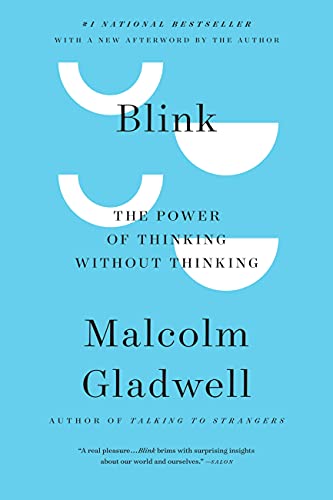
The psychological mechanism behind this is called thin-slicing, a term popularised by Malcolm Gladwell in Blink, which refers to the brain’s ability to extract meaningful signals from very small samples of behaviour. Thin-slicing evolved because it was useful. In environments where threat assessment had to be fast, the brain that could process a stranger’s posture, eye contact, and movement in under a second and generate a rough verdict had a survival advantage over the brain that deliberated. The problem is that the interview room is not the savanna, and the signals the brain prioritises in a snap judgment, grooming, confidence, height, vocal tone, physical similarity to people the interviewer already trusts, are only loosely correlated with whether someone will do the job well.
What happens after the first impression has formed is the part that should make every interviewer slightly uncomfortable. The brain does not approach the rest of the interview as an open evaluation. It approaches it as a confirmation exercise. If the first impression was positive, subsequent answers are interpreted generously. Hesitations become thoughtfulness. Gaps in experience become opportunities for growth. If the first impression was negative, the same answers are interpreted critically. Confidence becomes arrogance. Preparation becomes rehearsed insincerity. The interview proceeds to its conclusion, and the interviewer believes they have conducted a thorough evaluation. What they have actually done is spend forty-five minutes building a case for the conclusion they reached in the first ten seconds.
A large-scale study examining over 600 job interviews found that 4.9 percent of interviewers made their decision within the first minute. Another 25.5 percent had decided within the first five minutes. Nearly 60 percent of decisions were made within the first fifteen minutes of a thirty-minute interview. The remaining half of the scheduled interview time was, for the majority of candidates, a formality. The questions were still being asked. The answers were still being given. But the outcome had already been shaped by what happened before any substantive content had been exchanged. The small talk portion at the beginning of an interview, the casual question about the journey in, the comment about the weather, is doing more work than most candidates realise.
The halo effect compounds this further. A strong first impression does not just colour the interviewer’s view of subsequent answers. It colours their view of attributes the interview does not even assess. Research consistently shows that candidates who make a good initial impression are rated higher on intelligence, diligence, and cultural fit, regardless of whether any evidence for these qualities emerged during the interview itself. The positive first impression creates a glow that extends to things the interviewer has no actual information about. The reverse is equally true. A weak first impression creates a shadow that darkens attributes the candidate may genuinely possess.
There is a partial defence available to interviewers who want to reduce this effect. Structured interviews, which use identical questions for all candidates and score answers against predefined criteria, reduce but do not eliminate the first impression bias. The same research on thin-slicing found that even in highly structured interviews, the initial impression effect persists, though it weakens over the course of the interview as more information accumulates. One research team suggested a practical intervention: drop the scores from the first two or three questions when calculating the final rating, the way diving competitions drop the highest and lowest scores from a panel of judges. The scores given when the interviewer’s first impression is freshest are the most contaminated.
What does this mean for candidates? It means that the handshake, the eye contact, the energy you bring through the door, the first sentence you say in response to the opening small talk, are not the warm-up. They are the interview. The questions that follow are important, and answering them well matters. But the contest for the positive first impression is the one that sets the frame for everything else. A candidate who answers every question brilliantly but walks in looking uncertain and distracted is fighting against a narrative the interviewer has already started writing. A candidate who walks in with calm confidence and genuine warmth has already written the first chapter of a different story, and the questions are just filling in the details of a narrative that began the moment they appeared in the doorway.
The next time you interview someone, notice what you think of them in the first ten seconds. Then notice how hard you work, for the rest of the session, to find evidence that your first impression was right.
Most of us find plenty.
Now you know. The question is what you do with it.
Marco Bellinari
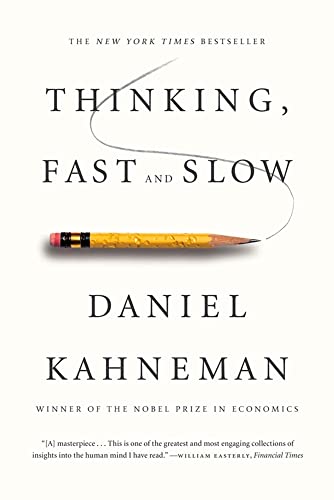
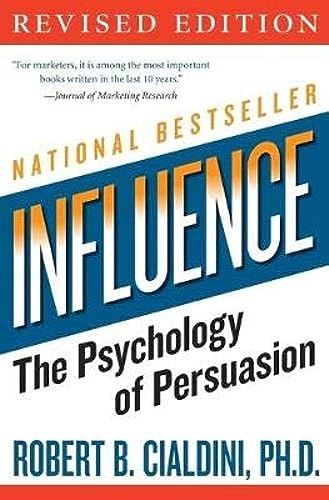
Want to understand yourself a little better? These books will help.
Sources
- University of South Florida. The Effect of Thin Slicing on Structured Interview Decisions. Schmidt 2007. 12-second silent footage study, nonverbal behaviour and hiring recommendations.
- GovExec. Here Is How Quickly Interviewers Decide Whether or Not to Hire Someone. 600 interview study, decision timing data, interview order effects.
- HR Zone. Are First Impressions Unfairly Influencing Your Hiring Process? Thin-slicing in structured interviews, score-dropping intervention, confirmation bias mechanism.

A Note from Marco Bellinari
Thank you for reading. Every fact in this article is documented and sourced. You will find the references at the bottom if you want to dig further. I hope it surprised you at least once. That is always the intention.
I would love to hear your thoughts. Follow Econopass on social media and share your reaction hereafter as a social comment. And if you do not want to miss the next story, hit follow. There is always another forgotten truth waiting to be told.