

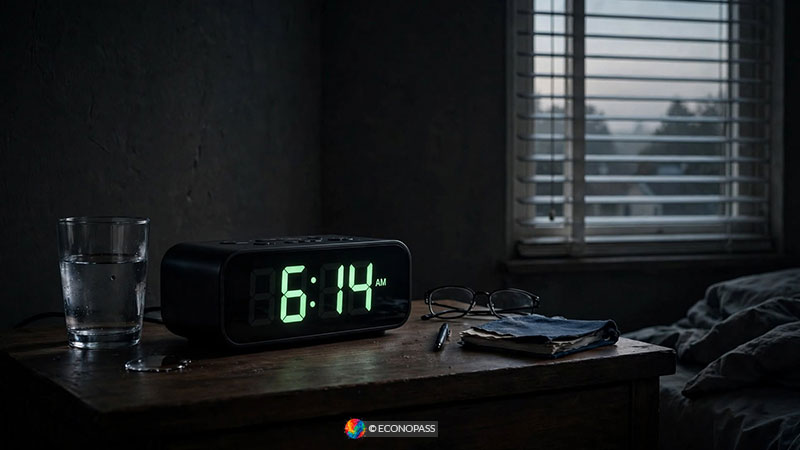
In 2011, researchers published a study of Israeli parole judges that became one of the most cited pieces of evidence in the science of decision-making. The judges reviewed cases throughout the day in sessions separated by food breaks. At the start of each session, roughly sixty-five percent of decisions were favorable to the prisoner. As each session progressed, that figure declined steadily. By the end of a session, just before a break, favorable rulings had dropped to nearly zero. After the break, the figure jumped back to around sixty-five percent and the cycle began again. The cases had not changed. The evidence had not changed. The judges had changed. Specifically, their brains had changed.
This is not a story about judicial bias, though it is that too. It is a story about something more fundamental: the fact that the human brain is not a stable instrument. Its capacity for careful reasoning, its tolerance for risk, its willingness to extend benefit of the doubt, its resistance to taking the easy option, all of these vary across the day in patterns that are largely biological, partially genetic, and almost entirely ignored by the institutions and individuals who rely on the brain to function consistently. You are not the same person at nine in the morning that you will be at three in the afternoon or eleven at night. The science is unambiguous on this point. What you do with it is your problem.
The Clock That Runs Everything
The suprachiasmatic nucleus is a cluster of roughly twenty thousand neurons sitting in the hypothalamus, just above where the optic nerves cross. It is the master clock of the human body, receiving light signals from the eyes and using them to synchronise a cascade of biological processes: hormone release, body temperature, immune function, metabolism, and cognitive performance. Every cell in the body contains its own molecular clock. The suprachiasmatic nucleus coordinates them. When it is functioning in alignment with the external light-dark cycle, the body operates on a roughly twenty-four-hour rhythm called the circadian rhythm.
Within that rhythm, cortisol plays a specific role in the morning. In the first thirty to forty-five minutes after waking, cortisol levels rise sharply in what researchers call the cortisol awakening response. This spike promotes alertness, sharpens attention, and prepares the brain for analytical work. It is not a stress response in the way cortisol is commonly understood. It is the brain’s method of initialising itself. The problem is that this window does not last indefinitely, and what replaces it depends on when you were born.
The cortisol awakening response in the first forty-five minutes after waking is the brain initialising itself for the day. It promotes analytical thinking and sharp attention. It also ends. What comes next is where chronotype matters.

eufy E25 Robot Vacuum & Mop
Powerful suction, mop combo, smart navigation, works with Alexa. Set it, forget it, come home to clean floors.
View on AmazonWhy Some People Are Not Morning People
Chronotype is the technical term for an individual’s preferred timing of sleep and wakefulness. It is not a personality trait in the motivational sense. It is a biological parameter with a significant genetic component, involving variants in genes including PER3, CLOCK, and several others that regulate the timing of the circadian system. Research on large populations suggests roughly twenty-five percent of people are strongly morning-oriented, twenty-five percent are strongly evening-oriented, and the remaining fifty percent fall somewhere in between.
Till Roenneberg’s decades of research on chronobiology, documented in Internal Time, established that chronotype is not a lifestyle choice. Evening types are not lazy or undisciplined. Their circadian clocks run on a later schedule than those of morning types, meaning their cortisol awakening response, their peak body temperature, their optimal window for analytical performance, all arrive later in the day. When society requires them to function at nine in the morning, they are operating significantly below their cognitive peak. Roenneberg coined the term social jetlag to describe the chronic misalignment between biological time and social time that most evening types live with every working day of their adult lives.
Social jetlag is the gap between when your biology wants you to sleep and when your schedule requires you to be awake. For evening chronotypes in standard working hours, this gap can be two to four hours every day. The cognitive cost accumulates the way any chronic sleep restriction does.
The Shape of a Day
For morning chronotypes, the cognitive day follows a predictable arc that Daniel Pink synthesised from research across psychology, chronobiology, and behavioural economics in When. Performance peaks in the late morning, when analytical capacity, working memory, and inhibitory control are at their strongest. A trough arrives in the early-to-mid afternoon, when vigilance drops, mood declines, and the probability of making an error increases substantially. A recovery follows in the late afternoon and early evening, when mood improves and creative thinking, which benefits from slightly looser cognitive inhibition, can reach a secondary peak.
For evening chronotypes, this pattern is shifted several hours later and in some cases partially reversed. The peak arrives in the afternoon or evening, the trough may fall in the morning, and the recovery can extend into late night. This means that the same person, tested at nine in the morning and again at nine in the evening, will produce measurably different results on cognitive assessments. The difference is not fatigue in the ordinary sense. It is the difference between operating at the right point in the biological cycle and operating at the wrong one.
What Changes When the Clock Shifts
The cognitive changes across the day are not limited to speed or accuracy on attention tasks. They affect the architecture of decision-making itself. During peak hours, the brain applies more deliberate, analytical processing to problems. During the trough, it defaults more readily to heuristics, mental shortcuts that reduce the cognitive load of deciding at the cost of accuracy and nuance. The parole judges studied in 2011 were not making worse decisions because they were biased against prisoners in the late morning. They were making worse decisions because the cognitive resources required for careful case evaluation had been depleted by sustained decision-making across a session, a phenomenon called decision fatigue, and because their biological cycles were not aligned with the institutional schedule they were required to follow.
Risk tolerance also shifts across the day. Studies measuring financial risk-taking at different times of day have found that risk appetite is generally higher in the morning and lower in the afternoon, with individual variation based on chronotype. Testosterone, which influences risk-taking behaviour, follows a diurnal pattern, typically peaking in the morning hours. The implications for any decision with a risk dimension, financial, medical, legal, personal, are significant and almost entirely unaddressed by the contexts in which those decisions are made.
Risk tolerance, analytical depth, and resistance to cognitive shortcuts all shift measurably across the day. The time at which a decision is made affects its quality independently of the information available. This is not widely factored into the design of any institution that requires decisions to be made.
The Sleep Architecture Problem
The cognitive variation across the waking day does not exist in isolation from what happens during sleep. Matthew Walker’s synthesis of sleep research in Why We Sleep establishes that the brain’s performance across the day is substantially determined by the quality and architecture of the sleep that preceded it. REM sleep, which is concentrated in the later hours of a sleep period, is disproportionately important for emotional regulation, creative thinking, and the consolidation of complex memories. When sleep is cut short, whether by an alarm clock, by insomnia, or by the demands of a schedule that does not accommodate an individual’s chronotype, the lost sleep is disproportionately REM sleep. The consequence is a daytime brain that is not merely tired but structurally compromised at the functions that REM sleep was maintaining.
The institutions that require people to be at desks, in courtrooms, in operating theatres, at trading terminals, at eight or nine in the morning have not generally incorporated this research into their design. The assumption embedded in most professional and educational schedules is that human cognitive performance is roughly constant across the day and that the relevant variable is effort. The research suggests that effort is substantially less important than timing, and that timing is substantially determined by biology rather than preference. You are a different person at night than in the morning. You were always going to be.
Now you know. The question is what you do with it.
Marco Bellinari


Sources
- Extraneous factors in judicial decisions, PNAS, Danziger et al. 2011
- Circadian rhythms and sleep in humans, Nature Reviews Neuroscience
- Chronotype and social jetlag, Science
- The cortisol awakening response, Psychoneuroendocrinology review
- Decision fatigue, American Psychological Association Monitor
A Note from Marco Bellinari
Thank you for reading. Every fact in this article is documented and sourced. You will find the references at the bottom if you want to dig further. I hope it surprised you at least once. That is always the intention.
I would love to hear your thoughts. Follow Econopass on social media and share your reaction hereafter as a social comment. And if you do not want to miss the next story, hit follow. There is always another forgotten truth waiting to be told.
Still Curious? Don't Stop Here!

Why Music Gives You Chills. Not Everyone Gets It and the Difference Says Something About Y...

The Reason You Trust a Confident Person More Than a Competent One. Even When You Know Bett...

Why You Cannot Tickle Yourself. The Answer Reveals How Your Brain Predicts Everything.
Your Brain Treats Rejection the Same Way It Treats a Broken Bone. The Pain Is Not Metaphor...
Why You Are More Likely to Say Yes When You Are Tired. And Who Knows This Better Than You ...
You Have Two Different Memory Systems. One of Them Is Lying to You.

Why Helping Someone Makes You Feel Better Than Being Helped.