You have never met someone and thought nothing of them. Not once. Neither has anyone who has ever met you.
The moment two human beings encounter each other, an evaluation begins that neither party controls and neither party can stop. It happens faster than conscious thought. It happens before you have said a word. And by the time seven seconds have passed, the other person has already formed an opinion of your competence, your trustworthiness, and whether they like you. That opinion will influence every interaction you have with them from that point forward.
The science on this is not ambiguous. What is surprising is how much happens in those seconds, and how little any of it is fair.
Princeton psychologists Janine Willis and Alexander Todorov found that judgments of trustworthiness from a face alone are formed in as little as one tenth of a second. Longer exposure does not significantly change the verdict. It only makes people more confident in the conclusion they already reached.
Seven seconds is actually the generous version. The brain begins processing a stranger’s face before you have consciously registered that you are looking at one. What it is doing in those milliseconds is running an assessment programme that has not changed in a hundred thousand years: is this person a threat or an ally? Can I trust them? Are they stronger than me? Do they have status?
These were life-or-death calculations for your ancestors, who encountered strangers in environments where the wrong judgment could be fatal. The brain that runs this assessment is the same brain you brought to your last job interview, your last first date, your last meeting with someone you needed to impress. Evolution has not caught up with the office.
What exactly is being assessed in those seconds? Psychologists have mapped it with uncomfortable precision.
The first thing the brain evaluates is warmth. Is this person well-intentioned toward me? This is processed before competence, before attractiveness, before any other quality. Warmth is detected primarily through facial expression and body language, particularly in the first moments of eye contact. A person who appears cold or guarded in the first seconds faces an uphill battle that almost no subsequent display of competence can fully reverse.
The second assessment is competence. Does this person appear capable? This is read through posture, the firmness of a handshake, the quality of eye contact, and the first words spoken. Studies show that HR professionals make a hiring judgment about a candidate within the first ninety seconds of an interview, and up to seventy percent of them stick to that judgment regardless of what follows.
Seventy percent of hiring decisions are effectively made in the first ninety seconds. The rest of the interview is largely the brain searching for reasons to justify a conclusion it has already reached.
And this is where it gets genuinely uncomfortable. Because the brain does not stop at forming a first impression. It immediately begins a process called confirmation bias, in which every subsequent interaction is filtered through the lens of that initial verdict. If the first impression was positive, ambiguous behaviours get interpreted generously. If it was negative, identical behaviours are read with suspicion. The same joke lands differently. The same mistake is forgiven or remembered. The same idea is taken seriously or dismissed.
Solomon Asch demonstrated this in a landmark 1946 experiment. He gave participants identical lists of personality traits describing the same fictional person, but in different orders. When positive traits came first, the person was rated warmly. When negative traits came first, even the same positive traits were reinterpreted as less genuine. The content was identical. The sequence changed everything. This is the primacy effect, and it operates in every first meeting you will ever have.
Edward Thorndike discovered something related in 1920 while studying how military officers rated their subordinates. Officers who rated a soldier as physically impressive also tended to rate them as more intelligent, more reliable, and better leaders, without any additional evidence. Thorndike called this the halo effect: one positive trait creates a glow that illuminates everything else. One negative trait creates a shadow that darkens it. The brain does not evaluate people as collections of independent qualities. It takes a shortcut.
The halo effect means that if someone decides they like you in the first seven seconds, they will interpret your subsequent mistakes as exceptions. If they decide they do not, they will interpret your subsequent successes as anomalies.
There is one more layer to this that most people find the most disturbing. The first impression you form of someone shapes not just how you see them, but how they see you. Your brain’s assessment produces micro-expressions: tiny, involuntary facial movements that the other person reads unconsciously and responds to. If your brain decides it does not like someone, that conclusion leaks into your face and your body before you have decided what to say. The other person detects it, feels the cool response, and responds in kind. Your initial negative assessment creates the very behaviour that confirms it.
You can walk into a room having already lost a conversation that has not started yet.
What can be done about this? The research is more cautious than the self-help industry would have you believe. You cannot override seven seconds of evolutionary programming with a firm handshake. But you can work with what the brain is actually looking for. Warmth first, always. Eye contact that signals engagement rather than dominance. A moment of genuine attention before anything else. The brain is looking for evidence that you are safe. Give it that evidence before you give it anything else.
And the harder practice: catch yourself in the moment after a first impression forms, and ask what you actually know versus what you have assumed. The impression is real. What it means about the other person is not settled. The brain makes its decision in seven seconds. The decision does not have to be final.
Now you know. The question is what you do with it. Marco Bellinari
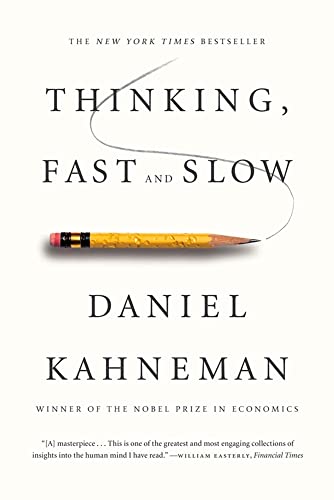
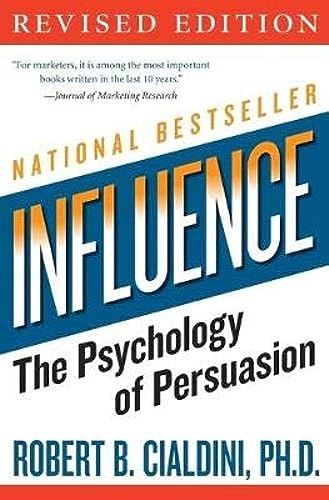
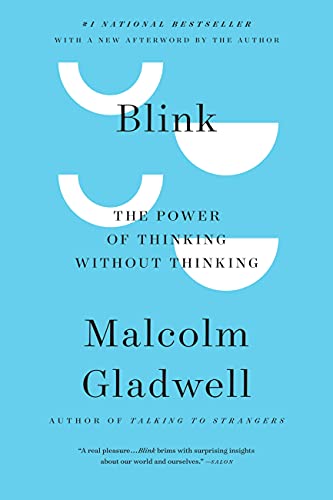
Want to understand yourself a little better? These books will help.
Thank you for reading. Every fact in this article is documented and sourced. You will find the references at the bottom if you want to dig further. I hope it surprised you at least once. That is always the intention.
I would love to hear your thoughts. Follow Econopass on social media and share your reaction hereafter as a social comment. And if you do not want to miss the next story, hit follow. There is always another forgotten truth waiting to be told.
Disclosure: This article may contain affiliate links. This means we may earn a commission if you click on a link and make a purchase at no extra cost to you. This applies to featured Amazon products or any other Econopass's partners.
We use cookies to ensure that we give you the best experience on Econopass website. If you continue to use this site we will assume that you are happy with it.