You have checked your phone since you started reading this. You may not have noticed. That is rather the point.
The average person checks their phone 96 times a day. That is once every ten minutes of waking life. Nearly half of Americans describe themselves as feeling addicted to their phones. They are not being dramatic. They are accurately describing what is happening in their brains. And it has nothing to do with self-discipline, weakness, or lack of willpower.
It is engineering. Deliberate, research-backed, neuroscience-informed engineering. And it started not with Silicon Valley but with a psychologist and some pigeons in the 1950s.
The most powerful way to maintain a behaviour is not to reward it every time. It is to reward it unpredictably. B.F. Skinner documented this in the 1950s. Silicon Valley implemented it in 2009. They did not invent social media. They built a casino that fits in your pocket.
B.F. Skinner was studying operant conditioning when he discovered something that would eventually reshape the attention economy of the entire planet. He found that pigeons pressing a lever for food pellets pressed far more compulsively when rewards arrived on a random, unpredictable schedule than when they arrived consistently. A pigeon that received food every time it pressed the lever pressed calmly and stopped when satisfied. A pigeon that received food sometimes after three presses, sometimes after thirty, pressed obsessively and was extraordinarily resistant to stopping.
Skinner called this a variable ratio reinforcement schedule. The uncertainty itself was the mechanism. The not-knowing was more powerful than the reward.
Casinos understood this first. Slot machines are pure variable ratio reinforcement. You do not know which pull will pay off, so you keep pulling. The near-miss, the occasional small win, the possibility that the next one might be the one: these are not accidents of design. They are the product.
Your phone is the same machine.
Every pull-to-refresh, every notification, every scroll through a feed operates on the same variable ratio reinforcement schedule that makes slot machines billions of dollars a year. Your brain does not distinguish between a slot machine payout and a perfectly timed like on a photo you posted. The neurological mechanism is identical.
The neuroscience goes one level deeper, and this is the part that most people find genuinely unsettling. Research by Wolfram Schultz at Cambridge, published in 1997, established that dopamine is released not when you receive a reward, but when you anticipate one. The red notification badge on your phone triggers a dopamine response before you have even seen what is inside it. The vibration of a notification. The pull-to-refresh gesture. Each of these is a cue that your brain has learned to associate with possible social reward, and it releases dopamine in response to the cue alone.
This is why people report hearing phantom phone vibrations. Your nervous system has become so primed to expect the signal that it begins generating the sensation independently. You are not imagining things. You are experiencing a conditioned response that has been trained into you by a system specifically designed to train it.
Harvard’s Science in the News put it clearly: smartphones have given us a virtually unlimited supply of social stimuli, both positive and negative. Every notification has the potential to be a positive social reward and therefore a dopamine trigger. The platforms are free because your attention is the product being sold. And the more compulsively you check, the more valuable your attention becomes.
In 2017, Chamath Palihapitiya, former Vice President of User Growth at Facebook, said publicly: “We have created tools that are ripping apart the social fabric of how society works. I feel tremendous guilt.” He said it. Then nothing changed. Because the mechanism that makes you check your phone is the same mechanism that makes it impossible to stop building platforms that exploit it.
None of this means you are helpless. But it does mean that the solution is not trying harder. Research consistently shows that willpower-based approaches to reducing phone use fail at the same rate as willpower-based approaches to any other variable reward system. You cannot out-discipline a dopamine loop.
What works is restructuring the environment rather than fighting the impulse. Removing the phone from the bedroom. Turning off all non-essential notifications, which eliminates the cue before the craving can form. Designating specific check times rather than responding to every trigger. These are not discipline strategies. They are engineering counter-strategies: using the same logic of behaviour design to work in your interest rather than against it.
The people who designed the systems in your phone understood the neuroscience better than most of the people using those phones. That gap is where the problem lives. Closing it starts with understanding that what you are experiencing is not weakness. It is the intended outcome of a very well-designed machine.
Now you know. The question is what you do with it. Marco Bellinari
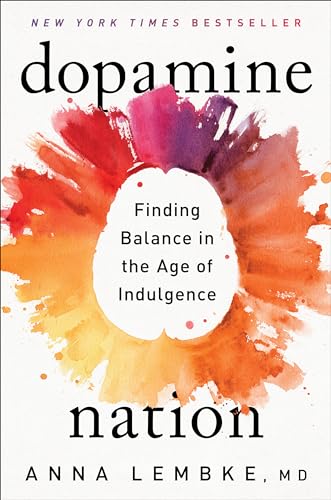
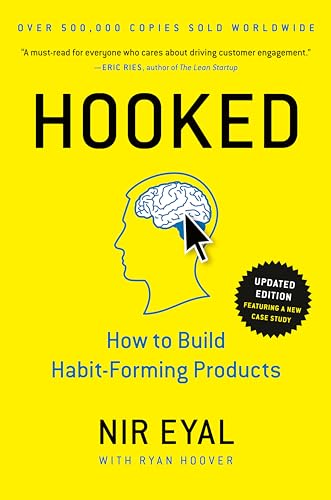
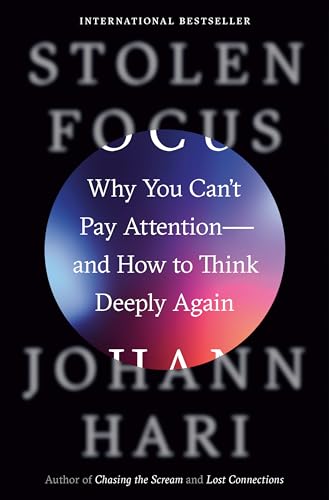
Want to understand yourself a little better? These books will help.
Thank you for reading. Every fact in this article is documented and sourced. You will find the references at the bottom if you want to dig further. I hope it surprised you at least once. That is always the intention.
I would love to hear your thoughts. Follow Econopass on social media and share your reaction hereafter as a social comment. And if you do not want to miss the next story, hit follow. There is always another forgotten truth waiting to be told.
Disclosure: This article may contain affiliate links. This means we may earn a commission if you click on a link and make a purchase at no extra cost to you. This applies to featured Amazon products or any other Econopass's partners.
FediBack: The Reason You Cannot Stop Checking Your Phone Has Nothing to Do With Willpower.
🟢 How many times have you checked your phone since you started reading this article? Count honestly. Then tell me below whether knowing the mechanism changes anything for you
🟢 How many times have you checked your phone since you started reading this article? Count honestly. Then tell me below whether knowing the mechanism changes anything for you
🟢 How many times have you checked your phone since you started reading this article? Count honestly. Then tell me below whether knowing the mechanism changes anything for you
We use cookies to ensure that we give you the best experience on Econopass website. If you continue to use this site we will assume that you are happy with it.