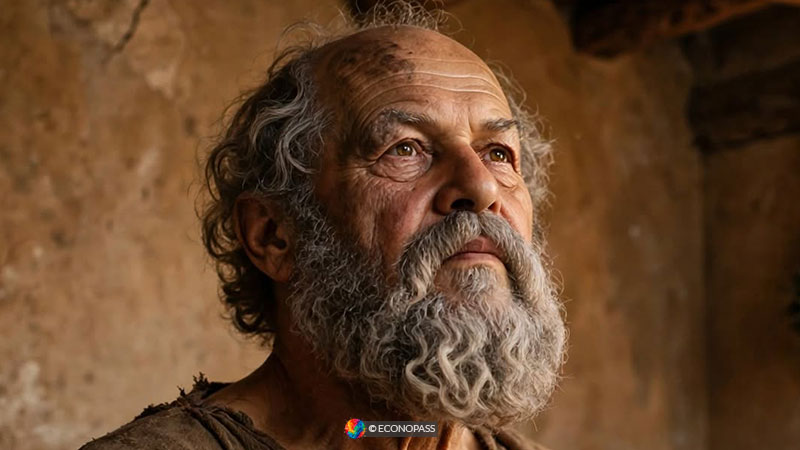

Francisco de Orellana has a province named after him in Ecuador. A river. A Spanish postage stamp from 1965. History gave him everything it had.
The people who showed him where to go on that Amazon River have nothing. Not a province. Not a stamp. Not even a name in the record.
This is not a gap in the historical record. This is the historical record.
The Expedition Was Already Dying
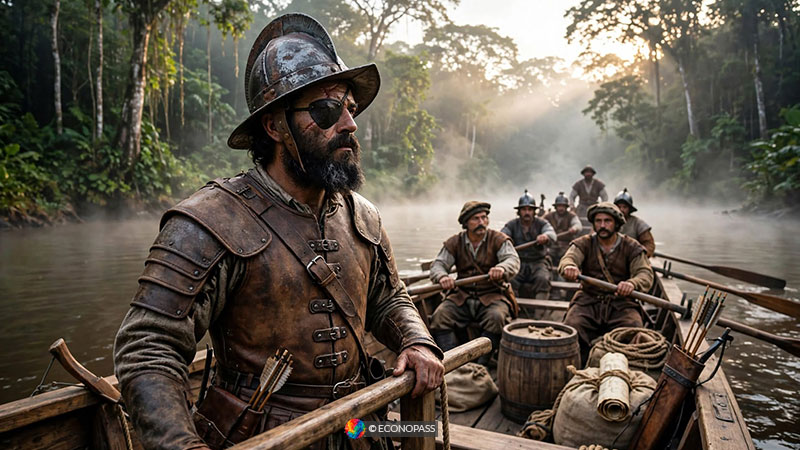
December 26, 1541. The Napo River, in what is now Peru. Francisco de Orellana and fifty men are drifting downstream on a boat they built from local timber because they had nothing else.
The original expedition had left Quito in February 1541 under Gonzalo Pizarro, in search of cinnamon trees and the legendary El Dorado. By the time Orellana caught up with the main party, it was already a catastrophe. More than three thousand indigenous porters had died or been abandoned. More than a hundred and forty Spaniards had died or deserted. The survivors had eaten their horses, their dogs, and were eating leather stripped from their saddles.
When Orellana agreed to take fifty men downstream on December 26 to look for food, the assumption was that he would return with supplies. The current made that impossible. He could not come back upriver. The only direction was forward, into a river system he had never seen, with no maps, no provisions, and no plan beyond staying alive.
What history calls discovery, Orellana’s men called survival. They were not exploring. They were trying not to die.

Amazon Smart Plug
Turn any outlet smart in seconds. Schedule lights, fans, coffee makers, no hub required, works with Alexa.
View on AmazonThe River Was Not Empty
The Amazon basin in 1541 was not uninhabited jungle. It was one of the most densely populated regions in the Americas.
Gaspar de Carvajal, the Dominican friar who kept the expedition’s chronicle, recorded what he saw from the boat. Villages stretching continuously for miles along both riverbanks. Canoe fleets that could mobilize thousands of warriors within hours. Organized agricultural settlements with roads cut through the forest. Carvajal described a river lined with civilization from the Napo tributary all the way to the Atlantic coast.
Scholars working from that chronicle and from archaeological evidence since have estimated that the pre-contact Amazon supported populations of eight to ten million people. The Amazon River was not a wilderness. It was a managed landscape, an inhabited highway, a system of waterways that people had been navigating for more than eleven thousand years before Francisco de Orellana arrived on it in a boat he had built from necessity.
Orellana did not enter an unknown river. He entered a river that millions of people knew in detail he would never approach.
The Man Who Actually Knew the River
Carvajal’s chronicle records something historians have noted but rarely emphasized: Orellana had unusual linguistic ability. He could communicate with the leaders of the tribes he encountered along the way. He negotiated food, passage, and safe harbor repeatedly across thousands of miles of river and dozens of distinct tribal territories.
This ability did not emerge from nowhere on a boat. At every river junction, every change of territorial boundary, every moment where the wrong tributary would have meant death, someone who already knew the river was making decisions or translating them. The Amazon does not reveal itself to strangers. It is read, the way a navigator reads currents, bends, and flooding patterns that only make sense after years of learning them.
Carvajal recorded the names of every Spanish captain on the expedition. He recorded dates and distances and the specific birds the men observed. He recorded battles. He recorded the weather. He recorded the moment the expedition first saw the Atlantic coast.
He did not record the name of a single one of the indigenous guides.
At every fork in the Amazon River, someone pointed in the right direction. That person is not in the history books. The man who followed the pointing is.
What “Discovery” Has Always Required
The word discovery requires that the thing being discovered was previously unknown. The question that follows is always the same: unknown to whom.
Orellana named the river the Amazon. The name came from a battle Carvajal described against a tribe whose women fought alongside its men, which Orellana compared to the Amazons of Greek mythology. That European literary reference became the name of the river. Whatever the river had been called by the people who lived on it for eleven millennia was not considered worth recording.
The same logic applied to the indigenous guides. Their knowledge was used. Their labor made the expedition possible. Their understanding of the river kept fifty starving Europeans alive across eight months and four thousand miles. What could be extracted was extracted. What remained was dropped. The names. The credit. The acknowledgment.
The Amazon had been a known, navigated, inhabited waterway for at least eleven thousand years before December 1541. Orellana spent eight months on it. He arrived at the Atlantic on August 24, 1542, and returned to Spain to tell the king what he had found.
The Name History Kept
Orellana’s name is on the map. The province of Orellana in Ecuador. The city of Puerto Francisco de Orellana. The river itself was briefly called the Rio de Orellana before the name Amazon won. Museums have his portrait. Encyclopedias carry his biography. Textbooks teach his voyage as the first navigation of the Amazon.
The indigenous guides who showed him which branch to take at every fork: unnamed in Carvajal’s chronicle, unnamed in the histories that followed, unnamed across four hundred and eighty-four years of repetition.
Colonial chronicles were not careless documents. They recorded the name of every Spaniard on the expedition, the specific variety of turtle the men ate, the distances between villages, the depth of the river in certain passages. The absence of indigenous names in those records was not an oversight. It was a decision about what counted as a name worth keeping.
The Amazon had already been discovered by the people who built their lives on it. The people who showed Francisco de Orellana how to survive on that river did the work that history chose to credit to him.
Their names are gone.
That was the point.
Every story has a version. I’m sharing mine.
Marco Bellinari
Sources
- Francisco de Orellana, Wikipedia
- Francisco de Orellana, Encyclopaedia Britannica
- Uncovering Amazonia, Open Rivers, University of Minnesota
- Timeline of Amazon History, Wikipedia
- In the Footsteps of Orellana and Carvajal, Sounds and Colours
A Note from Marco Bellinari
Thank you for reading. Every fact in this article is documented and sourced. You will find the references at the bottom if you want to dig further. I hope it surprised you at least once. That is always the intention.
I would love to hear your thoughts. Follow Econopass on social media and share your reaction hereafter as a social comment. And if you do not want to miss the next story, hit follow. There is always another forgotten truth waiting to be told.
Still Curious? Don't Stop Here!
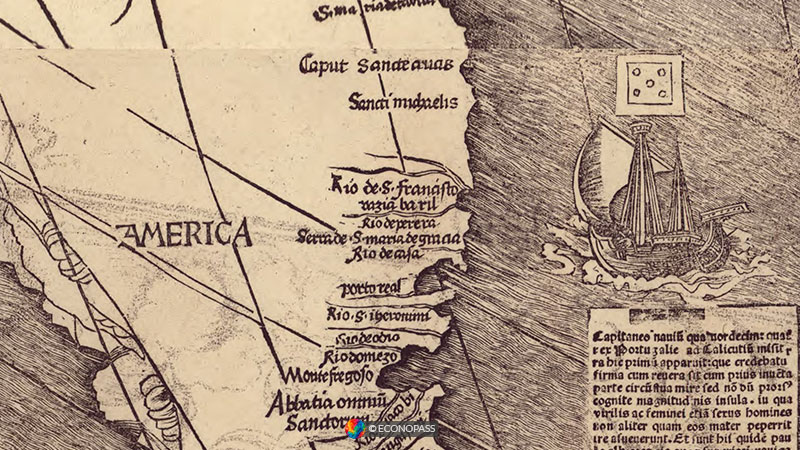
The First Map to Name America Was Drawn by a German Who Never Left Europe. He Based It on ...
The Berlin Wall Did Not Fall Because of a Political Decision. It Fell Because of a Press C...
Hannibal Crossed the Alps With Elephants. Only One Survived. History Remembers the Crossin...
Nikola Tesla Did Not Die Penniless and Forgotten. The FBI Seized His Papers the Morning Af...
The First Person to Walk on the Moon Almost Did Not Make It Back. The Thing That Saved Him...
The Library of Alexandria Was Not Burned Down. It Declined Over Centuries. The Fire Story ...
The Declaration of Independence Was Not Signed on July 4. Most Delegates Signed It a Month...