Someone you care about is making a decision you think is wrong. You can see it clearly. You have been in a similar situation. You know how it ends. So you tell them. You lay out your reasoning carefully, respectfully, and with genuine good intention.
They do not change their mind. In fact, they seem more committed to their original course than before you spoke.
This is not a coincidence. It is a documented psychological response with a name, a mechanism, and sixty years of research behind it. And once you understand it, you will never give unsolicited advice the same way again.
In 1966, psychologist Jack Brehm published a theory he called psychological reactance. The core idea is straightforward: when people perceive that their freedom to choose is being threatened, they experience a motivational state that pushes them to restore that freedom. The most direct way to restore threatened freedom is to do the opposite of what they have been told to do. Unsolicited advice, however well-intentioned, is almost always perceived as a threat to autonomy. The brain registers it as pressure. And pressure produces pushback.
Brehm’s theory has been tested in hundreds of studies across health campaigns, marketing, parenting, and interpersonal communication. The findings are consistent. Strongly worded advice, unsolicited recommendations, and directive messages reliably produce resistance. Not because the content is wrong. Because the delivery implies that the recipient cannot be trusted to reach the right conclusion on their own.
The mechanism is worth understanding in detail. When you offer unsolicited advice, you are not just sharing information. You are implying several things simultaneously: that you have assessed the situation and found it lacking, that your judgment is superior to theirs in this matter, and that they need your input to make a good decision. The person receiving the advice processes all of these implications before they process the content of what you are saying. And the implications trigger reactance before the argument even lands.
A 2004 study by Fitzsimons and Lehmann, published in Marketing Science, tested this across four experiments. They found that unsolicited advice that contradicted a person’s initial inclination did not just fail to persuade. It produced a behavioral backlash: participants not only ignored the recommendation but actively moved in the opposite direction. Being told what to do made people more committed to what they were already going to do. The advice made things worse, not better.
There is a further layer that makes this particularly uncomfortable. The closer you are to someone, the more likely you are to give them unsolicited advice. Research on advice-giving patterns consistently shows that we offer unrequested opinions most frequently to the people we care about most: partners, children, close friends, siblings. The people who are most likely to experience your unsolicited advice as pressure are the people you most want to help. The relationship itself creates the conditions for the backfire.
The Oxford Practical Ethics blog, drawing on this research, makes the point directly: the attitudes that produce unsolicited advice, the belief that you know better, that your perspective is more accurate, that the other person would benefit from hearing it, are precisely the attitudes most likely to trigger a contrary response. You are most certain when you are most likely to be tuned out.
What actually works is the opposite of what feels natural. Research on autonomy-supportive communication, particularly in clinical psychology and parenting studies, shows that framing that preserves the other person’s sense of control is significantly more effective than directive advice. Instead of “you should do X,” something closer to “I have been in a similar situation, and what worked for me was X, though your situation is different” hands the decision back to the person. It provides information without implying that they are required to use it. It removes the threat to autonomy and therefore removes the trigger for reactance.
The most counterintuitive finding in this research is about timing. Solicited advice, the same words, the same content, delivered in response to a direct request, is received completely differently from unsolicited advice. The research is not saying that advice is useless. It is saying that the same advice, delivered without being asked for, reliably undermines itself. What you say matters far less than whether you were asked to say it.
Most people who give unsolicited advice are not doing it to assert dominance or to feel superior. They are doing it because they genuinely care and because watching someone you love head toward a mistake is uncomfortable. The impulse is kind. The mechanism it triggers is not.
The next time you feel the urge to tell someone what they should do, ask yourself one question first: did they ask? If the answer is no, the most useful thing you can offer is probably not your opinion. It is the space to reach their own conclusion and your presence when they need to talk it through.
Which, as it happens, is also what most people actually want.
Now you know. The question is what you do with it. Marco Bellinari
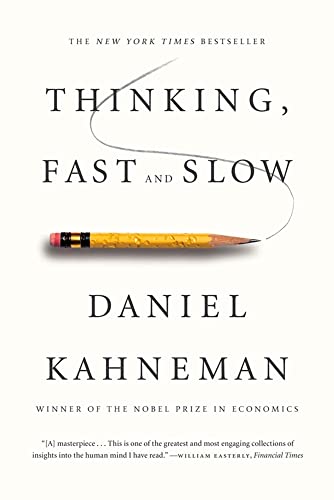
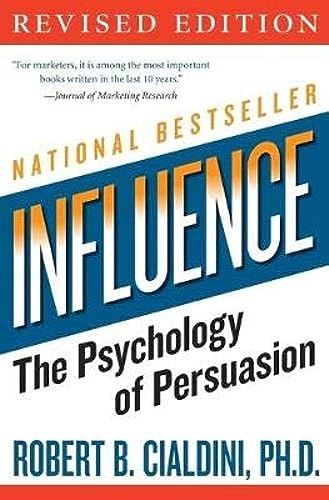
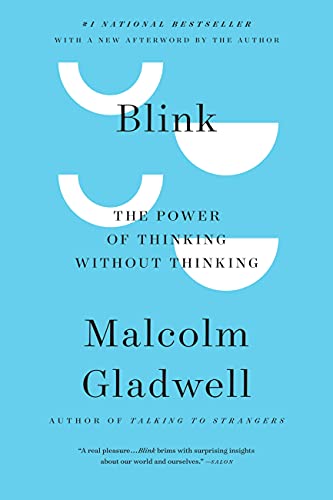
Want to understand yourself a little better? These books will help.
Thank you for reading. Every fact in this article is documented and sourced. You will find the references at the bottom if you want to dig further. I hope it surprised you at least once. That is always the intention.
I would love to hear your thoughts. Follow Econopass on social media and share your reaction hereafter as a social comment. And if you do not want to miss the next story, hit follow. There is always another forgotten truth waiting to be told.
Disclosure: This article may contain affiliate links. This means we may earn a commission if you click on a link and make a purchase at no extra cost to you. This applies to featured Amazon products or any other Econopass's partners.
These articles and stories are free because of a few ads. To support us, simply turn off your ad blocker for Econopass. It takes one click on the ad blocker icon in your browser. Thank you!
We use cookies to ensure that we give you the best experience on Econopass website. If you continue to use this site we will assume that you are happy with it.