


The List You Cannot Remember
Someone reads you a list of ten words. Banana. Chair. River. Telephone. Umbrella. Castle. Pencil. Mirror. Falcon. Clock. A minute later you are asked to recall as many as you can. Without fail, you remember banana and clock. The words in the middle, river, umbrella, pencil, are gone or hazy at best. This is not a failure of attention. It is your brain working exactly as designed, and the pattern is so reliable that psychologists built a name for it more than a hundred years ago.
They called it the serial position effect, and once you know it exists, you will see it everywhere.
Two Effects, One Name
The serial position effect is actually two separate phenomena working together. The primacy effect accounts for why you remember the beginning: the first items on a list enter your long-term memory because you have time to rehearse them before the next item arrives. You repeat them mentally. They consolidate. By the time the middle of the list arrives, you are receiving new information faster than you can process it, and rehearsal stops.
The beginning of a list gets rehearsed. The middle gets overwritten. The end gets held in short-term memory just long enough to recall.
The recency effect accounts for why you remember the end: the final items are still sitting in your short-term memory when you are asked to recall. They have not had time to fade. They feel vivid because they are recent, not because they are important. If you wait thirty minutes before asking someone to recall the list, the recency effect disappears. The primacy effect does not. Long-term memory holds; short-term memory drains.
Hermann Ebbinghaus and the Forgetting Curve
The German psychologist Hermann Ebbinghaus spent years in the 1880s memorising lists of nonsense syllables and testing his own recall at precise intervals. He was, for a long period, the only subject in his own experiments. What he found was that forgetting is not random. It follows a curve: steep at first, then levelling off. Most of what you learn is lost within the first hour. What survives that window tends to persist much longer. The curve is now called the Ebbinghaus forgetting curve, and it has been replicated so many times across so many contexts that it is considered one of the most robust findings in all of cognitive psychology.
Ebbinghaus also identified the spacing effect: memory for material improves when learning is spread over time rather than crammed into a single session. The brain needs time between exposures to consolidate what it has seen. That is why cramming the night before an exam produces knowledge that evaporates within days, while spaced repetition produces knowledge that lasts for years.
Your brain does not record experience the way a camera records video. It edits as it goes, keeping what it rehearses and discarding what it does not.
Where You Are Already Using This Without Knowing It
The serial position effect shapes more of your daily life than you probably realise. Job interviews are affected: candidates interviewed first or last are rated more favourably than those in the middle of the day. Juries remember opening statements and closing arguments more clearly than the testimony given on day three of a trial. Restaurant menus are designed with this in mind: the most profitable items appear at the top and bottom of each section, not buried in the middle. Playlists are sequenced this way. Speeches are written this way. The person who speaks first at a meeting and the person who speaks last both have a structural advantage over everyone who spoke between them.
Teachers who understand the serial position effect use it deliberately: the most important material goes at the beginning and end of a lesson, with review and practice in the middle. The least important content, the administrative details, the housekeeping, goes in the slot where the brain is least likely to retain anything anyway.
What This Means for How You Take In Information
Knowing this changes how you might approach any situation where sequence matters. If you are giving a presentation, your strongest point belongs at the opening or the close, not slide seven. If you are reading something important and time is limited, the first and last sections will stay with you; the middle will require deliberate effort to retain. If you are trying to learn something new, spacing your sessions over multiple days will outperform any single long session, every time.
The serial position effect is not a bug in human cognition. It is a compression algorithm. Your brain cannot store everything with equal fidelity, so it applies a heuristic: beginnings matter because they set context, endings matter because they are recent, and the middle is treated as largely redundant. The heuristic is wrong often enough to cause real problems. But it is fast, it is automatic, and it has been running in human brains for as long as human brains have existed. The question is not whether it will affect you. It is whether you will account for it.
Now you know. The question is what you do with it.
Marco Bellinari
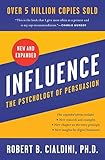
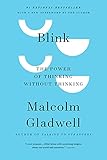
Want to understand yourself a little better? These books will help.

Sources
- Simply Psychology. The Serial Position Effect.
- Scientific American. Memory and the Serial Position Effect.
- Classics in the History of Psychology. Ebbinghaus on Memory.
- NIH / PubMed. Spacing effects in learning and memory.
- American Psychological Association. Memory.

A Note from Marco Bellinari
Thank you for reading. Every fact in this article is documented and sourced. You will find the references at the bottom if you want to dig further. I hope it surprised you at least once. That is always the intention.
I would love to hear your thoughts. Follow Econopass on social media and share your reaction hereafter as a social comment. And if you do not want to miss the next story, hit follow. There is always another forgotten truth waiting to be told.