There is a sentence in Proverbs, written roughly three thousand years ago, that psychologists have been quietly validating ever since. It goes like this: “Even fools are thought wise if they keep silent, and discerning if they hold their tongues.”
The research behind this is not flattering. It is, in fact, rather uncomfortable, because it reveals something about how human judgment works that most of us would prefer not to be true.
The perception that quiet people are more intelligent is not a compliment to quiet people. It is a cognitive bias that operates on everyone in the room, including you, including me, regardless of what we know about the people we are judging. Understanding how it works does not make it go away.
In 2010, psychologist Nicholas Epley and colleagues published research on what they called the signal detection problem in social judgment. Their findings showed that when people speak confidently and frequently, observers update their assessment of those people’s intelligence upward in the moment, but then revise it downward when the content proves shallow. Quiet people, by contrast, are rarely tested. Their silence is interpreted as evidence of depth, and that interpretation is almost never corrected, because they never say enough to disprove it.
This is the mechanism. It is not that silent people are more intelligent. It is that the human brain, looking for signals of intelligence in a social situation, treats the absence of speech as positive evidence rather than as an absence of evidence. The quiet person in the room is a blank canvas onto which everyone projects their assumptions. And the assumptions are almost always flattering.
The phenomenon has a related name in social psychology: the pratfall effect, documented by Elliot Aronson in 1966. Aronson found that highly competent people became more likeable when they made small mistakes, because the mistake made them human. But his research also revealed the inverse: people who say little and err rarely are perceived as operating at a higher level, precisely because there is no evidence to the contrary. Silence protects you from the pratfall. It also protects you from ever being accurately assessed.
There is a further layer, and this one is the most uncomfortable. Research in communication patterns, including work by Deborah Tannen and others on conversational dynamics, consistently shows that in mixed professional settings, people who speak less tend to receive more attention when they do speak. The words of a quiet person are weighted differently from the words of a talkative one. The same idea, offered by different speakers at different frequencies, lands differently in the room. The person who has said little all meeting and then offers a single observation is heard differently from the person who has contributed throughout. The content may be identical. The reception is not.
Between 40 and 60 percent of what people say in a conversation is related to themselves, their opinions, their experiences. On social media that figure rises toward 80 percent. Talking, for most people, is partly a performance of self. And because it is a performance, it can be evaluated, critiqued, and found wanting. Silence performs nothing. It cannot be critiqued. It simply accumulates, and what it accumulates is projection.
What does this mean in practice? The uncomfortable implication is that in most professional and social settings, talking less is a more effective strategy for being perceived as intelligent than actually being intelligent. The research does not say that quiet people are smarter. It says that quiet people are perceived as smarter, and that this perception is remarkably resistant to correction.
The further implication is that most people dramatically overestimate how much value they add by speaking. Research on conversational recall consistently shows that listeners remember far less of what was said than speakers assume. The person who spoke for twenty minutes at the meeting believes they made a significant impression. The people in the room have retained roughly two or three points and have already begun forming opinions based on other signals entirely.
The psychologist Adam Grant has written about what he calls the confidence heuristic: the tendency of groups to mistake confidence for competence. Silence reads as a form of confidence. Not the aggressive confidence of someone who talks over others, but the quieter confidence of someone who does not need to perform. In a room full of people performing their intelligence, the person who is not performing is conspicuous. And conspicuous silence is almost always interpreted as strategic rather than empty.
None of this is an argument for not speaking. Speaking is how ideas move. Speaking is how relationships form. Speaking is how most people do their best work. The research is not saying that silence is a virtue or that talkativeness is a flaw. It is saying something more specific and more unsettling: that the impression you make in a social or professional context is partially decoupled from the quality of your actual thinking, and that one of the most consistent predictors of being perceived as smart is simply not giving people enough material to judge you by.
The fool who keeps silent is thought wise. That is not a compliment to silence. It is a warning about how judgment works.
Now you know. The question is what you do with it. Marco Bellinari
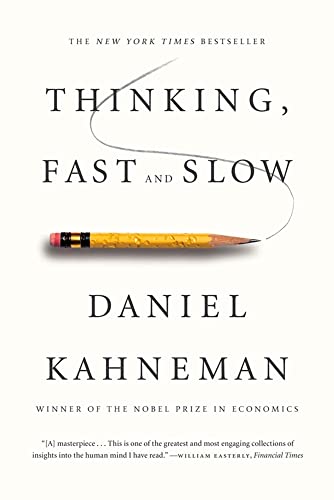
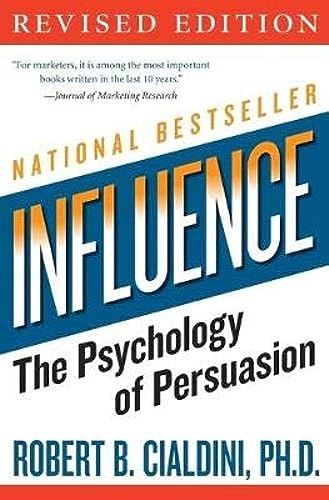
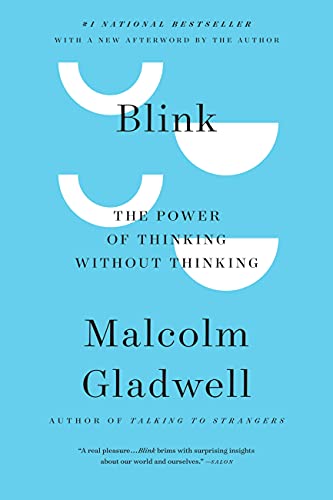
Want to understand yourself a little better? These books will help.
Thank you for reading. Every fact in this article is documented and sourced. You will find the references at the bottom if you want to dig further. I hope it surprised you at least once. That is always the intention.
I would love to hear your thoughts. Follow Econopass on social media and share your reaction hereafter as a social comment. And if you do not want to miss the next story, hit follow. There is always another forgotten truth waiting to be told.
Disclosure: This article may contain affiliate links. This means we may earn a commission if you click on a link and make a purchase at no extra cost to you. This applies to featured Amazon products or any other Econopass's partners.
These articles and stories are free because of a few ads. To support us, simply turn off your ad blocker for Econopass. It takes one click on the ad blocker icon in your browser. Thank you!
We use cookies to ensure that we give you the best experience on Econopass website. If you continue to use this site we will assume that you are happy with it.