
The war ended on September 2, 1945. Hiroo Onoda did not get the message. Not because he was careless, not because he was uninformed. Because he was a soldier, and soldiers do not abandon their post on rumour.
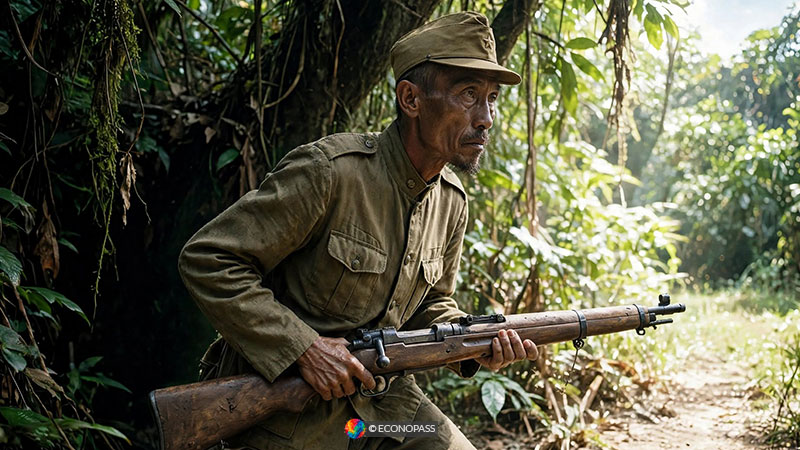
He was twenty-two years old when he was sent to Lubang Island in the Philippines with a single order: hold the island. Resist the enemy. Never surrender. His commanding officer told him explicitly that even if food ran out, even if help never came, he was to keep fighting. Those orders, delivered in 1944, were the last orders Hiroo Onoda ever received. He followed them for the next three decades.
When leaflets were dropped from planes announcing Japan’s surrender, Onoda did not believe them. He had been warned that the enemy would use psychological tactics. A pamphlet saying the war was over was exactly the kind of trick a competent enemy would use.
He was not alone at first. Three other soldiers stayed with him in the jungle. One surrendered in 1950. One was killed in a skirmish in 1954. Another was shot dead by local police in 1972. By then Onoda had been fighting for twenty-eight years. He continued alone.
The Philippine government tried to reach him. Flyers were dropped from aircraft. His family recorded messages. Former comrades were brought to the island to call out to him through the trees. Each time, Onoda interpreted it as a trick. The enemy was sophisticated. He was not going to fall for it.
In 1974, a Japanese adventurer named Norio Suzuki went to Lubang on a personal mission to find Onoda. He succeeded in two days. Onoda came out of the jungle armed, wearing his original uniform, his rifle still functioning after nearly thirty years in tropical conditions. He said he had been waiting for orders.
Suzuki brought back photographs and a message: the war was over. But Onoda would not stand down for a photograph. He would stand down for his commanding officer. The Japanese government located Major Yoshimi Taniguchi, who had since retired and was working as a bookseller. Taniguchi flew to Lubang and, in full military uniform, formally relieved Onoda of his duty on March 9, 1974.
He handed over his rifle, his ammunition, and his sword. He was fifty-one years old. He had spent more of his adult life at war than at peace, fighting a conflict that everyone else had stopped fighting before he turned twenty-three.
He was not embarrassed. He was not broken. He said he had no regrets, that he had done his duty. The Philippines pardoned him for the killings that had occurred during his thirty years of guerrilla activity. The Japanese government received him as a hero.
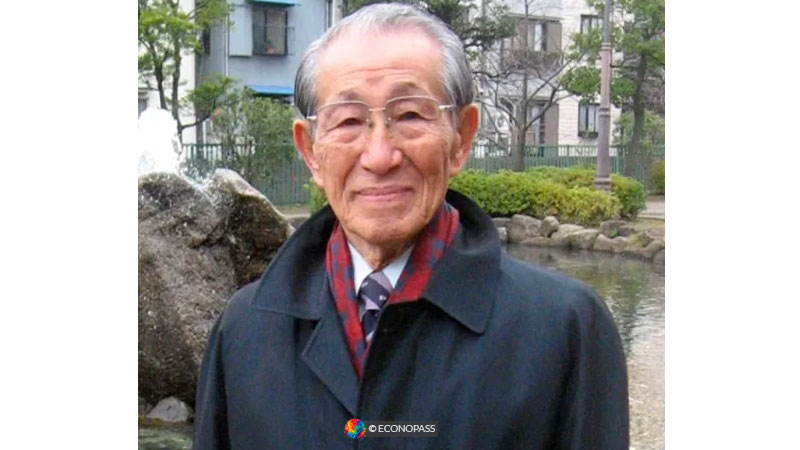
He moved to Brazil, raised cattle, and later returned to Japan to run a nature school for young people. He died in 2014 at the age of ninety-one. He had outlived the war by sixty-nine years, though he had only known it was over for forty of them.
The question that stays is not whether he was mad. He was not mad. He was obedient. The question is what it means to follow an order so completely that reality cannot reach you. Most of us stop well before we get anywhere near that line. Hiroo Onoda crossed it in 1945 and did not come back until someone with the right rank came to get him.
The world is stranger than anyone told you. I am just keeping count.
Marco Bellinari
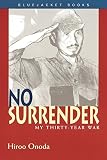
Sources
- BBC News: Hiroo Onoda, Japanese soldier who refused to surrender, dies aged 91
- The Guardian: Hiroo Onoda obituary
- TIME: The Soldier Who Would Not Surrender
- History.com: The Last Japanese Soldier
- Smithsonian Magazine: The Soldier Who Fought WWII Until 1974
A Note from Marco Bellinari
Thank you for reading. Every fact in this article is documented and sourced. You will find the references at the bottom if you want to dig further. I hope it surprised you at least once. That is always the intention.
I would love to hear your thoughts. Follow Econopass on social media and share your reaction hereafter as a social comment. And if you do not want to miss the next story, hit follow. There is always another forgotten truth waiting to be told.