
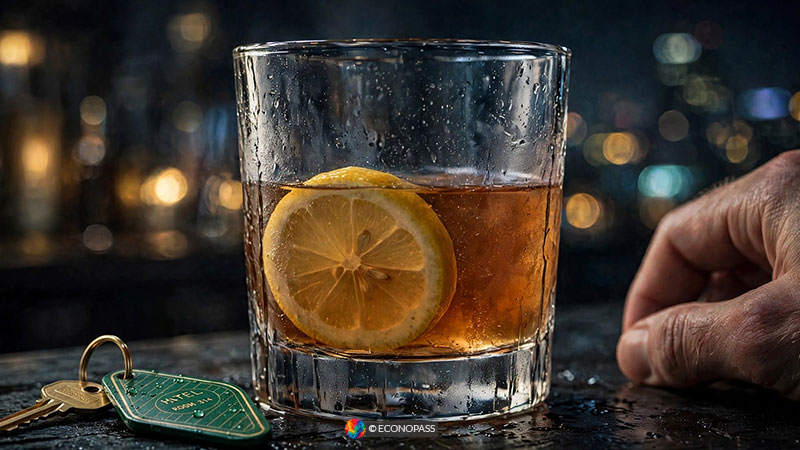
The evening had gone exactly as those evenings do. A rooftop bar in the La Candelaria district. Warm air, city lights, a view that made the whole trip feel worth it. A friendly local who spoke decent English, who bought the first round, who laughed at the right moments. By midnight the traveler was back in his hotel room. He did not remember leaving the bar. He did not remember the walk. He did not remember anything at all until morning, when he found himself on the bed, fully clothed, and understood immediately that the night had been removed from him.
His passport was gone. His bank cards were gone. His laptop, which had been in the room safe, was gone. The safe itself showed no signs of forced entry. He had opened it himself. He had no memory of doing so.
He had not been robbed in the usual sense. He had been borrowed. His body had continued operating after his mind went dark, guided by someone else, doing things he would never have agreed to do.
The Drug
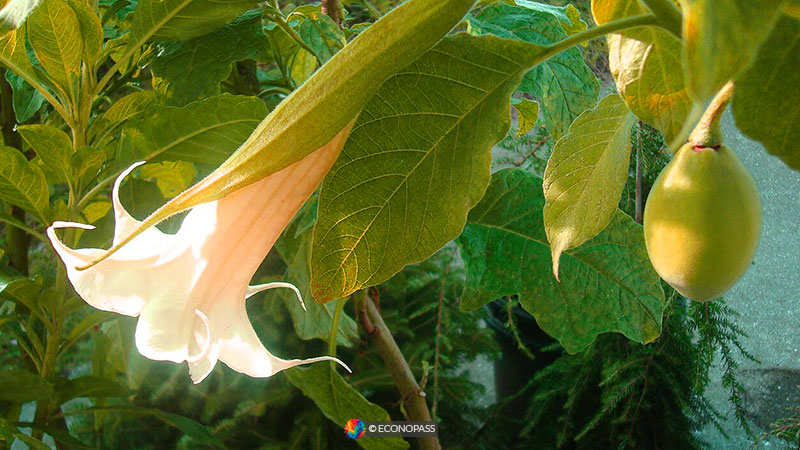
Scopolamine is derived from the borrachero tree, a plant that grows abundantly across Colombia and is known locally for its psychoactive properties. In pharmaceutical form it treats motion sickness and is used as a surgical pre-anaesthetic. In the concentrated powder form that circulates in Bogota’s criminal economy, it is something else entirely. The street name is burundanga. In English it is sometimes called devil’s breath.
What makes scopolamine useful to criminals is not that it incapacitates victims. It is that it does not. Victims remain ambulatory, cooperative, and apparently lucid. They walk, talk, respond to instructions, and carry out complex tasks. They help carry their own luggage out of hotel rooms. They withdraw cash from ATMs and hand it over. They unlock safes. They do all of this with no resistance, no alarm, no visible distress. And they remember none of it.
The drug works by blocking acetylcholine receptors in the brain, disrupting the formation of short-term memories and suppressing the will to resist. The result is a person who is present in every practical sense and absent in every meaningful one.

Anker PowerCore 10,000mAh
Charges an iPhone 3× over. Dual USB-C ports, pocket-sized, no cables needed at the airport.
View on AmazonHow It Moves
Bogota’s public health and security agencies have documented hundreds of scopolamine cases annually. The Colombian National Institute of Legal Medicine tracked over 1,200 reported cases in a single year, and investigators consistently note that reported cases represent a fraction of actual incidents, since many victims feel shame or confusion, or are uncertain enough about what happened that they do not file a report.
The delivery methods are varied. The powder can be dissolved into a drink. It can be blown into a victim’s face at close range. It has been found on business cards, in cigarettes, in food. The common thread in tourist cases is human contact: someone who makes conversation, builds brief trust, offers something, and uses that moment of openness.
The borrachero tree produces the drug without effort. The criminal uses it without violence. The victim cooperates without knowing. The whole operation depends on a single moment of ordinary human trust.
The Warning the Guidebooks Give
Travel advisories for Colombia have included scopolamine warnings for years. The US State Department, the UK Foreign Office, and a range of travel safety organizations all note the risk. The standard advice is direct: do not accept drinks, cigarettes, or food from strangers. Do not leave drinks unattended. Be suspicious of unsolicited conversation in tourist areas, particularly late at night.
This advice is correct. It is also difficult to follow in practice, because the social engineering behind scopolamine crime is designed to feel like something else. The stranger at the bar does not look like a threat. The conversation feels organic. The drink is offered in a context that makes refusal seem rude. The entire sequence is constructed to pass through a traveler’s normal filters without triggering them.
Gavin de Becker, in The Gift of Fear, makes the point that most victims of predatory crime recognize in retrospect that something felt wrong before anything went wrong. The feeling was there. The information was available. What overrode it was the social pressure not to be impolite, not to seem paranoid, not to insult someone who might be perfectly innocent. That pressure is not a flaw in the victim. It is the surface the criminal works against.
Bogota Is Not the Story
Scopolamine crime exists in other countries and other cities. But Bogota has become the city most associated with it in international reporting, partly because Colombian law enforcement has documented the phenomenon extensively and partly because tourist infrastructure in Colombia has expanded rapidly in recent years, bringing more potential victims into contact with criminal networks that have been operating these schemes for decades.
The victims are not naïve people. They are ordinary travelers making decisions that would be entirely reasonable in most contexts. The man at the rooftop bar was not careless. He was in a public place, with people around, doing something millions of travelers do without incident. The difference between him and the travelers who left that same bar safely is not judgment. It is luck, and the specific identity of one person who approached him.
Every scopolamine victim made the same reasonable decision: to accept a moment of ordinary human connection. That is not a mistake. It is what the crime is designed to look like.
What Happens After
Recovery from scopolamine is physical. The drug clears the system within hours. The damage it leaves is administrative and psychological: the practical chaos of traveling without documents, and the difficulty of filing a coherent report about events the victim cannot remember. Several travelers who have spoken publicly about scopolamine attacks describe a specific additional distress: knowing that their body continued operating without them, that they cooperated actively in their own robbery, that they cannot account for what they said or did during the hours that were taken from them.
The traveler in this account spent four days at the Colombian embassy working through emergency documentation. His bank reversed the transactions that had been made during the night. His laptop was gone for good. He did not return to the rooftop bar. He did not know which drink it had been.
Not the highlights reel. Not the itinerary. Just what actually happened.
Simon De Lafronde
Sources
- Lured by Dates, Tourists in Colombia Can Face Drugging, Robbery, and Assault, ASIS Online
- Colombian Devil’s Breath, World’s Scariest Drug, Kills Your Free Will, The Cabin Chiang Mai
- Gangs Prey on Tourists with Deadly Zombie Drug, Yahoo News
- New Scopolamine Victim Case in Bogota, Infobae
- Robberies with Scopolamine on the Rise in the City, Publimetro
A Note from Simon de Lafronde
The advice and information in this article come from my experience and research. It’s intended to support your reading with evidence-based insights. If the article is covering wellness or any other health topics, this is not professional advice. Please consult appropriate professionals for your specific situation.
📖 Read More