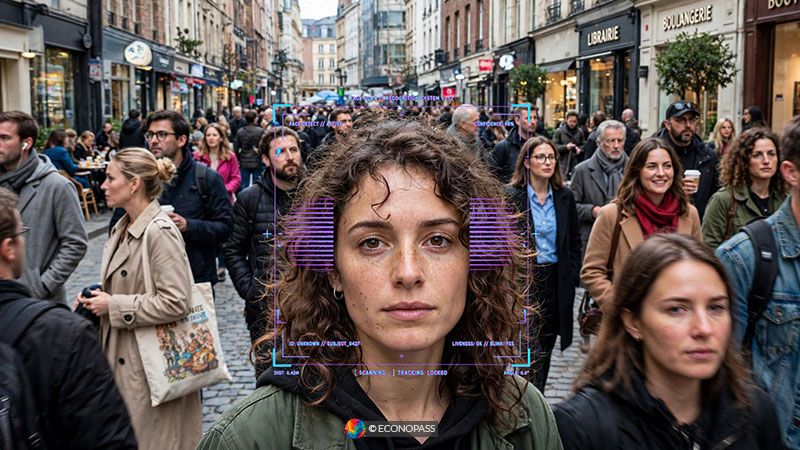
You meet someone at a dinner party. You have a good conversation. Three days later, you pass them on the street and you do not recognise them. You are not being rude. Your brain has already begun discarding the information.
Face memory decays rapidly in most people. Research on face recognition consistently shows that the detailed neural representation of an unfamiliar face begins to degrade within 24 to 72 hours of the initial encounter. Without repeated exposure or an emotional anchor that flags the memory as important, the face joins the enormous archive of faces your brain encounters and does not retain.
The mechanism behind this is the fusiform face area, a region in the extrastriate cortex that neuroscientists first linked to facial recognition in 1997. This area processes faces as a distinct category from other visual objects, which is why face recognition operates differently from object recognition. When the fusiform face area is functioning normally, it creates a representation of a face that is initially strong but requires consolidation through repeated exposure to become durable. An unfamiliar face seen once, in ordinary social circumstances, rarely consolidates into long-term memory. The conversation you had was memorable. The face attached to it often is not.
For most people, face memory sits somewhere in the middle of a wide bell curve of ability. But at either end of that curve are two groups of people whose experience of faces is so different from the average that they barely resemble the normal description at all.
The first group: prosopagnosics. People with prosopagnosia, commonly called face blindness, cannot reliably recognise faces even when they belong to people they know well. The neurologist Oliver Sacks, who wrote about his own prosopagnosia in his book The Mind’s Eye, described regularly failing to recognise his own reflection in a mirror, mistaking it for another person in the room. The condition affects approximately two percent of the population and can be either acquired through brain damage to the fusiform face area or present from birth as a developmental condition. Prosopagnosics typically develop compensatory strategies, recognising people by voice, gait, hairstyle, or context rather than by the face itself.
The second group is the one that researchers were surprised to discover: super-recognisers. The term was coined in a landmark 2009 paper by Richard Russell and colleagues at Harvard, who documented individuals with the opposite profile from prosopagnosics. Where prosopagnosics struggle to recognise familiar faces, super-recognisers never forget unfamiliar ones. They remember faces seen briefly, in passing, years or decades earlier. They recognise celebrities from childhood photographs. They identify people despite significant changes in age, hairstyle, or weight. Tested on the Cambridge Face Memory Test, super-recognisers score as far above the population mean as prosopagnosics score below it. The same spectrum, opposite ends.
What makes super-recognition particularly striking is what it is not. It is not general memory superiority. When researchers tested two world memory champions on face recognition tasks, their scores were merely average. Super-recognisers with extraordinary face memory often have ordinary or below-average memory for names, locations, and objects. Studies have found that super-recogniser abilities do not translate to superior memory for other objects, or to IQ. Many super-recognisers describe having poor memory for names or locations. The gift is specific to faces, which suggests it reflects something particular about the fusiform face area rather than general cognitive capacity.
The practical implications have attracted the attention of law enforcement. Police departments in the United Kingdom, Australia, and the United States have begun actively identifying and recruiting super-recognisers for surveillance and identification work. The Metropolitan Police in London established a super-recogniser unit, and officers in this unit have identified criminals from CCTV footage that standard facial recognition software failed to match. In studies comparing highly trained forensic examiners with super-recognisers, the super-recognisers had higher confidence in their decisions, even in the rare cases when they were wrong.
The discovery of super-recognisers changed the scientific understanding of face memory in a fundamental way. As Richard Russell put it: “There has been a default assumption that there is either normal face recognition, or there is disordered face recognition. This suggests that is not the case, that there is actually a very wide range of ability.” The existence of both prosopagnosia and super-recognition confirms that face memory is not a fixed human capacity. It is a spectrum, and where you sit on it shapes every social interaction you will ever have, in ways you are almost certainly not aware of.
You can take a version of the Cambridge Face Memory Test online to get a rough sense of where you fall. Most people score in the middle. A small number score so low they show signs of prosopagnosia they may never have identified. A small number score so high they qualify as super-recognisers and may have spent their entire lives wondering why everyone else seems so bad at faces.
The face you forgot on Tuesday has not necessarily forgotten you.
Now you know. The question is what you do with it. Marco Bellinari
Want to understand yourself a little better? These books will help.
Thank you for reading. Every fact in this article is documented and sourced. You will find the references at the bottom if you want to dig further. I hope it surprised you at least once. That is always the intention.
I would love to hear your thoughts. Follow Econopass on social media and share your reaction hereafter as a social comment. And if you do not want to miss the next story, hit follow. There is always another forgotten truth waiting to be told.
Disclosure: This article may contain affiliate links. This means we may earn a commission if you click on a link and make a purchase at no extra cost to you. This applies to featured Amazon products or any other Econopass's partners.
These articles and stories are free because of a few ads. To support us, simply turn off your ad blocker for Econopass. It takes one click on the ad blocker icon in your browser. Thank you!
We use cookies to ensure that we give you the best experience on Econopass website. If you continue to use this site we will assume that you are happy with it.