It arrives without warning. You are driving, washing dishes, or lying in bed trying to fall asleep, and suddenly your brain serves up a scene from fifteen years ago. Something you said at a party that landed wrong. The way your voice cracked at the wrong moment. The thing you did in front of everyone that you wish, even now, you could reach back and undo.
You wince. Your stomach tightens. Your face does the thing.
And then you wonder, for probably the hundredth time: why does my brain keep showing me this? Why can I not remember what I ate for lunch on Tuesday, but I can recall with perfect clarity the exact expression on someone’s face twenty years ago when I said something embarrassing?
The answer is that your brain is not malfunctioning. It is doing exactly what it was designed to do. Embarrassing memories are not stored the same way as ordinary memories. They are flagged, prioritised, and preserved by a system that evolved to keep you socially safe, and it does not particularly care that the threat is long gone.
The mechanism begins in the amygdala, the brain’s emotion processing centre. When something socially threatening happens, the amygdala activates. It sends signals to the hippocampus, where memories are consolidated, essentially marking the event as important. It then triggers the release of stress hormones including cortisol and adrenaline. These hormones enhance memory consolidation. The stronger the physiological response at the moment of the experience, the more deeply the memory is encoded. Research by Cunningham and colleagues, published in 2014, found that stronger arousal at the time of an event, measured by heart rate and skin conductance changes, directly predicted how well that event would be remembered later, particularly for emotional material.
That is why you remember the embarrassing moment but not the successful presentation from the same week. The presentation did not make your heart race. Your cheeks did not flush. Your nervous system did not interpret it as a threat requiring special storage. The embarrassment did all of those things, and the brain responded accordingly.
Embarrassment has been classified by neuroscientists as one of the self-conscious emotions, alongside pride, guilt, and shame. What distinguishes self-conscious emotions from basic emotions like fear or anger is that they require an awareness of how you appear to others. You cannot be embarrassed alone in a sealed room with no memory of other people. Embarrassment is, at its core, a social emotion. And the brain treats social threats with the same urgency it treats physical ones.
Research from UCSF, presented at the American Academy of Neurology, identified the pregenual anterior cingulate cortex (pACC) as a key region for self-conscious emotions. In studies where subjects watched videos of themselves singing alone, those with damage to the right pACC were significantly less likely to cringe at their own performance. The capacity for embarrassment, and the memory that comes with it, is neurologically specific. It lives in a particular part of the brain, and when that part is damaged, the cringe response diminishes.
There is also a phenomenon called involuntary autobiographical memory that explains why these scenes arrive unbidden. Research shows that involuntary memories, ones that come to mind without deliberate effort, tend to be more negative than voluntary ones. They also carry stronger emotional tone. When your brain is not occupied with a specific task, it does not default to neutral. It runs a kind of background maintenance, surfacing memories that still carry unresolved emotional charge. The embarrassing moment from 2009 keeps appearing because your brain has not yet fully processed it as safe. Every time it surfaces and you wince, you are confirming that it still carries a social threat signal.
This is where understanding the mechanism becomes practically useful. The memory is not tormenting you randomly. It is presenting itself for review. The psychological research on this suggests that the most effective way to reduce the frequency of unwanted cringe memories is not to suppress them but to actively reappraise them: to deliberately revisit the memory with the knowledge that no social threat remains, that nobody is still watching, that the moment has passed. Each reappraisal reduces the emotional charge attached to the memory. Each time the brain reviews the scene and does not detect active danger, it gradually reclassifies it from threat to archive.
There is one more layer to this that most people find oddly comforting. Research consistently shows that we overestimate how much other people noticed and remember our embarrassing moments. This is called the spotlight effect: the cognitive tendency to believe we are more observed than we are. The person whose face you remember from the party in 2009 almost certainly does not remember the moment at all. Their brain had no reason to flag it as important. Only yours did, because only yours was at the centre of the social threat.
You are the only one still watching. And your brain is keeping the footage running because it has not yet been told the danger is over.
Now you know. You can tell it.
Now you know. The question is what you do with it. Marco Bellinari
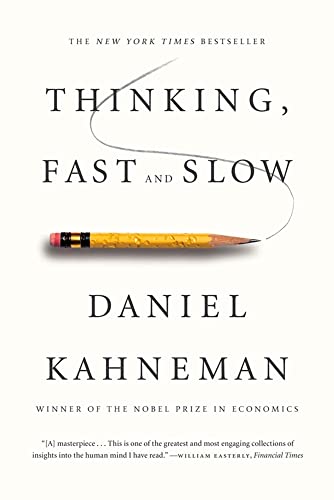
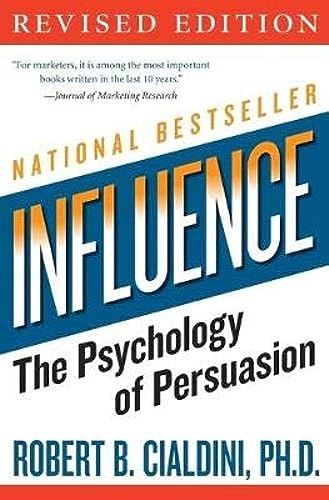
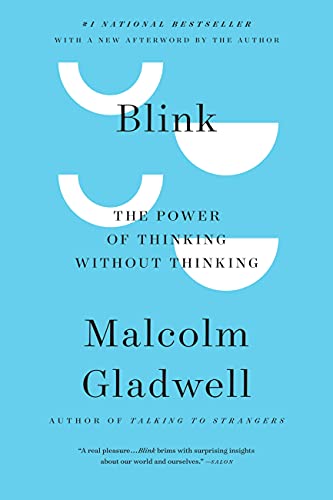
Want to understand yourself a little better? These books will help.
Thank you for reading. Every fact in this article is documented and sourced. You will find the references at the bottom if you want to dig further. I hope it surprised you at least once. That is always the intention.
I would love to hear your thoughts. Follow Econopass on social media and share your reaction hereafter as a social comment. And if you do not want to miss the next story, hit follow. There is always another forgotten truth waiting to be told.
Disclosure: This article may contain affiliate links. This means we may earn a commission if you click on a link and make a purchase at no extra cost to you. This applies to featured Amazon products or any other Econopass's partners.
These articles and stories are free because of a few ads. To support us, simply turn off your ad blocker for Econopass. It takes one click on the ad blocker icon in your browser. Thank you!
We use cookies to ensure that we give you the best experience on Econopass website. If you continue to use this site we will assume that you are happy with it.