
Table of Contents
Key Takeaways
- Audiobooks let busy people consume books during otherwise wasted time — commutes, walks, cooking, folding laundry
- The average audiobook listener finishes 15–20 books per year, versus 4 for traditional readers
- Listening at 1.25x–1.5x speed feels natural after a few sessions and nearly doubles your throughput
- A good audiobook subscription pays for itself with a single title per month
- You don’t need dedicated time — you need to reclaim the time you already have
Short Answer
If you haven’t read a book in months, the problem probably isn’t motivation — it’s format. Audiobooks turn the dead time already in your day into a reading habit that actually sticks.
I Was a Reader. Then Life Happened.
I’ll be honest with you. Three years ago, my nightstand book had a bookmark on page 47 for so long that I stopped noticing it. I used to read voraciously — on trains, in cafés, before bed. Then somewhere between the school runs, the meal planning, and the endless mental load of keeping a family functioning, reading just… disappeared.
I didn’t lose the love of books. I lost the stillness required to sit with one.
It wasn’t until a friend mentioned she’d “read” 22 books the previous year that I paused. She had three kids, a demanding job, and approximately zero more free hours than me. Her secret? She hadn’t opened a physical book in months. She’d been listening.
I was skeptical. It took me about a week to become a complete convert.
The Time Was Already There — I Just Couldn’t See It
This is the part that genuinely surprised me. I didn’t find extra time. I found time I was already spending, just doing nothing particularly valuable with it.
Here’s where I listen now, every single week:
The school run. Fifteen minutes each way, twice a day. That’s an hour of listening before lunch.
Cooking dinner. Chopping vegetables, stirring sauces, waiting for water to boil — easily 30–45 minutes where my hands are busy but my mind is free.
Walking. I started walking more because I wanted to listen. That’s not a small thing.
Folding laundry. The most boring task in domestic life became something I almost look forward to.
Added together, I was sitting on 90 minutes of daily listening potential that I’d been filling with half-attention scrolling. The books were waiting. I just needed to meet them differently.
What Listening Actually Feels Like
The first concern people raise is: does it count as reading? I’ve stopped caring about that question, honestly. What I care about is whether I’m absorbing ideas, stories, and perspectives that enrich my life. By that measure, audiobooks work beautifully.
The second concern is focus. And yes, the first few sessions feel different. Your mind wanders more easily than when your eyes are locked on a page. The trick is choosing the right books to start with — engaging narrative non-fiction or a gripping novel rather than dense academic text. Once the habit forms, focus follows.
A few things that helped me settle in:
- Speed adjustment. I listen at 1.25x now. It felt fast for about three minutes, then became completely natural. At 1.5x, I can get through a 10-hour book in a single week of normal daily activity.
- Rewinding is fine. Miss something while your attention drifted? Tap back 30 seconds. No shame, no lost pages.
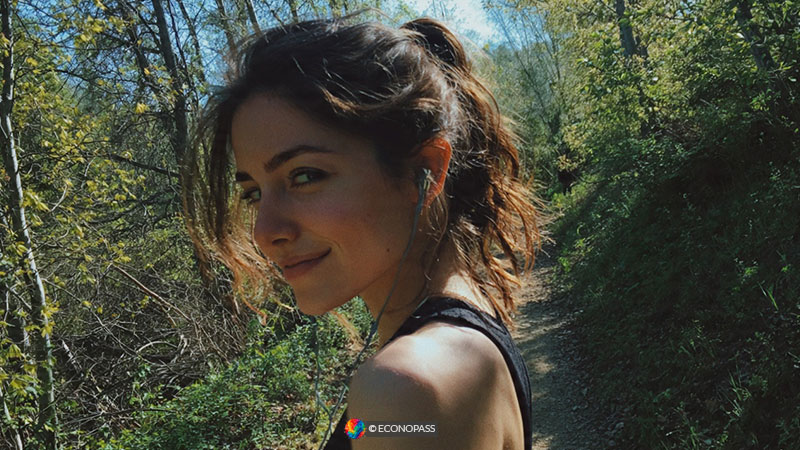
- Good earbuds matter. Not expensive ones — just ones that stay in comfortably during movement.
What I’ve Been Listening To
In the past year I’ve finished 18 books. Before audiobooks, I was managing perhaps 3 or 4. A few that stayed with me:
Atomic Habits by James Clear — perfect for walking pace, ideas that land better when you’re literally in motion. The Body Keeps the Score changed how I think about stress and recovery. And for pure pleasure, I rediscovered my love of Scandinavian crime fiction — there’s something deeply satisfying about listening to a Nordic thriller while cooking a warming soup on a grey afternoon.
For audiobooks, I use Audible, which gives me one credit per month and access to a large catalogue of podcasts and Audible Originals. The free trial is a sensible place to start — you get a credit immediately and can test whether listening works for you before committing.
If you’re more of a variety reader — someone who wants unlimited access across genres without worrying about credits — Kindle Unlimited covers both ebooks and a growing audiobook selection, which suits a different kind of reading habit.
The Lagom of It All
There’s a Swedish concept I return to often: lagom. Not too much, not too little. Just right. The sustainable middle way.
Audiobooks are, for me, the lagom approach to reading as a busy adult. I’m not trying to become someone who wakes at 5am for two hours of silent reading. I’m not abandoning books in favour of podcasts. I’m simply meeting the habit where my actual life is — in the kitchen, on the school run, on a walk through autumn leaves.
Forty-seven pages. That’s where my bookmark still sits, on a book I eventually listened to instead. I finished it on a Tuesday afternoon while making vegetable soup. It was wonderful.
Frequently Asked Questions
Is listening to audiobooks as effective as reading?
Research suggests comprehension and retention are comparable for most content types. A 2019 study published in PLOS ONE found no significant difference in understanding between reading and listening for narrative text. For highly technical material with charts or complex structure, reading may have an edge — but for most books, listening works just as well.
How do I choose my first audiobook?
Start with something you’re genuinely curious about, not something you feel you should read. Narrative non-fiction and character-driven fiction tend to translate best to audio. Avoid dense academic texts until you’ve built the listening habit.
What’s the difference between Audible Standard and Premium Plus?
Audible Standard gives you one credit per month to spend on any title, plus access to the Audible Plus catalogue of included titles. Premium Plus adds unlimited listening from the Plus catalogue on top of your monthly credit. For most people starting out, Standard is sufficient.
Can I listen on any device?
Yes — the Audible app works on iOS, Android, Kindle, Alexa devices, and desktop. Your library and your listening position sync across all of them.
What if I don’t like a book?
Audible has a straightforward return policy — if you finish a book and feel it wasn’t worth the credit, you can exchange it. It’s one of the more generous policies in subscription services.
Sources
- Rogowsky, B.A., Calhoun, B.M., & Tallal, P. (2016). Matching learning style to instructional method: Effects on comprehension. Journal of Educational Psychology. https://pubmed.ncbi.nlm.nih.gov/26877776/
- Deniz, E. & Maciejewski, W. (2019). Reading vs. listening comprehension study. PLOS ONE. https://journals.plos.org/plosone/
- Pew Research Center — Reading habits in the United States. https://www.pewresearch.org
A Note from Lila
The advice and information in this article come from my experience as a mother of three and my work in wellness. It’s intended to support your wellness journey with evidence-based insights. This is not medical advice. Please consult your healthcare provider for decisions about your health.
📖 Read My Full Story & PhilosophyLearn about my Swedish “lagom” approach to balanced family health