
Table of Contents
Key Takeaways
- A protein-rich breakfast (25–30g) reduces hunger hormones and helps you eat less throughout the day
- The best weight loss breakfasts combine protein, fibre, and healthy fat — not just low calories
- Skipping breakfast doesn’t automatically help weight loss and may increase cravings later
- Simple, realistic options like eggs, Greek yogurt, and oats outperform expensive “diet” products
- Consistency matters more than perfection — a good enough breakfast every day beats an ideal one twice a week
Short Answer
The best breakfasts for weight loss are high in protein and fibre, moderate in healthy fats, and low in added sugar. Eggs, Greek yogurt, oats with protein, and cottage cheese are consistently supported by research as effective options that reduce hunger and support a calorie deficit throughout the day.
Introduction
I used to be a breakfast skipper. Back when my kids were small and mornings were chaos, grabbing a coffee and rushing out felt like the only option. By 10am I was raiding the biscuit tin, and by lunch I’d eaten half the kitchen 😜. It took me embarrassingly long to connect those dots.
As a dietitian, I now know what the research confirms: breakfast itself isn’t magic, but what you eat in the morning sets the hormonal and hunger tone for the entire day. The right breakfast can make eating less feel almost effortless. The wrong one — or none at all — can leave you fighting cravings all afternoon.
This guide covers the breakfasts that actually work for weight loss, why they work, and how to make them fit into a real, busy life. No elaborate recipes. No expensive superfoods. Just practical, delicious options grounded in evidence.
Why Breakfast Composition Matters for Weight Loss
Weight loss comes down to a sustained calorie deficit — something our TDEE calculator can help you establish. But hitting that deficit is far easier when your hormones are working with you, not against you.
Breakfast plays a key role here through two mechanisms:
Protein reduces ghrelin (your hunger hormone)
Ghrelin is the hormone that tells your brain you’re hungry. A high-protein breakfast suppresses ghrelin more effectively than a carbohydrate-heavy one. A study published in Obesity found that participants who ate a protein-rich breakfast reported significantly lower hunger and consumed fewer calories at lunch compared to those who ate a low-protein meal or skipped breakfast entirely.
Aiming for 25–30g of protein at breakfast is the sweet spot most research points to. If you’re unsure how much protein fits your overall goals, our macro calculator can give you a personalised breakdown.
Fibre slows digestion and stabilises blood sugar
Soluble fibre — found in oats, berries, and legumes — forms a gel in your digestive tract that slows glucose absorption. This prevents the blood sugar spike-and-crash cycle that leads to mid-morning energy slumps and snack cravings. Combined with protein, fibre creates a breakfast that genuinely keeps you full.
The Best Breakfasts for Weight Loss
These options are ranked not by taste (that’s personal) but by their evidence base for satiety, protein content, and practical sustainability.
1. Eggs — The Gold Standard
Eggs are the most researched breakfast food for weight management. A study in the International Journal of Obesity found that participants who ate eggs for breakfast lost 65% more weight than those who ate a bagel with the same calorie count — largely due to eggs’ superior impact on satiety hormones.
Two large eggs provide roughly 12g of protein, along with vitamin D, choline, and healthy fats. Scrambled, poached, boiled — the cooking method matters less than consistency.
Quick option: Two boiled eggs prepped the night before, eaten with a slice of wholegrain toast and half an avocado. Under 10 minutes, and it keeps you full until lunch.
2. Greek Yogurt with Berries
Plain Greek yogurt is one of the most protein-dense foods by volume. A 200g serving delivers around 17–20g of protein depending on the brand. It also contains probiotics that support gut health — increasingly linked to healthy weight regulation.
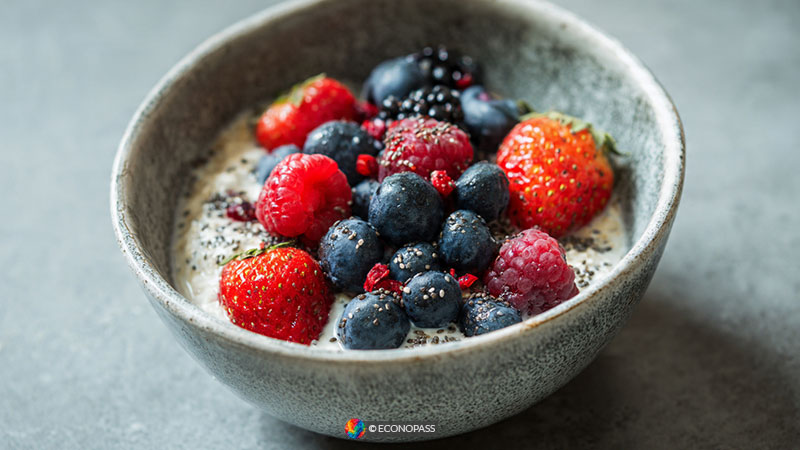
The key word is plain. Flavoured yogurts often contain as much added sugar as a dessert. Add your own berries for natural sweetness and a fibre boost — blueberries, raspberries, and strawberries are all excellent choices.
Quick option: 200g plain Greek yogurt, a handful of mixed berries, a tablespoon of chia seeds. Done in 90 seconds.
3. Oats — With a Protein Upgrade
Oats are rich in beta-glucan, a soluble fibre that has strong evidence for reducing appetite and supporting healthy cholesterol levels. The Mayo Clinic lists oats as one of the top heart-healthy foods, and their satiety benefits are well-documented.
The issue with oats alone is that they’re relatively low in protein. The fix is simple: stir in a scoop of protein powder, cook them in milk instead of water, or top with Greek yogurt and nut butter. This transforms oats from a moderate breakfast into a genuinely powerful weight loss meal.
Quick option: Overnight oats — mix 50g rolled oats with 150ml milk, 100g Greek yogurt, and a tablespoon of chia seeds the night before. Grab from the fridge in the morning.
4. Cottage Cheese
Cottage cheese is underrated. It’s one of the highest-protein, lowest-calorie whole foods available — a 200g serving contains around 24g of protein for roughly 180 calories. It’s also high in casein, a slow-digesting protein that keeps you satiated for hours.
It works savoury (with cucumber and everything bagel seasoning) or sweet (with honey and sliced banana). Either way, it’s one of the most efficient weight loss breakfasts you can eat.
5. Smoothies — Done Right
Smoothies have a reputation problem — mostly because commercial versions are sugar bombs in disguise. But a well-constructed smoothie is genuinely excellent for weight loss.
The formula: protein base + fibre source + healthy fat + liquid. For example: Greek yogurt or protein powder + frozen spinach and berries + a tablespoon of almond butter + unsweetened almond milk. This combination delivers 20–25g of protein, plenty of fibre, and keeps added sugar minimal.
Avoid fruit juice as a base, limit high-sugar fruits like mango and banana to small portions, and always include protein. Without it, a smoothie is essentially a liquid snack.
6. Wholegrain Toast with Protein Topping
Toast gets unfairly dismissed in diet culture. Wholegrain bread provides fibre and complex carbohydrates — perfectly fine for weight loss when paired with a protein-rich topping.
Effective combinations: two poached eggs + sliced tomato, cottage cheese + smoked salmon, or natural nut butter + sliced banana. Avocado toast is popular for good reason — the healthy fats support satiety — but add a protein source alongside it for a more complete meal.
What to Avoid at Breakfast
Just as important as what to eat is what to skip — or at least limit significantly.
High-sugar cereals: Many branded breakfast cereals marketed as “healthy” contain more sugar per serving than a chocolate biscuit. Check labels: anything above 10g of sugar per 100g is a red flag for weight loss.
Fruit juice: Whole fruit contains fibre that slows sugar absorption. Juice removes that fibre, delivering a rapid glucose spike with little satiety benefit. Eat the orange; don’t drink it.
Pastries and muffins: High in refined carbohydrates and often saturated fat, these spike blood sugar quickly and leave you hungry within an hour. The “low-fat muffin” is particularly misleading — fat removal is usually compensated with sugar.
Skipping entirely: This is genuinely individual. Some people thrive without breakfast, particularly those following time-restricted eating — something I explore in depth in our intermittent fasting guide. But for most people who find themselves snacking heavily by mid-morning, a structured breakfast is far more effective than willpower alone.

Making It Practical: Breakfast for Real Mornings
The best breakfast is the one you’ll actually eat. Here’s how to make high-protein breakfasts work when mornings are hectic:
- Prep the night before: Overnight oats, boiled eggs, and smoothie ingredients bagged in the freezer all take zero morning effort. This is the single most effective strategy I recommend to clients.
- Batch cook on Sundays: A tray of baked eggs or a batch of egg muffins keeps in the fridge for 4–5 days. Our meal prep guide covers this in detail.
- Keep it simple: Two boiled eggs and a piece of fruit is not a glamorous breakfast, but eaten consistently it outperforms an elaborate smoothie bowl made twice a month.
- Don’t drink your calories carelessly: Coffee with milk is fine. A large flavoured latte with syrup before 9am can cost you 300 calories before you’ve eaten anything. Check what you’re drinking alongside breakfast too.
For a broader look at how breakfast fits into your overall nutrition strategy, including how to track your intake without obsessing over it, see our guide to counting calories and macros.
How Breakfast Fits Your Overall Weight Loss Plan
Breakfast matters, but it’s one piece of a larger picture. Sustainable weight loss requires a consistent calorie deficit, adequate protein across the whole day, and habits you can maintain long-term. A well-structured morning meal makes all of those easier — but it doesn’t override poor choices for the rest of the day.
If you’re building a full weight loss approach, our complete guide to sustainable weight loss is a good starting point. And for understanding how protein specifically supports fat loss — not just at breakfast — read our article on the role of protein in weight loss.
Need help with portion sizes and hunger between meals? Our healthy snacking guide covers smart strategies that complement a strong breakfast routine.
A Note on Individual Variation
I want to be honest about one thing: nutrition research on breakfast is mixed. Some studies show significant benefits; others show minimal effects when total daily calories are controlled. What’s consistent across the evidence is that protein at breakfast reduces hunger, and that structured eating patterns support better food choices overall.
What works brilliantly for one person may not suit another. If you genuinely feel better skipping breakfast and aren’t struggling with cravings, that’s valid. The lagom principle applies here too — the sustainable middle path is always the right one for you, not the one that looks best on paper.
Finding Your Morning Rhythm
When I finally stopped skipping breakfast and started keeping boiled eggs in the fridge, something quietly shifted. Not dramatic weight loss overnight — but the 3pm biscuit habit faded. Lunch portions naturally got smaller. I stopped thinking about food constantly by 11am.
That’s the real gift of a good breakfast: it’s not about restriction. It’s about starting the day in a way that makes the rest of it easier. A little protein, a little fibre, something you genuinely enjoy — that’s enough. Lagom, as we say.
Start with one change. Try Greek yogurt instead of cereal for a week. Or keep two boiled eggs ready each morning. Small, consistent steps build the habits that actually last.
Lila.
Frequently Asked Questions
Is it better to skip breakfast for weight loss?
For most people, no. While intermittent fasting works well for some, research consistently shows that skipping breakfast tends to increase hunger later in the day, leading to larger portions or poor snack choices. If you’re not hungry in the morning, a small protein-rich option is better than nothing. If you thrive on time-restricted eating, that’s a valid approach — but it’s not universally superior to eating breakfast.
How many calories should breakfast be for weight loss?
There’s no universal number, as it depends on your total daily calorie goal. A reasonable range is 300–450 calories, prioritising protein (25–30g) and fibre. Use our TDEE calculator to establish your daily target, then distribute meals accordingly.
Are smoothies good for weight loss?
They can be — but only when built with adequate protein and fibre, and minimal added sugar. A Greek yogurt and berry smoothie with nut butter is excellent. A juice-based smoothie with honey and dried fruit is essentially a high-calorie drink. The construction matters enormously.
What’s the fastest high-protein breakfast?
Two boiled eggs (prepped the night before) with a piece of fruit takes under two minutes to assemble. Plain Greek yogurt with berries is similarly fast. Overnight oats require zero morning preparation at all. Speed is rarely a genuine barrier — preparation the evening before is the key habit.
Does eating breakfast boost metabolism?
Not significantly on its own. The “metabolism boost” claim is overstated. What breakfast does do is support better hunger regulation, more stable blood sugar, and often better food choices throughout the day — all of which support weight loss indirectly. The direct metabolic effect is modest.
Sources for my article
- My breakfast history! 😀
- Leidy HJ et al. (2013). Beneficial effects of a higher-protein breakfast on appetite. Obesity. NCBI/PubMed.
- Vander Wal JS et al. (2008). Egg breakfast enhances weight loss. International Journal of Obesity. NCBI/PubMed.
- Mayo Clinic. Top 5 lifestyle changes to improve your cholesterol (oats and beta-glucan).
- Dietitians of Canada. The Importance of Breakfast.

A Note from Lila
The advice and information in this article come from my experience as a mother of three and my work in wellness. It’s intended to support your wellness journey with evidence-based insights. This is not medical advice. Please consult your healthcare provider for decisions about your health.
📖 Read My Full Story & PhilosophyLearn about my Swedish “lagom” approach to balanced family health
Reading Suggestions
![Healthy Weight Loss Recipes: 7 Delicious Meals Tha...]()
Healthy Weight Loss Recipes: 7 Delicious Meals Tha...
Weight Management![The Paleo Diet: Complete Guide to Eating Like Our ...]()
The Paleo Diet: Complete Guide to Eating Like Our ...
Health & Fitness![Counting Calories & Macros: The Complete Guide...]()
Counting Calories & Macros: The Complete Guide...
Health & Fitness![Meal Prep for Weight Loss: Your Complete Planning ...]()
Meal Prep for Weight Loss: Your Complete Planning ...
Health & Fitness![The Complete Keto Diet Guide: From Beginner to Suc...]()
The Complete Keto Diet Guide: From Beginner to Suc...
Health & Fitness![The Mediterranean Diet: 7 Pillars for Better Healt...]()
The Mediterranean Diet: 7 Pillars for Better Healt...
Health & Fitness