Table of Contents
Picture this: you’re strolling down a cobblestone street, the scent of fresh pastries wafting from a nearby bakery, while cyclists glide past you with that effortless Danish cool. Welcome to Copenhagen – a city that somehow manages to be both achingly hip and refreshingly unpretentious at the same time.
I’ll be honest with you – Copenhagen wasn’t even on my radar until a friend dragged me there for a long weekend. Now? I can’t shut up about it. This isn’t just another European capital trying too hard to impress tourists. Copenhagen has this magnetic quality that makes you want to slow down, soak everything in, and maybe – just maybe – figure out what the Danes mean by “hygge.”
Whether you’re planning your first visit or looking to dig deeper into what makes this Scandinavian gem tick, I’ve got you covered. Let’s dive into the 10 absolute best things to see and do in Copenhagen, from iconic landmarks to cultural treasures that’ll make your Instagram followers seriously jealous.
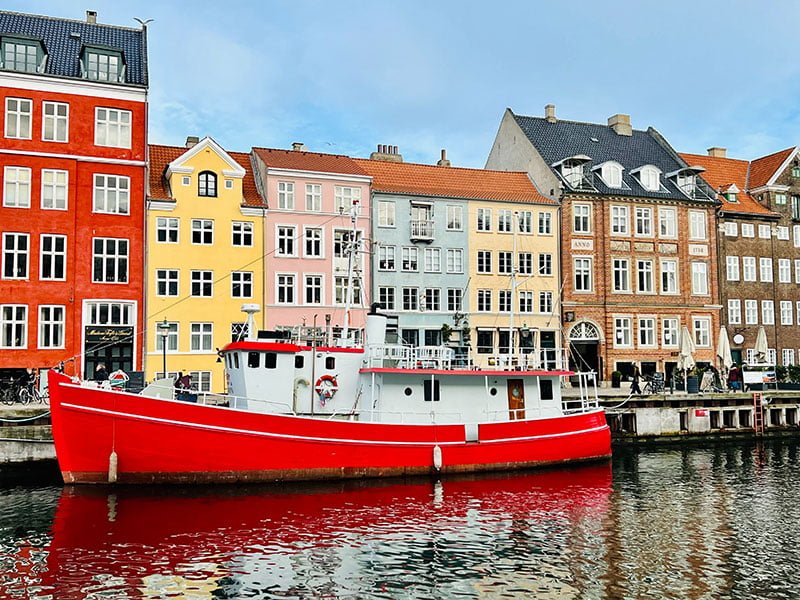
① Explore Nyhavn: Copenhagen’s Postcard-Perfect Crown Jewel
Let’s start with the obvious – because sometimes the obvious stuff is obvious for good reason. Nyhavn (literally “New Harbor”) is Copenhagen’s most photographed spot, and honestly, it’s impossible to take a bad photo here.
Those rainbow-colored 17th-century townhouses lining the canal? They’re not just pretty faces. Each building tells a story, and Hans Christian Andersen actually lived in three different houses along this stretch. The whole area buzzes with life – street performers, outdoor cafés, and those impossibly photogenic boats bobbing in the harbor.
Here’s my insider tip: skip the touristy canal boat tours that leave from here and instead grab a beer at one of the outdoor cafés. Café Nyhavn offers the best people-watching, while the waterfront restaurants serve excellent Nordic cuisine with views that justify the price tag.
The magic happens at different times of day. Morning brings quiet coffee moments and golden light. Afternoon crowds create that bustling European café atmosphere. But evening? That’s when Nyhavn transforms into something truly special, with fairy lights reflecting off the water.
Best time to visit: Late afternoon when the light hits the buildings just right, creating those golden hour vibes that make everything look like a fairy tale.
② Visit Tivoli Gardens: Where Magic Meets Danish Charm
Tivoli Gardens isn’t just an amusement park – it’s a Copenhagen institution that’s been making people smile since 1843. Walt Disney himself visited for inspiration, and you can see why the moment you walk through those ornate gates.
The genius of Tivoli lies in its perfect blend of thrills and charm. Sure, there are roller coasters and carnival games, but there are also peacocks wandering the gardens, world-class restaurants, and concerts that range from rock to classical. It’s like someone took a theme park and infused it with Danish sophistication.
My favorite time to visit? Evening, when thousands of fairy lights transform the place into something magical. The Nimb Hotel restaurant inside the park serves some of the best Nordic cuisine in the city if you want to make it a proper night out. But honestly, even grabbing cotton candy and riding the vintage wooden roller coaster feels special here.
During summer, the outdoor stage hosts everything from international pop stars to the Danish Royal Ballet. Winter brings Christmas markets that would make even the Grinch believe in holiday magic.
Fun fact: Tivoli is the second-oldest operating amusement park in the world, and it shows no signs of slowing down.
③ Admire the Little Mermaid Statue: Copenhagen’s Most Famous (and Controversial) Icon
Let’s address the elephant in the room – or should I say, the mermaid by the harbor. The Little Mermaid Statue is probably Copenhagen’s most famous attraction, and also its most debated one.
Here’s the thing: she’s smaller than you expect. Much smaller. Standing at just 1.25 meters tall, this bronze statue perched on a rock at Langelinie promenade doesn’t exactly scream “major tourist attraction.” But that’s kind of the point.
Created by sculptor Edvard Eriksen in 1913, she represents Hans Christian Andersen’s beloved fairy tale and has become an unexpected symbol of Copenhagen. I’ve watched countless tourists approach with sky-high expectations, only to pause, tilt their heads, and then… smile. There’s something endearing about her modest size and peaceful expression.
The walk to reach her is half the experience. Langelinie Park offers beautiful harbor views, and you’ll pass the impressive Gefion Fountain along the way. Plus, the nearby Kastellet (star-shaped fortress) provides excellent photo opportunities and historical context.
Pro tip: Visit early morning or late evening to avoid crowds and get that perfect shot without photobombers.
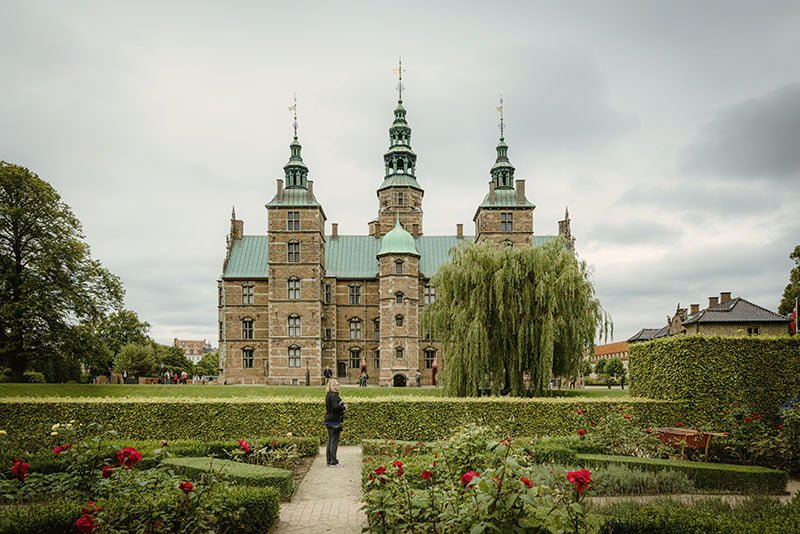
④Discover the History at Rosenborg Castle: Royal Treasures and Renaissance Splendor
Rosenborg Castle is where Copenhagen’s royal history comes alive in the most spectacular way. Built by Christian IV in the early 17th century as a summer residence, this Renaissance masterpiece houses the Danish Crown Jewels and tells the story of 400 years of royal life.
Walking through these rooms feels like time travel. The Great Hall with its silver lions standing guard, the Winter Room with its intricate ceiling, and the Treasury where actual crowns and royal regalia gleam behind glass – it’s all genuinely impressive.
But here’s what I love most: this isn’t a sterile museum experience. You can see where kings actually lived, worked, and entertained. The tapestries depicting Christian V’s victories are massive and detailed enough to study for hours.
The surrounding King’s Garden (Kongens Have) is Copenhagen’s oldest royal garden and perfect for a post-castle stroll. Locals use it as their backyard – you’ll see picnics, sunbathers, and impromptu football games alongside the manicured flower beds.
Hidden gem: The castle’s basement houses an impressive collection of royal memorabilia, including Christian IV’s blood-stained clothes from the Battle of Kolberger Heide.
⑤ Wander through Christiania: Copenhagen’s Most Fascinating Social Experiment
Now here’s where things get interesting. Freetown Christiania is Copenhagen’s most controversial and fascinating neighborhood – a self-proclaimed autonomous zone that’s been operating since 1971.
This isn’t your typical tourist attraction. Christiania has its own rules, its own vibe, and definitely its own way of doing things. The colorful murals, unique architecture, and alternative lifestyle make it unlike anywhere else in Europe. It’s a functioning community of about 850 residents who’ve created something completely unique in the heart of Copenhagen.
The main street, Pusher Street, gets most of the attention, but the real magic happens when you explore deeper. Art galleries showcase local talent, organic cafés serve surprisingly good food, and workshops sell handmade crafts that you won’t find anywhere else.
Important note: Photography is restricted in certain areas, and you should respect the community’s rules. This is a real neighborhood where real people live, not a theme park. The residents are generally friendly and happy to chat, but approach with genuine curiosity, not gawking tourist energy.
What to expect: A glimpse into a completely different way of life that exists right in the heart of one of Europe’s most expensive cities.
⑥ Experience the National Museum of Denmark: Vikings, Bog Bodies, and Danish Heritage
The National Museum of Denmark might sound like a snooze-fest, but trust me on this one – this place houses some of the most incredible artifacts you’ll ever see. We’re talking world-class Viking treasures, remarkably preserved bog bodies, and the famous Sun Chariot that’s over 3,000 years old.
The Viking exhibition is absolutely world-class. Seeing actual Viking ships, weapons, and jewelry up close gives you serious perspective on these legendary seafarers. But don’t sleep on the Danish prehistory section – those bog bodies are both fascinating and slightly terrifying, preserved so well you can see their facial expressions from 2,000 years ago.
What makes this museum special is how it connects Denmark’s past to its present. The Ethnographic collection includes items from around the world that Danish explorers brought back, showing how this small Nordic country has always been connected to global stories.
The Children’s Museum on the ground floor lets kids (and adults) try on medieval armor and explore a reconstructed Danish house from the 1600s. It’s interactive history that actually works.
Pro tip: Free admission on Tuesdays – perfect for budget-conscious travelers who still want to soak up some serious culture.
⑦Marvel at the Architecture of Amalienborg Palace: Royal Living at Its Finest
Amalienborg Palace isn’t just a pretty building – it’s the actual home of the Danish royal family, and you might catch a glimpse of them if you’re lucky. This rococo masterpiece consists of four identical palaces arranged around an octagonal courtyard, creating one of Europe’s most impressive royal squares.
The daily changing of the guard ceremony at noon is surprisingly entertaining. These aren’t just ceremonial guards; they’re the real deal, and watching them march through Copenhagen’s streets in their blue uniforms and towering bearskin hats is oddly mesmerizing. The whole procession takes about 30 minutes and covers several city blocks.
Inside the Amalienborg Museum, you get a peek into royal life that’s way more interesting than you’d expect. The state rooms where the royal family still entertains foreign dignitaries, private apartments showing how Danish royalty actually lives, and an impressive collection of royal portraits and artifacts.
The octagonal courtyard itself is architectural perfection. The symmetry, the proportions, the way it frames the equestrian statue of Frederick V in the center – it’s Instagram gold, but more importantly, it represents Danish design philosophy at its most refined.
Insider tip: If the Danish flag is flying above one of the palaces, it means a member of the royal family is home.
⑧ Discover the Beauty of Frederiksberg Gardens: Copenhagen’s Green Oasis
Frederiksberg Gardens is Copenhagen’s best-kept secret – a romantic landscape garden that feels like you’ve stumbled into a Jane Austen novel. Created in the 1700s, these gardens showcase the English landscape style that was all the rage among European nobility.
What makes these gardens special isn’t just their beauty (though they’re gorgeous), it’s their authentic atmosphere. Winding paths lead to hidden grottos, classical temples, and peaceful lakes where you can rent rowboats during summer. The Chinese Pavilion on a small island is particularly Instagram-worthy.
The gardens surround Frederiksberg Palace, now a military academy, but the real stars are the mature trees, some over 200 years old, creating cathedral-like canopies over walking paths. Spring brings cherry blossoms, summer offers perfect picnic spots, and autumn creates a riot of golden colors.
Copenhagen Zoo borders the gardens, so you might hear exotic animals in the distance, adding an unexpected soundtrack to your peaceful stroll. The Elephant House, designed by renowned architect Norman Foster, is visible from certain viewpoints in the gardens.
Local secret: The small café near the Chinese Pavilion serves excellent coffee and pastries, and locals consider it one of the city’s most romantic spots.
⑨ Visit the National Gallery of Denmark: Art That Spans Centuries
The National Gallery of Denmark (Statens Museum for Kunst) houses an impressive collection that spans 700 years of art, from medieval religious works to cutting-edge contemporary pieces. But here’s what makes it special – it’s not intimidating like some major art museums can be.
The Danish Golden Age collection is absolutely stunning. Artists like Christoffer Wilhelm Eckersberg and P.S. Krøyer captured Danish light and landscape in ways that help you understand why Danes are so connected to their natural environment. The famous Skagen painters documented life in Denmark’s northernmost tip with an intimacy that’s genuinely moving.
The French Impressionist section includes works by Monet, Renoir, and Pissarro that hold their own against any major museum collection. But don’t miss the contemporary Danish art – artists like Olafur Eliasson (yes, he’s technically Danish-Icelandic) show how Nordic sensibility translates into modern art.
The museum building itself, with its striking modern extension, represents Danish architectural evolution. The sculpture garden outside provides a perfect transition between art and nature, very Danish in its approach.
Museum hack: The café overlooking the sculpture garden serves some of the best museum food in Europe, and it’s worth visiting even if you skip the galleries.
⑩ Indulge in Danish Cuisine at Torvehallerne: Copenhagen’s Culinary Heart
Torvehallerne is where Copenhagen’s food revolution comes alive in the most delicious way possible. This glass-covered market, opened in 2011, brings together the best of Danish cuisine under two gorgeous Victorian-inspired structures.
Here’s the thing about Danish food – it’s way more than just pastries and hot dogs (though those are excellent too). Torvehallerne showcases New Nordic cuisine alongside traditional favorites, creating a food experience that’s both innovative and deeply rooted in Danish culture.
Grød serves gourmet porridge that’ll change your entire relationship with oatmeal. Hallernes Smørrebrød makes traditional open-faced sandwiches that are almost too beautiful to eat. Omegn offers foraged ingredients and creative combinations that represent the cutting edge of Danish cooking.
But it’s not all high-end. Ma Poule serves excellent coffee, the fish vendors offer the freshest catches from Danish waters, and the pastry stalls make kanelsnegle (cinnamon rolls) that are genuinely life-changing.
The market buzzes with energy – chefs shopping for ingredients, locals grabbing lunch, tourists discovering flavors they’ve never experienced. It’s Copenhagen’s food culture in microcosm.
Pro strategy: Come hungry and graze your way through the market. Buy ingredients for a picnic in nearby King’s Garden, or grab ingredients to cook if you’re staying in an Airbnb.
Essential Copenhagen Travel Information
| Category | Details |
|---|---|
| Best Time to Visit | May-September for warm weather; December for Christmas markets |
| Getting Around | Copenhagen Card, Metro, buses, bikes, or walk (city center is compact) |
| Currency | Danish Krone (DKK), but cards accepted everywhere |
| Language | Danish, but English widely spoken |
| Budget Range | $100-300+ per day depending on accommodation and dining choices |
| Museum Pass | Copenhagen Card includes admission to most attractions plus transportation |
FAQ Before Traveling to Copenhagen
How many days do you need in Copenhagen?
Three to four days gives you enough time to see the major attractions and get a feel for local life. A week lets you explore neighborhoods more deeply and take day trips to places like Malmö, Sweden, or Kronborg Castle.
Is Copenhagen expensive for tourists?
Yes, Copenhagen is pricey, but there are ways to manage costs. The Copenhagen Card provides free museum admission and transportation. Many attractions offer student discounts, and street food at places like Torvehallerne is more affordable than restaurants.
What’s the best way to get around Copenhagen?
The city center is compact and walkable, but the Metro system is excellent. Biking is the most Danish way to get around – rental bikes are available throughout the city, and there are over 400 kilometers of bike lanes.
Can you visit Copenhagen’s royal attractions?
Yes! Amalienborg Palace has a public museum, Rosenborg Castle is open for tours, and you can watch the changing of the guard ceremony daily at noon (when the Queen is in residence).
What should I pack for Copenhagen?
Layers are essential regardless of season. Comfortable walking shoes are a must, and a light rain jacket is always smart. Danes dress stylishly but practically – think clean lines and quality fabrics.
Is it worth visiting the Little Mermaid Statue?
She’s smaller than expected, but the walk along Langelinie promenade is beautiful, and nearby attractions like Kastellet and Gefion Fountain make it worthwhile. Manage your expectations and enjoy the harbor views.
Your Copenhagen Adventure Awaits
Copenhagen isn’t trying to be the loudest or flashiest city in Europe, and that’s exactly what makes it special. It’s confident enough in its own skin to let you discover its charms at your own pace – from fairy-tale castles to cutting-edge food markets, from royal palaces to alternative communities.
The city works because it balances old and new, tradition and innovation, must-see attractions and local experiences. You can spend your morning exploring Viking artifacts at the National Museum, your afternoon wandering through romantic gardens, and your evening sampling New Nordic cuisine at Torvehallerne.
What strikes me most about Copenhagen is how it manages to be both deeply Danish and completely international. The Little Mermaid represents fairy-tale Denmark, while Christiania shows its progressive side. Rosenborg Castle preserves royal history, while the National Gallery pushes artistic boundaries.
So pack your curiosity, bring your appetite for both food and experiences, and prepare to fall for a city that masters the art of living well. Copenhagen is waiting, and trust me – you’re going to love what you find there.
Ready to start planning your Copenhagen adventure? Check out VisitCopenhagen.com for current events and detailed attraction information. For restaurant reservations and local insights, Copenhagen.com offers excellent local recommendations. And don’t forget to explore Get Your Guide for additional travel tips and practical information/tickets.

A Note from Simon de Lafronde
The advice and information in this article come from my experience and expertise. It’s intended to support your journey with evidence-based insights. This is not professional advice. Please consult appropriate professionals for your specific situation.
📖 Read More